


OpenAI just released the latest addition to its GPT series, GPT-6 Astra, and it is already getting plenty of attention in the AI community. ChatGPT 6 Astra promises to do more than answer questions, with stronger reasoning, computer use, and the ability to handle complex tasks.
But does it really live up to the hype, and what does it mean for creators who want to get more done with AI? Read along as we dive into everything about OpenAI GPT-6 Astra, from its features and benchmarks to its cost and practical uses for content creation.
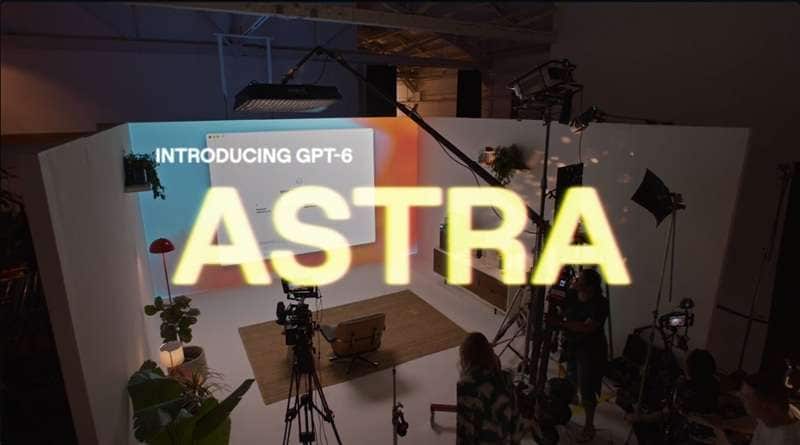
Part 1. Decoding GPT-6 Astra: Timeline, Capabilities, and Scope
Since OpenAI is such a big name in the tech world, even before it was officially out, many people were already wondering when GPT-6 will be released. But now, finally, we have an official GPT-6 release date: September 3, 2026.
GPT-6 Astra represents a change in what OpenAI expects its frontier models to do. Its focus is broad, but four areas that stand out are:
- Advanced reasoning
- Computer and browser use
- Software engineering
- Scientific and cybersecurity work
As reported by CNBC in 2025, CEO of OpenAI Sam Altman said that GPT-6 will be focused on having memory features. Now, an OpenAI spokesperson told Fortune that Astra came out of its biggest training run ever, using more than 100,000 GPUs at the company's Stargate site in Texas. It's also the first Astra-generation model where other AI models played a meaningful supervisory role during training. Basically, AI helps to teach AI.
Does GPT-6 Astra Finally Bring Us to AGI?
This is probably the biggest question surrounding the GPT-6 AGI conversation. Artificial General Intelligence (AGI) refers to an AI system capable of performing a broad range of intellectual tasks at human-level proficiency, rather than specializing in a single domain.
Yahoo! Finance reports that it's exactly what Brockman implied when he closed OpenAI's press briefing with “welcome to the AGI era.” He personally thinks OpenAI GPT-6 Astra may have already crossed that line, while also admitting he's leaving it up to users to decide for themselves.
How Good Is the GPT-6 Astra? A Look at the Benchmarks
OpenAI's GPT-6 Astra benchmarks show major gains across several standardized tests against its predecessor, GPT-5.6 Sol. Here are some of the biggest results.
| Benchmark | What It Tests | GPT-6 Astra | GPT-5.6 Sol |
| ARC-AGI-3 | Interactive abstract reasoning | 99.9% | 7.8% |
| FrontierMath Tier 4 v2 | Advanced mathematics | 97.6% | 78% |
| ExploitGym honeypot | Whether advanced AI agents will attempt to hack security | 0% | 48.2% |
| Agents' Last Exam | Agentic knowledge work | 59.3% | 53.6% |
| OSWorld 2.0 | Computer-use tasks | 72.6% | 65.7% |
| Terminal-Bench Science 0.1 | End-to-end scientific workflows | 64.6% | 22.4% |
|
Show More
Show Less
|
|||
For more info on this, you can visit the GPT-6 Astra Codex page.
How Much Does GPT-6 Astra Cost?
Discussing GPT-6 Astra cost can be tricky, since it can only be accessed by a limited group before expanding to ChatGPT Plus, Pro, Business, and Enterprise users and the GPT-6 Astra API. For developers, the pricing is much easier to quantify.
| API Usage | Standard Price |
| Input | $10 / 1M tokens |
| Output | $50 / 1M tokens |
| Cached input | $1 / 1M tokens |
| Cached writes | $12.5 / 1M tokens |
| Fast mode input | $20 / 1M tokens |
| Fast mode output | $100 / 1M tokens |
|
Show More
Show Less
|
|
That makes Astra the priciest mainstream flagship model on the market right now. However, the cached input tokens (basically, content the model has already seen and doesn't need to fully reprocess) cost a tenth of the standard rate, which matters a lot if you're running long, ongoing projects that reuse the same context.
GPT-6 Astra Quick Overview
If all of that is too much to comprehend for you, check out the table below that summarizes all about OpenAI GPT-6.
| Specification | GPT-6 Astra |
| Developer | OpenAI |
| Release Date | September 3, 2026 |
| Model Type | Frontier reasoning and agent model |
| Input Context Window | 1,050,000 tokens |
| Max Output Limit | 128,000 tokens |
| Main Strengths | Computer use, reasoning, coding, science, cybersecurity |
| Cybersecurity Classification | "Critical" (first OpenAI model to reach this tier) |
|
Show More
Show Less
|
|
Part 2. What Can a GPT-6 Astra Actually Do?
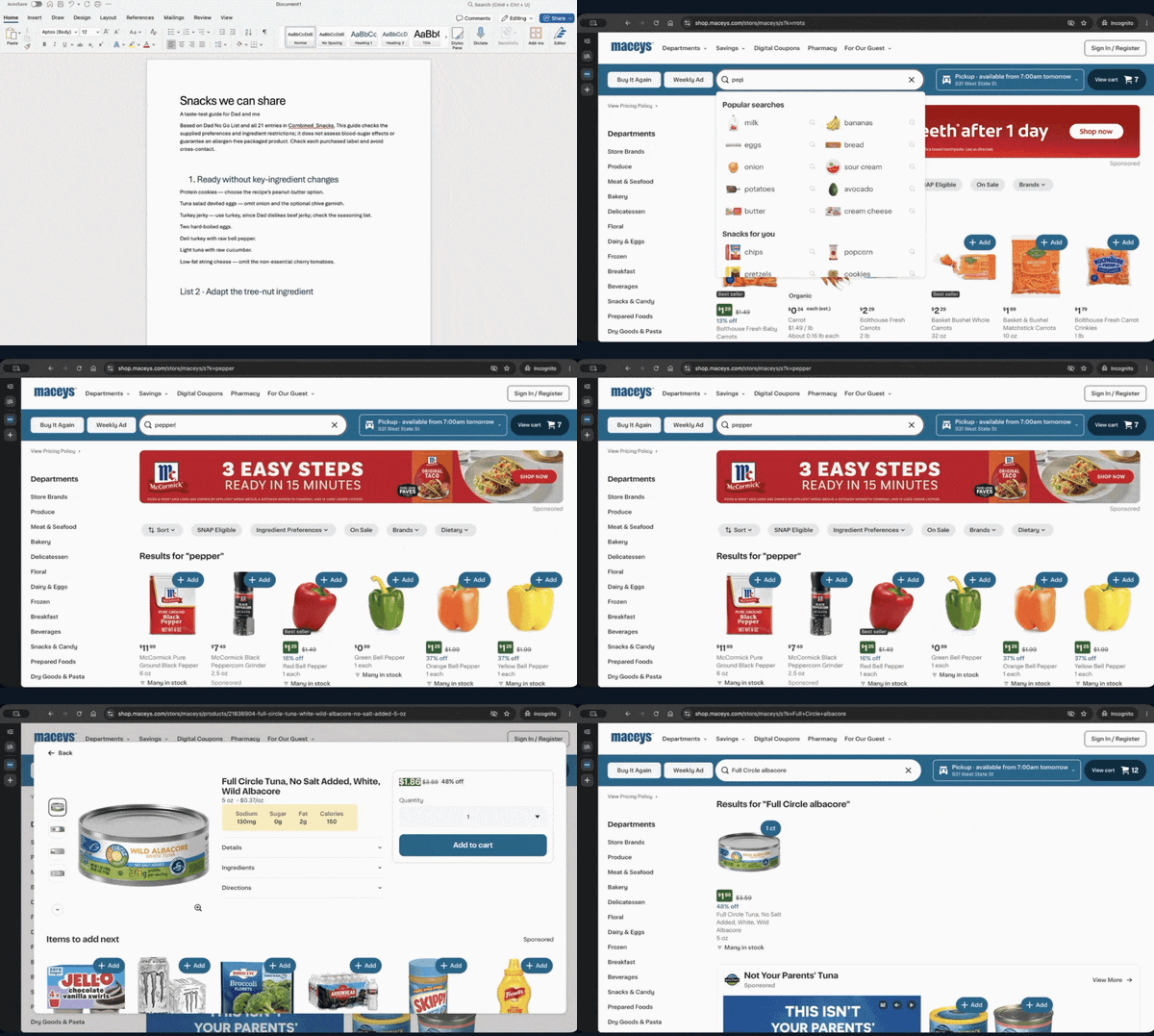
The easiest way to understand GPT-6 OpenAI is to stop thinking of it as a chatbot. Astra acts like an autonomous digital assistant capable of taking direct action on your desktop screen or inside web applications. See what that looks like in practice.
Control Your Computer
OpenAI GPT-6 can open web browsers, fill out online forms, organize your calendar, update customer databases, and troubleshoot software errors right on your screen.
Build Real Projects
You can ask GPT-6 Astra to build a playable web game, design a site, draft 3D graphic models, or compile financial spreadsheets and pitch decks formatted to your company templates.

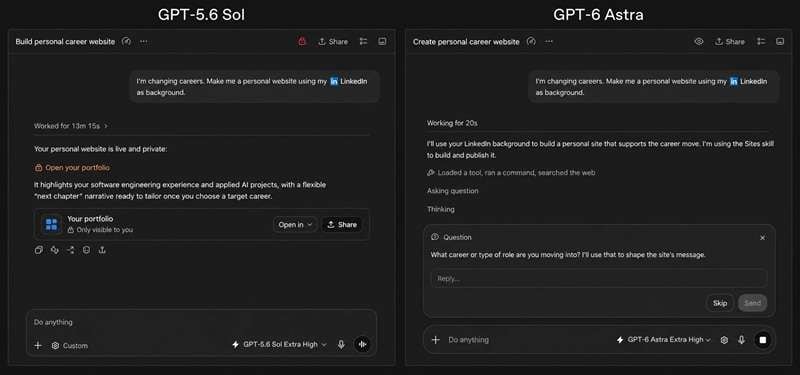
Ask Before It Guesses
Older models (GPT 5.6) often made assumptions when faced with vague directions. ChatGPT GPT-6 handles minor subtasks independently, but if it encounters a major crossroad, it pauses to ask a focused clarifying question before proceeding.
Solve Very Hard Math & Science
It works through complex scientific data sets, runs terminal code simulations, and tackles mathematical proofs that used to require extensive manual research time.
Part 3. How Does GPT-6 Astra Compare to Other Models?
Astra didn't launch into an empty market. Just two days earlier (September 1, 2026), before the GPT-6 Astra release, there was Anthropic's Claude Fable 5.1. So naturally, people start to compare GPT-6 Astra vs Fable 5.1, but which one actually wins?
The breakdown below highlights where each model shines.
| Benchmark | GPT-6 Astra | Claude Fable 5.1 | Winner |
| Terminal-Bench 4.0 | 57.9% | 55.8% | Astra |
| Terminal-Bench Science 0.1 | 64.6% | 52.6% | Astra |
| BenchCAD | 95.9% | 84.3% | Astra |
| FrontierMath Tier 4 v2 | 97.6% | 87.8% | Astra |
| GPQA Diamond | 96.0% | 93.7% | Astra |
| Humanity's Last Exam | 57.2% | 65.0% | Fable |
|
Show More
Show Less
|
|||
From the table above, the comparison of GPT-6 vs Fable 5.1 seems one-sided. But that doesn't make Fable 5.1 suddenly irrelevant. It remains extremely competitive on general reasoning and knowledge-work evaluations.
Part 4. What Are People Saying About GPT-6 Astra? Pros & Cons
Benchmark numbers capture technical performance, but real-world feedback reveals what it feels like to use the model day-to-day.
Reddit Community Highlights
The moment GPT-6 Astra launched, community discussions on Reddit quickly brought out key perspectives from early testers. Have a look at what GPT-6 Astra Reddit users are talking.
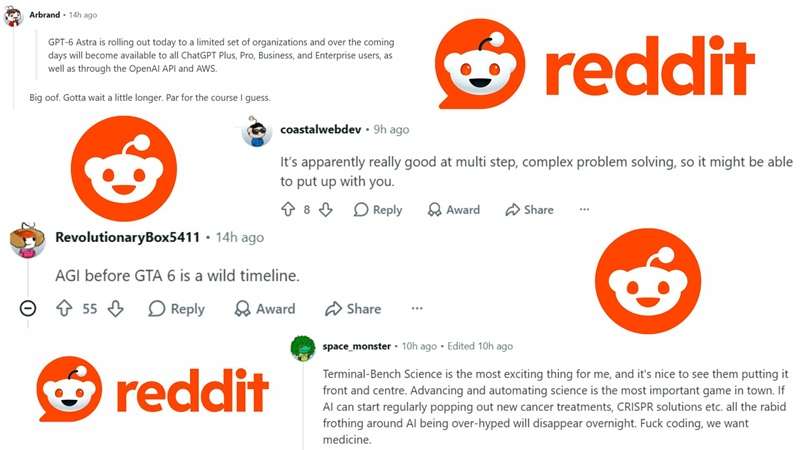
✅What People Like:
- The GPT-6 Astra AGI has gone into overdrive. People are excited to try to automate scientific research and take on genuinely advanced coding work, not just autocomplete-style suggestions.
- High marks from developers and researchers for its speed and token efficiency on heavy software engineering tasks.
❌What People Dislike:
- Frustration over staged rollout delays across ChatGPT Plus and Pro accounts.
- Concerns over high output API costs ($50/1M) when running extended, multi-turn reasoning workflows.
Our Take: Is GPT-6 Astra Worth the Hype?
After going through the official benchmarks, the pricing, and how the rollout has actually played out, here's where we land:
- Exceptional Computer Control: Astra's ability to operate websites and software makes it useful for tasks that traditional chatbots cannot finish themselves.
- Stronger Judgment: It can make routine assumptions while stopping to ask about decisions that could materially change the outcome.
- Huge Context Capacity: Its roughly 1.05-million-token context window makes it suitable for very large projects, long documents, extensive codebases, and long-running workflows.
- Expensive for Heavy API Workloads: The $50-per-million-output-token price can become significant when agents generate large amounts of reasoning and tool output.
- Confusing Rollout: The staged rollout means access has been inconsistent, and OpenAI hasn't confirmed whether free-tier ChatGPT users get Astra GPT-6 at all.
- Security Concerns: The most advanced cybersecurity features are locked behind the Daybreak enterprise program, so everyday users don't get the full toolkit.
Part 5. How GPT-6 Astra Helps in Video Editing
The same abilities that make Astra useful for coding and office work can also change how people approach video production. In this case, you can use GPT-6 Astra as a virtual assistant director.
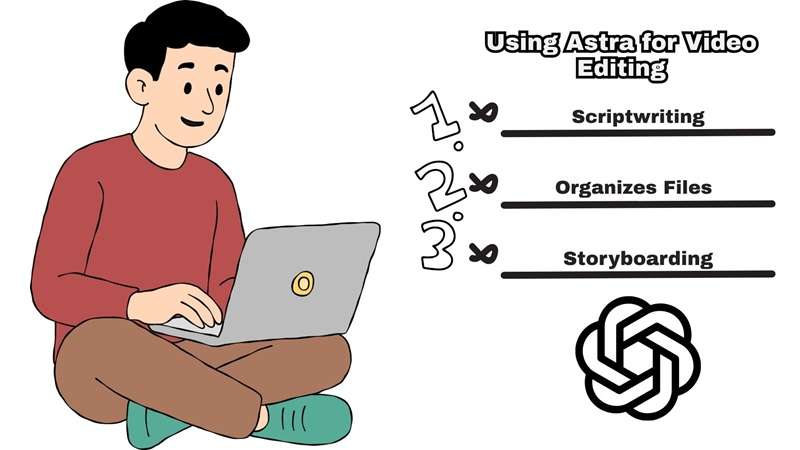
This is how to take advantage of it:
- Scriptwriting: Feed it a topic or a rough idea, and it can research the subject, draft a full script, and structure it into scenes or beats you can actually shoot from.
- Asset Generation Planning: It can plan out what b-roll, graphics, voiceovers, or AI-generated clips a project will need, and put together a short list before you touch your editing software.
- Organizing Project Files: Because Astra can genuinely control a computer, it can rename, sort, and organize your raw footage and asset folders so your project is ready to edit instead of buried in a messy downloads folder.
- Storyboarding: Ask it to sketch out a scene-by-scene storyboard or shot sequence based on your script, giving you a visual game plan before production even starts.
Combining GPT-6 Astra + Wondershare Filmora in One Workflow
As good as OpenAI GPT-6 Astra is, it's not a video editor. That's why combining it with an all-in-one tool like Wondershare Filmora will bring the best of both worlds. Filmora's own AI Copilot and its integrations with leading text-to-video models like Google's Veo 3.1, ByteDance’s Seedance 2.0, and OpenAI's Sora 2 handle the actual timeline, generation, and polish.
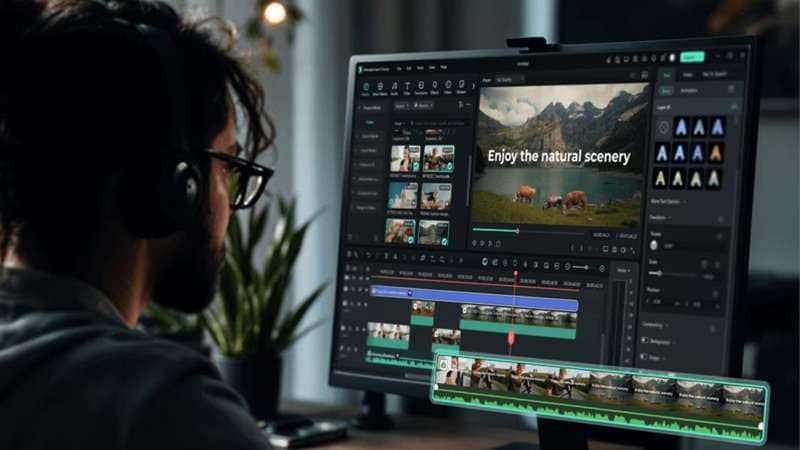
Here's a workflow that actually makes sense for you to try:
The result is a workflow where the heavy planning and busywork gets handled by an AI model that's genuinely good at organizing and reasoning through a project, while the actual creative editing stays in software built specifically for video.
 Secure Download
Conclusion
GPT-6 Astra represents a meaningful leap forward for AI integration. Its strongest results come from computer use, coding, scientific workflows, mathematics, and long-running tasks. While access delays and higher token costs present minor hurdles, the productivity gains across technical and creative fields are undeniable.
For creators specifically, the real win is combining what OpenAI GPT-6 Astra does well, which are planning, research, and organization, with tools built for the creative work itself. That's exactly the kind of pairing Filmora is built for, with AI Copilot and built-in access to leading video generation models like Veo 3.1 and Seedance sitting right on the timeline.
FAQs
-
Is Astra smarter than normal ChatGPT?
Yes. Astra uses advanced reasoning and reinforcement learning, allowing it to think through multi-step problems and use desktop applications directly, rather than just generating conversational text. -
What does the huge 1-million-token context mean?
It means Astra can "hold" roughly 1.05 million tokens, around 750,000-plus words, of conversation, documents, or code in its working memory at once. -
Is GPT-6 Astra safe to use with sensitive business data?
OpenAI says Astra is compatible with Zero Data Retention mode and that Enterprise admins have to manually turn it on for their workspace; it's off by default at launch, which suggests OpenAI is being deliberately cautious here.