- Enhance videos with 300+ stunning effects
- Auto crop and pan & zoom photos to fit the project ratio
- Multiple tracks to add photos, videos, music, titles and transitions
- Make creative videos with various speed controls
How to Use Android Phones in Watching VR or 360 Videos

Oct 14, 2026• Proven solutions
 TL;DR:
You can watch VR and 360-degree videos on your Android phone by using a viewer like Google Cardboard, or a DIY cardboard box with eye holes, and playing content through the YouTube app or local players like Kolor Eyes.
● VR videos provide stereoscopic 3D depth for added immersion, while 360 videos utilize the phone's gyroscope for navigation and often display with sharper clarity on low-cost viewers.
● To stream videos on YouTube, search for the #360Video channel, tap the Cardboard icon during playback to split the screen in two, and insert the device into your viewer.
● Select the highest available frame rate and resolution to avoid blurry artifacts that can cause visual nausea, and ensure any iOS devices paired with Cardboard are running iOS 9 or later.
Ask AI for a summary
 ChatGPT
 Perplexity
 Gemini
 Claude
 Grok
Grok
Quick answer: You can watch VR and 360-degree videos on an Android phone with a compatible app and, for split-screen viewing, a Google Cardboard-style viewer. For the clearest experience, use high-resolution videos, stable playback, and a device that supports gyroscope motion tracking. If you want to turn 360 footage into a standard video with a controlled viewing angle, Filmora's 360 Video Reframing tools can help you create a more focused, shareable result.
- 1. What Is the Difference Between VR and 360-Degree Videos?
- 2. How to Watch 360-Degree Videos on Android
- 3. How to Watch Local VR and 360 Videos on Android
- 4. How to Reframe 360 Videos with Filmora
- 5. Conclusion
- 6. FAQs
Part 1.What Is the Difference Between VR and 360-Degree Videos?
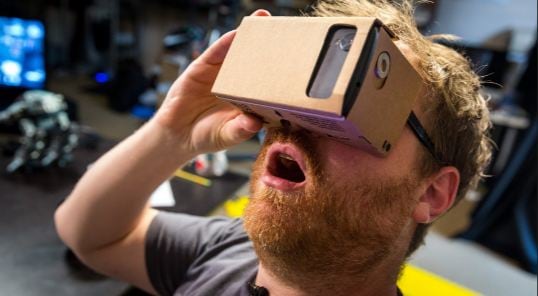
VR and 360-degree videos both create a more immersive viewing experience, but they are not exactly the same. A 360-degree video lets you look around a spherical scene, while a VR video can also use stereoscopic 3D to provide a separate perspective for the left and right eyes.
What are VR videos?
VR videos are often presented in stereoscopic 3D. The image for each eye is slightly different, which can create a stronger sense of depth. Nearby objects may appear closer, while distant objects appear farther away. A compatible VR viewer can make this effect feel more immersive when you place your Android phone in front of your eyes.
What are 360-degree videos?
360-degree videos allow you to look around the entire scene by moving your phone or dragging across the screen. Many Android phones use a gyroscope to detect movement, so you can explore the video from different directions. These videos can also be viewed with a Google Cardboard-style viewer.
| Feature | VR video | 360-degree video |
|---|---|---|
| Viewing experience | May include stereoscopic depth and separate left and right eye perspectives. | Lets you look around a 360-degree scene. |
| Typical device | VR viewer or headset with a compatible app. | Android phone, 360 player, or VR viewer. |
| Main benefit | Stronger sense of depth and presence. | Flexible exploration of the entire environment. |
Video quality also affects comfort. Low frame rates, blurry details, and unstable playback may make the image harder to follow and can cause discomfort for some viewers. When possible, choose the highest available resolution and frame rate, use a stable internet connection, and download a high-quality local copy for smoother playback.
Part 2. How to Watch 360-Degree Videos on Android
Google Cardboard provides an affordable way to view compatible VR and 360-degree videos. With the YouTube app on an Android phone, you can watch supported videos in regular screen mode or split-screen Cardboard mode.
Step-by-step instructions
- Assemble your Google Cardboard viewer or another compatible VR viewer.
- Open the YouTube app on your Android phone.
- Search for a 360-degree video, VR video, or a topic followed by "360 video".
- Choose a video that supports 360-degree playback.
- Start playback and look for the Cardboard icon. Some videos may not offer Cardboard mode.
- Tap the Cardboard icon to split the screen into two views.
- Place your Android phone inside the viewer and close it securely.
- Move your head or phone to look around the scene in different directions.
Tips for a better Android VR viewing experience
- Use a phone with a working gyroscope for motion-based viewing.
- Keep the screen clean and adjust the viewer lenses if the image looks blurry.
- Choose high-resolution videos to reduce visible pixelation.
- Use headphones when appropriate to improve spatial immersion.
- Stop watching if you feel eye strain, dizziness, or nausea.
Note:
Cardboard compatibility depends on the phone, viewer, app, and video format. Some features may also vary by Android version and device manufacturer.
Part 3. How to Watch Local VR and 360 Videos on Android
You can watch local VR or 360-degree video files on an Android phone by downloading a compatible file and opening it in a player that supports the correct format. Before downloading, check the video's resolution, aspect ratio, projection type, and audio format. A compatible 360 video player may provide options such as normal view, 360 view, or Cardboard view.
Steps to play a local 360 video
- Download a legal, high-quality VR or 360-degree video to your Android phone.
- Install a video player that supports the video's format and projection type.
- Open the file in the player and select the correct 360 or VR viewing mode.
- Rotate your phone to explore the scene, or enable Cardboard mode if available.
- Adjust the video quality and screen brightness for a more comfortable experience.
If a local video appears stretched, distorted, or incorrectly cropped, the player may not recognize the original 360 projection. Try another compatible player or convert the footage with a 360 video editor before playing it on your phone.
 Secure Download

Part 4. How to Reframe 360 Videos with Filmora
Watching a 360-degree video lets viewers choose where to look, but that freedom can make it difficult to guide attention in a short social video, tutorial, or highlight clip. Filmora's 360 Video Reframing feature provides a practical way to turn immersive 360 footage into a more focused viewing experience.
What is 360 Video Reframing?
360 Video Reframing is the process of selecting and controlling the visible area of spherical footage so that the final video emphasizes the subject, action, or location you want viewers to notice. Instead of asking viewers to search the entire scene, you can guide the perspective and create a standard video composition that is easier to watch on phones, computers, and social platforms.
When should you use Filmora 360 Video Reframing?
- When the main action moves around a large 360-degree scene.
- When you want to create a regular flat video from immersive footage.
- When you need to direct attention to a person, product, event, or landscape.
- When a social platform or video format does not support interactive 360 playback.
- When you want to create multiple clips from one 360 recording.
A 360-degree reframing workflow in Filmora
Filmora's 360 Video Reframing workflow helps you turn immersive spherical footage into a conventional flat video with a controlled viewpoint. You can import a supported 360-degree clip, adjust the camera view, apply motion presets, add keyframes, and export the final result for standard screens and social platforms.
Step 1. Create a project and import the 360-degree video
Launch Filmora, create a new project, and import your supported 360-degree video into Project Media. Drag the clip to the timeline. Filmora can recognize compatible spherical or equirectangular footage when the file includes the correct 360 metadata.
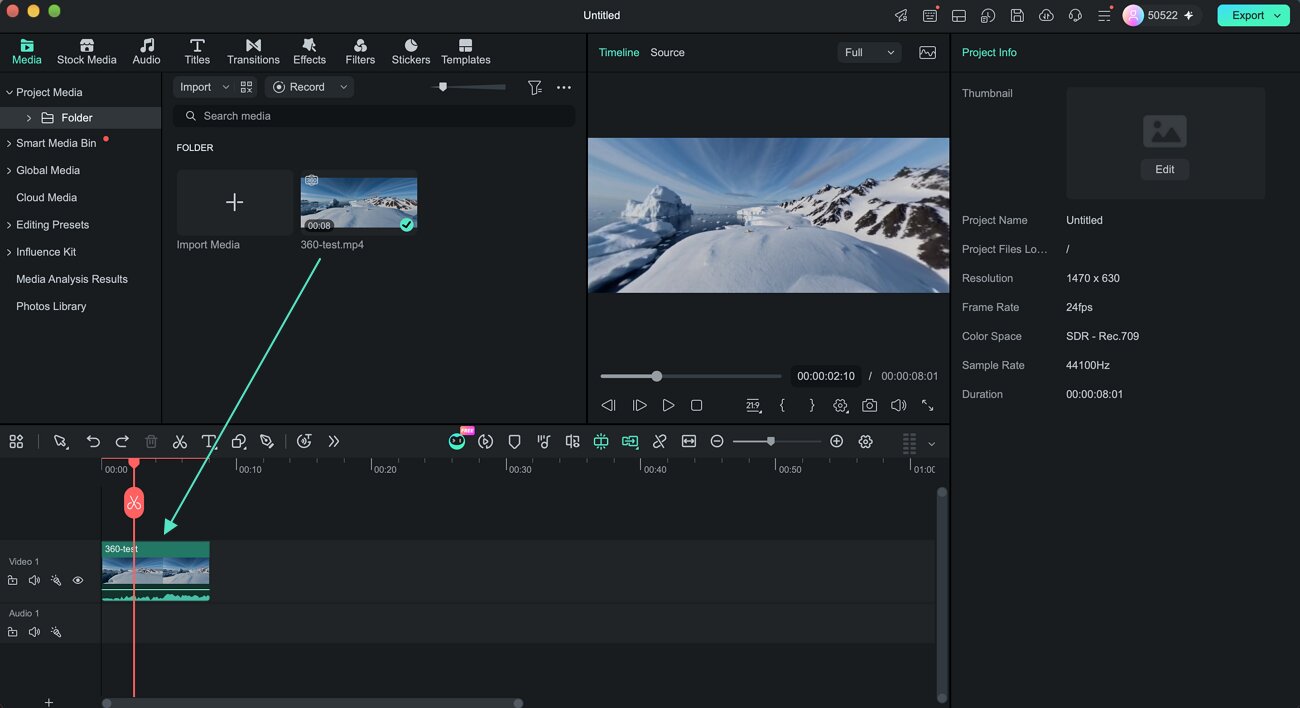
If your camera saves footage in a format that Filmora does not recognize, export or convert the file to a supported video format before importing it.
Step 2. Edit the 360-degree clip on the timeline
Once Filmora recognizes the footage as a 360-degree clip, you can edit it like a standard video. Trim unwanted sections, split the clip into segments, adjust playback speed, and apply video effects as needed.
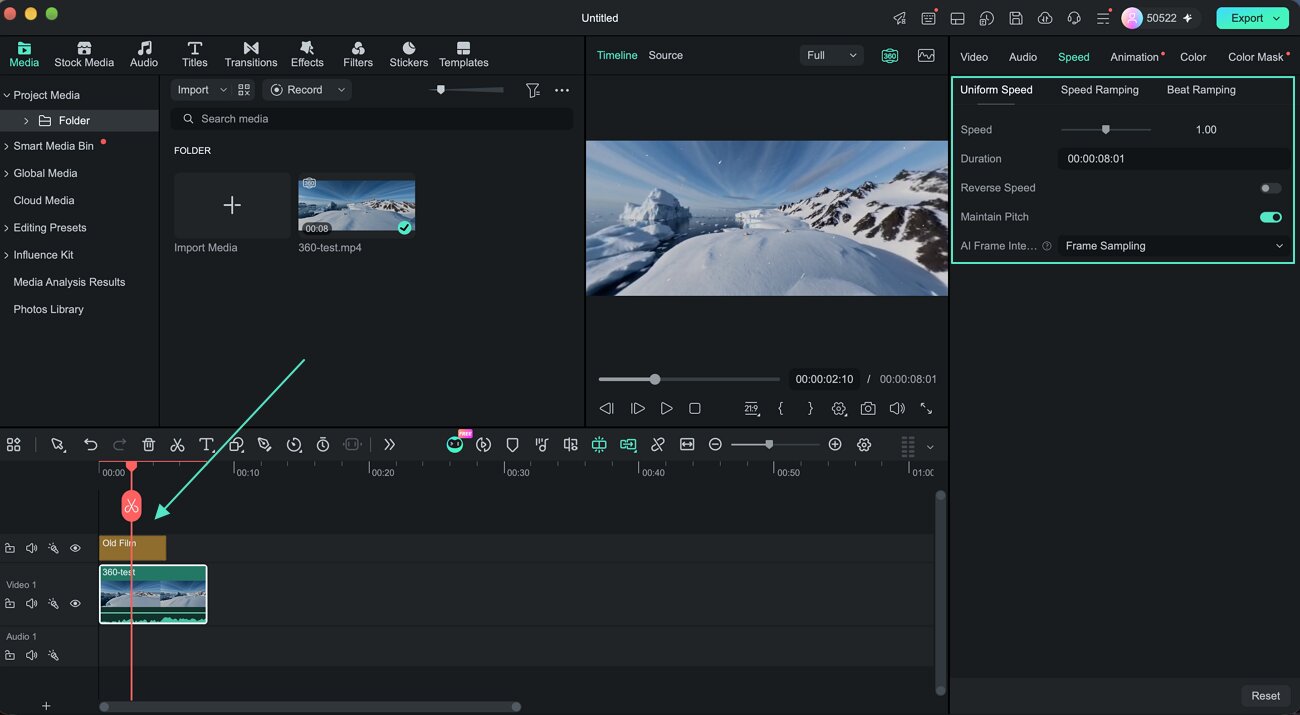
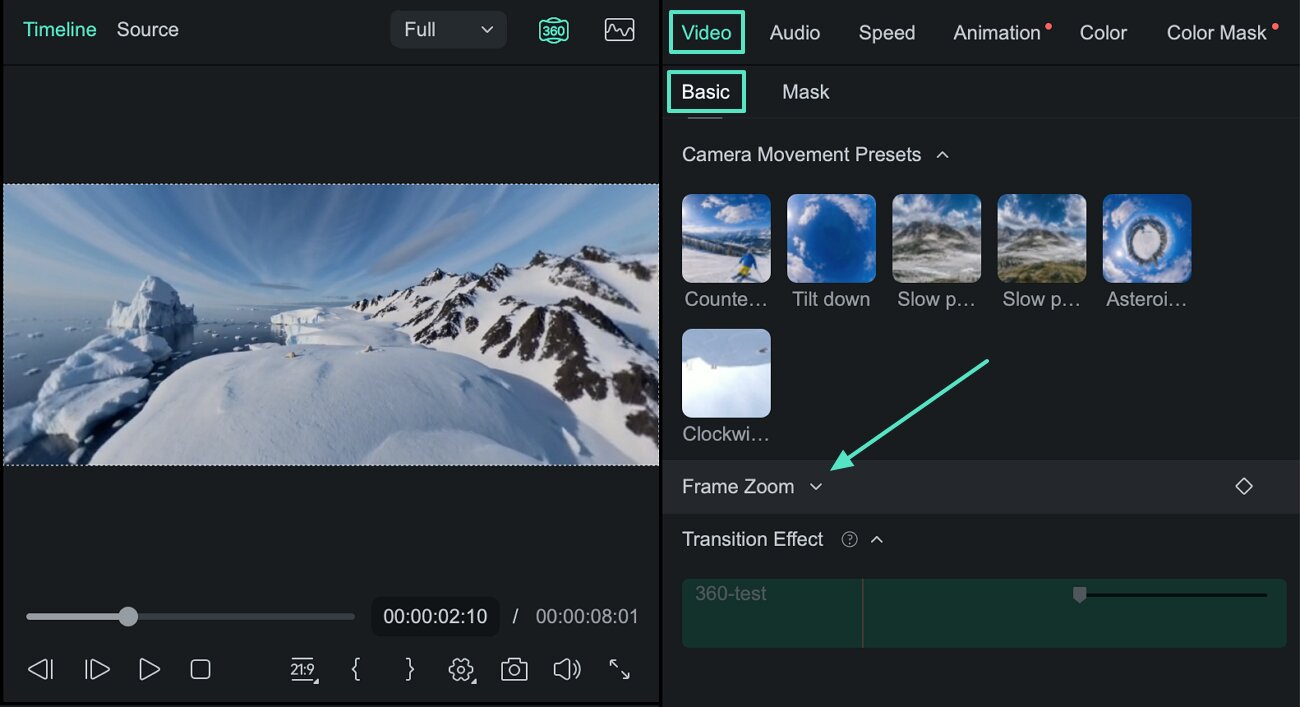
Step 3. Open Frame Zoom and adjust the initial view
Select the 360-degree clip on the timeline and open the Video section in the Property Panel. Go to Basic > Frame Zoom to reframe the spherical footage and decide which part of the scene appears in the final frame.
Step 4. Adjust the 360 camera view and projection mode
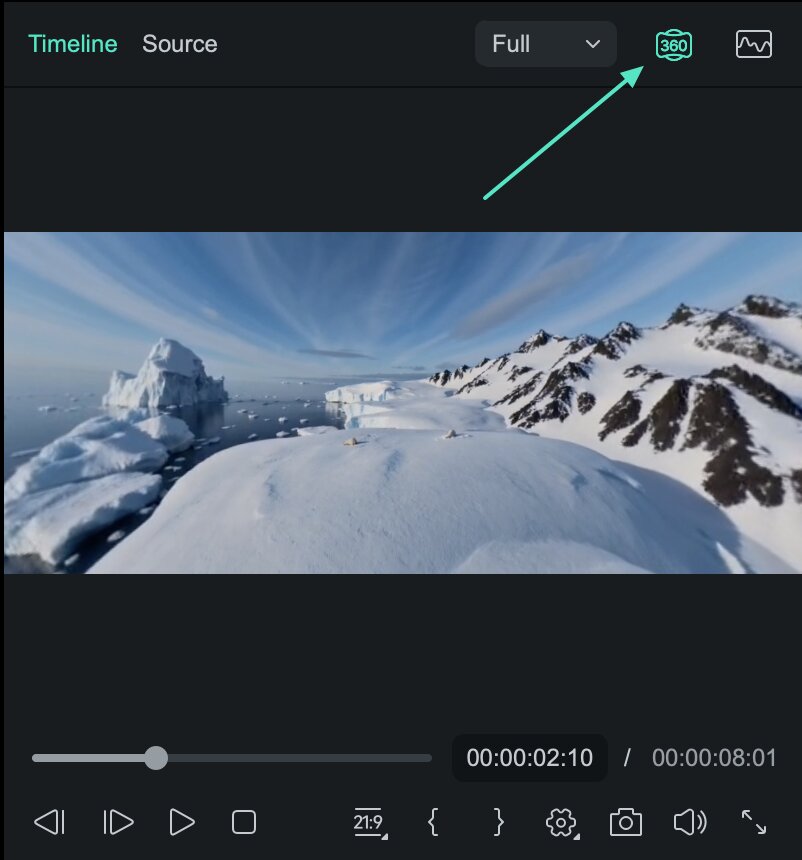
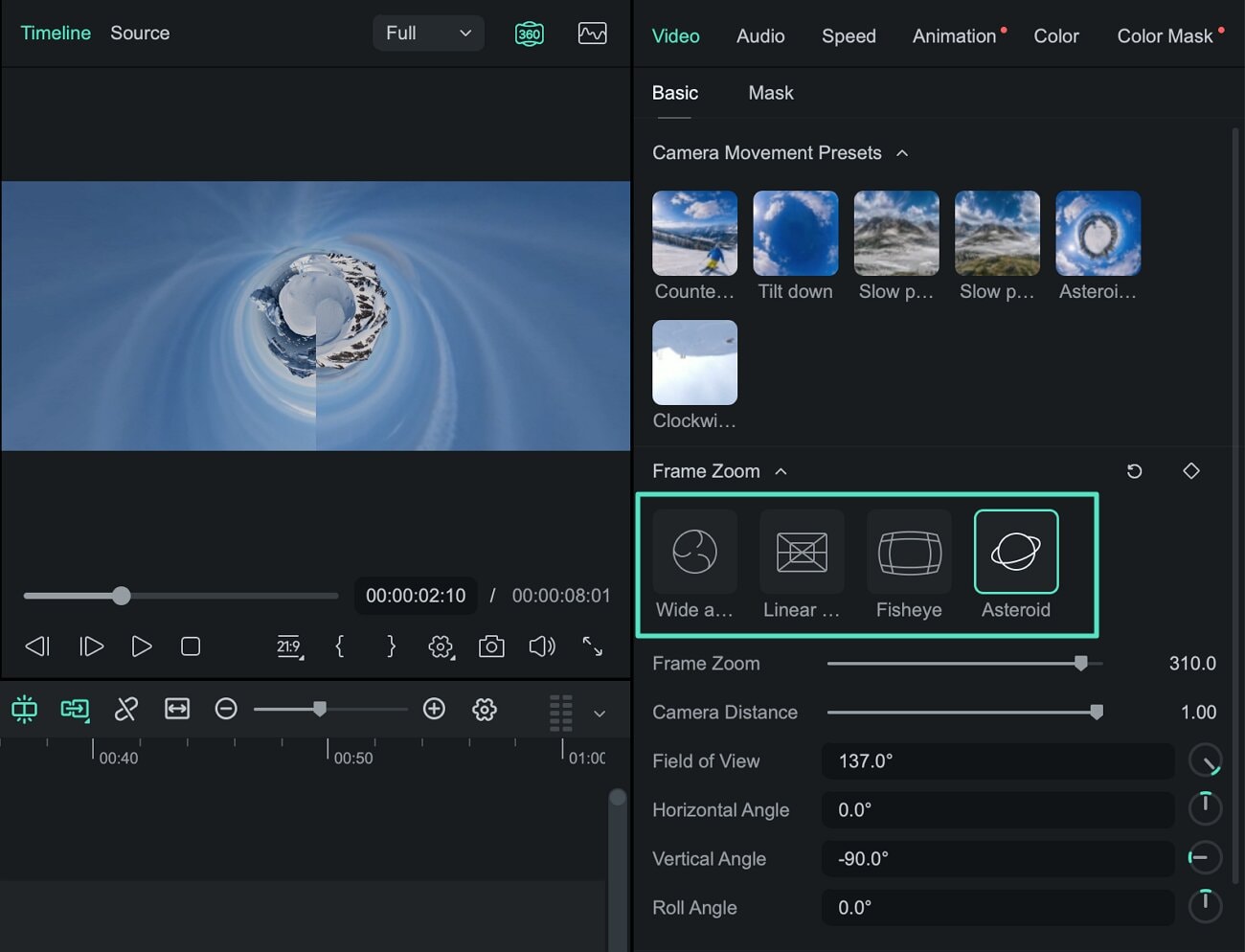
Use the available camera and panorama controls to set the perspective of the 360-degree footage. The 360 Panorama Monitor provides an interactive preview. Drag inside the player to look around the scene and position the virtual camera before making detailed adjustments.
You can also choose a suitable display or projection mode to control how the spherical scene appears in the output video.
Step 5. Apply motion presets or create controlled camera movement
Filmora provides motion presets that can help you create movement through the 360-degree scene. These presets are useful when you want the virtual camera to pan, rotate, or move toward a different area of the footage over time.
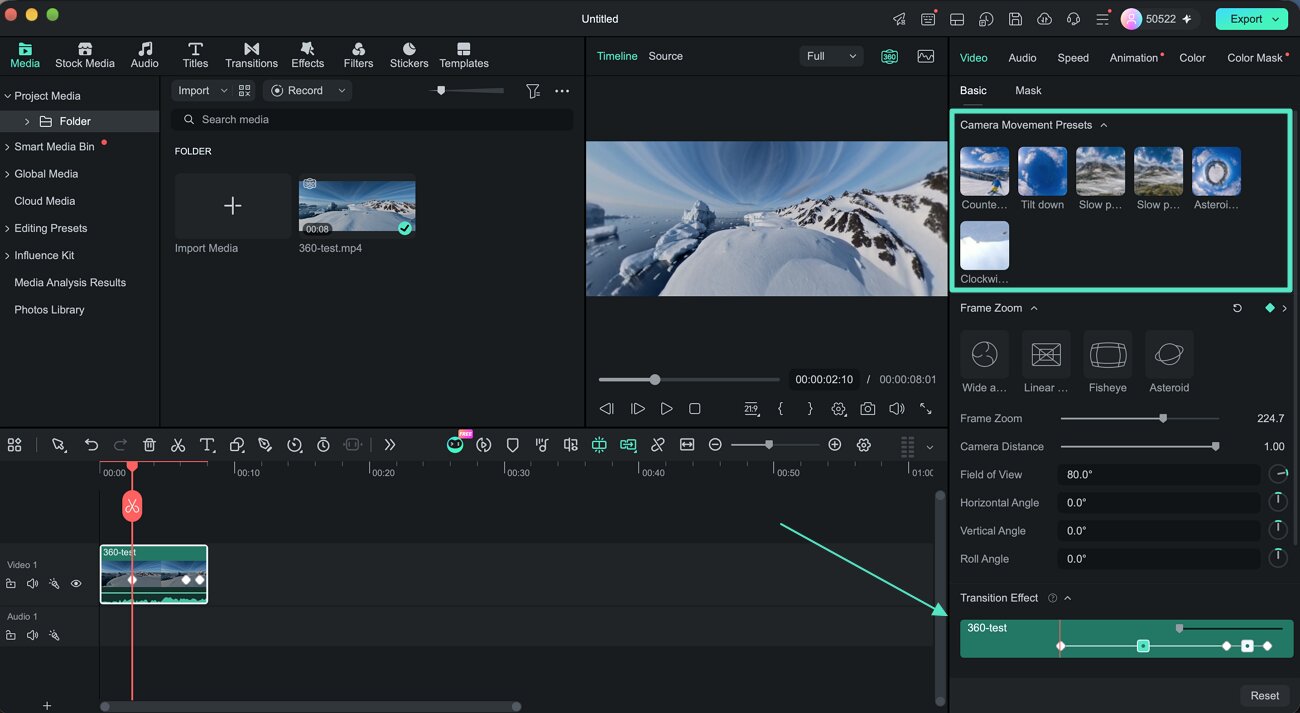
For more precise control, use keyframes with the supported panorama parameters. Set different values at separate points on the timeline, and Filmora will create the movement between those positions. This approach is useful for building controlled pans, zooms, rotations, and viewpoint changes.
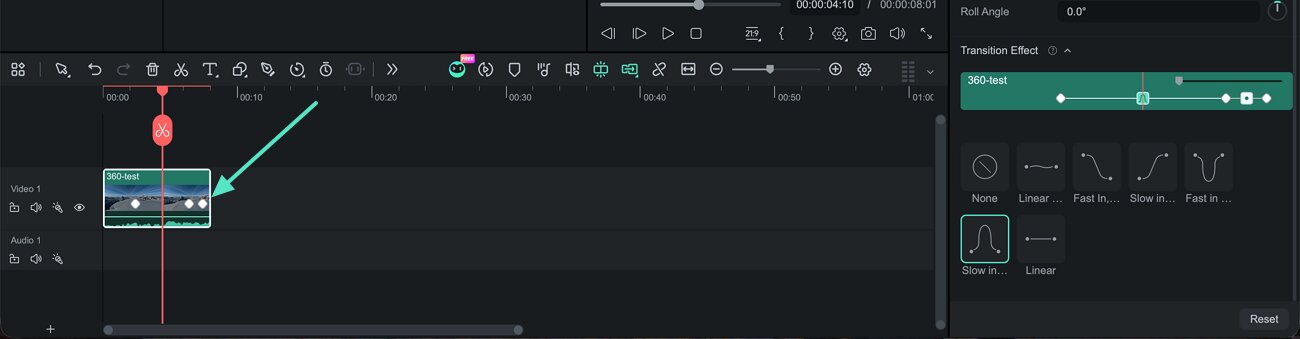
Step 6. Preview and export the reframed video
Play the sequence again and check the framing, projection mode, camera movement, keyframes, and timeline edits. When the result looks correct, select Export to render the finished video.
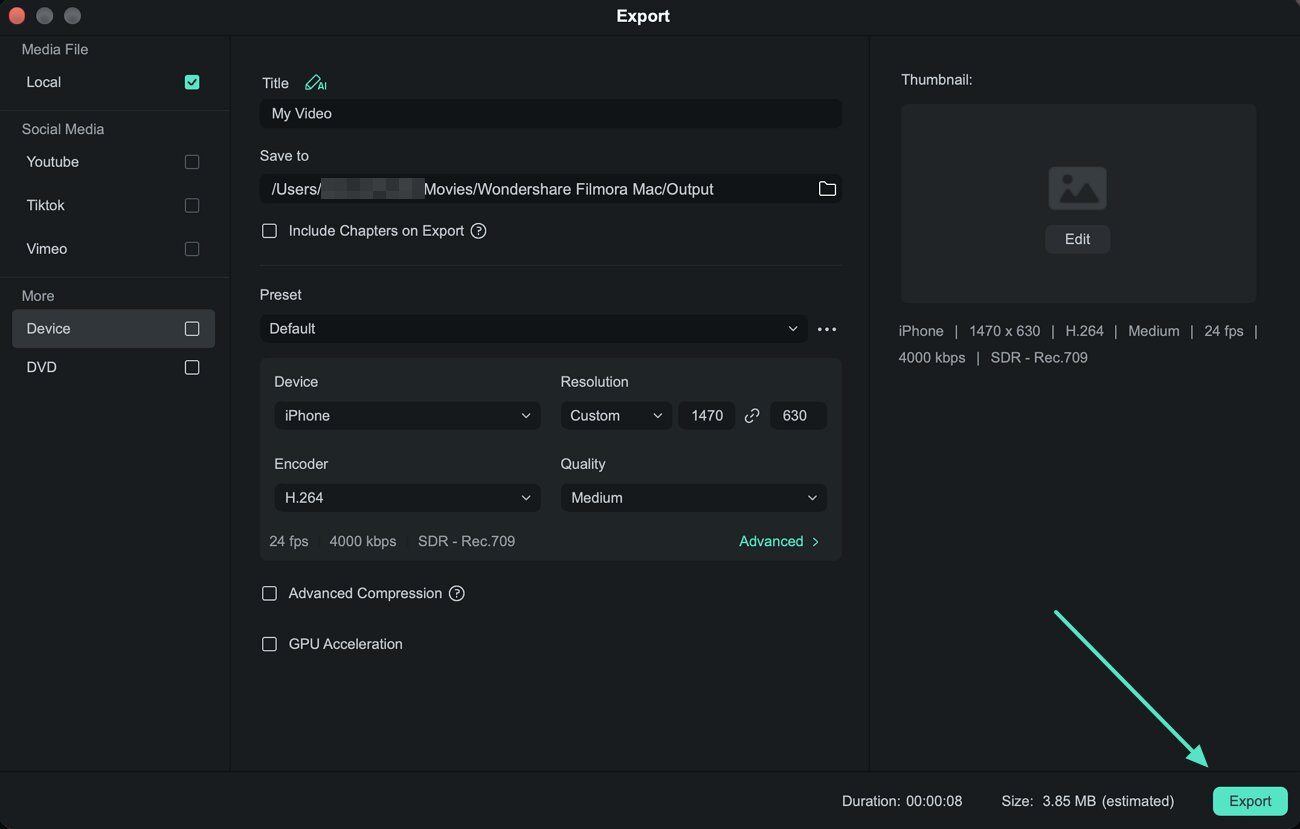
Conclusion
Watching VR and 360-degree videos on an Android phone is simple when you use the right app, video format, and viewer. You can stream compatible content from YouTube, use Google Cardboard for split-screen viewing, or play local files with a 360-compatible video player. For the best results, choose high-quality footage, confirm that your phone supports gyroscope motion tracking, and take breaks if you experience eye strain or discomfort.
If you create content instead of only watching it, Filmora 360 Video Reframing can help you select the most important perspective from 360 footage and produce a focused video for everyday screens and social media. This gives you the flexibility of immersive capture with the clarity of a traditional video.
FAQs
-
How can I watch VR videos on my phone without a headset?
You can watch many VR videos directly on your Android phone without a headset by opening them in YouTube or another compatible app. For a more immersive experience, use a low-cost Google Cardboard-style viewer. You can also create a simple DIY viewer, but make sure the phone is secure and the lenses are aligned correctly. -
How do I play VR videos on my Android phone?
Open the YouTube app or a compatible VR video player, search for a VR or 360-degree video, and start playback. If the video supports Cardboard mode, tap the Cardboard icon, place the phone inside the viewer, and move your head or phone to look around. -
Why does my 360 video look distorted on Android?
The video player may not support the original 360 projection, or the wrong viewing mode may be selected. Check whether the file is equirectangular or another supported format, switch to a compatible 360 player, and verify that the video is being viewed in 360 mode. -
Can I convert a 360 video into a normal video?
Yes. You can use Filmora's 360 Video Reframing tools to choose a viewing angle, guide the perspective, and create a more conventional video composition from 360-degree footage. -
What video quality is best for watching VR videos on a phone?
Use the highest resolution and frame rate that your phone, app, and internet connection can handle smoothly. Higher-quality footage usually looks clearer in a VR viewer, while low-resolution or low-frame-rate video may appear blurry and feel less comfortable to watch.
This article introduces a full guide to VR fans of watching VR or 360 videos through android phones.
by Benjamin Arango Oct 14, 2026 07:00 AM
What kind of phone support Gear VR? In this article we offer a full list of phones that is compatible with Gear VR.
by Benjamin Arango Oct 14, 2026 07:00 AM
Benjamin Arango
staff Editor