



 100% Security Verified | No Subscription Required | No Malware


 ChatGPT
 Perplexity
 Gemini
 Claude
 Grok
Grok
Automatic caption generators use speech recognition to turn spoken dialogue into synchronized text, reducing the time required to subtitle a video manually. They are useful for social videos, tutorials, interviews, podcasts, educational content, and other videos where viewers need to follow spoken content clearly.
Modern auto caption generators can do more than transcribe speech. Depending on the tool, you may also be able to translate captions, identify speakers, highlight spoken words, apply animated caption styles, and export subtitle files.
This guide compares several popular online automatic caption generators and shows how to generate and customize captions with Wondershare Filmora.
In this article
Part 1. 4 Automatic Caption Generators for Video
When choosing an automatic caption generator, look beyond basic speech-to-text. Language support, caption editing, translation, styling, subtitle export, and broader video editing capabilities can all affect how efficiently you can complete a project.
1. Kapwing
Kapwing is an online video editor with automatic subtitle generation. It can transcribe spoken dialogue, create synchronized captions, and provide tools for editing and styling the generated text.
Because captioning is integrated into Kapwing's broader online editor, you can continue adjusting the video, audio, layout, and other elements without moving the project to another tool.


- Automatically generate subtitles from spoken video or audio.
- Edit caption text and timing after transcription.
- Translate subtitles for multilingual content.
- Customize caption fonts, colors, positioning, and styles.
- Edit captions within a broader browser-based video editing workflow.
2. SubtitleBee
SubtitleBee is an online AI subtitle generator designed primarily for automatic transcription, translation, and subtitle styling. It can be useful when caption creation is the main task and you don't need a complete desktop video editing environment.

- Automatically transcribe spoken audio into subtitles.
- Supports multilingual subtitle workflows.
- Customize caption colors, fonts, positioning, and visual styles.
- Translate subtitles for videos intended for different audiences.
- Designed around a browser-based captioning workflow.
3. VEED
VEED combines automatic caption generation with browser-based video editing. After generating subtitles from speech, you can review the transcription, customize the caption appearance, and continue editing the video online.

- Automatically create subtitles from spoken content.
- Edit generated captions directly in the browser.
- Customize subtitle fonts, colors, styles, and positioning.
- Supports multilingual caption and translation workflows.
- Export subtitle files in supported formats such as SRT and VTT.
4. Zubtitle
Zubtitle is an online video tool focused on automatically captioning and preparing videos for social platforms. After uploading a video, the platform can transcribe its spoken audio and provide tools for editing and styling the resulting captions.

- Automatically generate captions after uploading a video.
- Edit caption text and visual appearance.
- Add text motion and other available caption styles.
- Use templates designed for common social video formats.
- Add other social-video elements such as headlines and progress bars.
Part 2. How to Generate Automatic Captions Online
Most online auto caption generators follow a similar workflow: upload a video, select the spoken language, generate subtitles, review the transcription, customize the captions, and export the result.
Here are two examples using the online tools covered above.
How to Generate Automatic Captions with Zubtitle
Step 1. Upload Your Video
Open Zubtitle and start a new video project. Select the original language of the video and upload the file you want to caption.

Step 2. Generate, Review, and Style the Captions
After the video is processed, Zubtitle generates captions from the spoken audio. Review the transcription and use the available editing controls to adjust the text and caption appearance. When you're finished, export the captioned video.

How to Generate Automatic Captions with Kapwing
Step 1. Upload Your Video and Open Subtitles
Open Kapwing's editor and upload your video. From the editing interface, select the subtitle tool and choose the automatic subtitle option.

Step 2. Select the Language and Generate Captions
Select the language spoken in your video and configure any available translation settings if needed. Generate the subtitles, then review the transcription and customize the caption appearance before exporting.

Part 3. Generate and Customize Auto Captions with Wondershare Filmora
Online caption generators are convenient when you want to caption a video quickly in a browser. For projects that also require more extensive timeline editing, Wondershare Filmora Auto Caption combines automatic transcription, caption styling, animation, translation, and video editing in the same desktop workflow.
Filmora currently provides two related approaches:
- Speech to Text: Generate synchronized, editable captions from spoken audio.
- Dynamic Captions: Create animated captions that can visually follow or emphasize spoken words.
Generate, edit, animate, and translate captions in one video editing workflow
Filmora Auto Caption: Key Features
- Up to 99% Accuracy for Clear Audio: Filmora reports transcription accuracy of up to 99% when the source audio is clear.
- 50+ Source Languages: Automatically transcribe spoken content in more than 50 supported languages.
- Smart Sentence Segmentation: Automatically divide recognized speech into readable caption segments.
- Multi-Speaker Detection: Identify different speakers and add speaker labels to captions.
- Active Words: Highlight words individually as they are spoken.
- Key Words: Let AI identify important words and phrases for visual emphasis.
- 100+ Caption Templates: Apply different visual treatments to generated captions.
- 120+ Animations: Add animated caption effects for creator-focused videos.
- Caption Translation: Translate generated captions into 30+ languages and create a synchronized secondary subtitle track.
Note: Filmora's published accuracy figure applies to clear audio and should not be interpreted as a guaranteed result for every recording. Background noise, overlapping speech, accents, names, and specialized terminology can affect any automatic transcription system.
How to Generate Automatic Captions with Filmora
Method 1. Generate Standard Captions with Speech to Text
01of 03Open Speech to Text
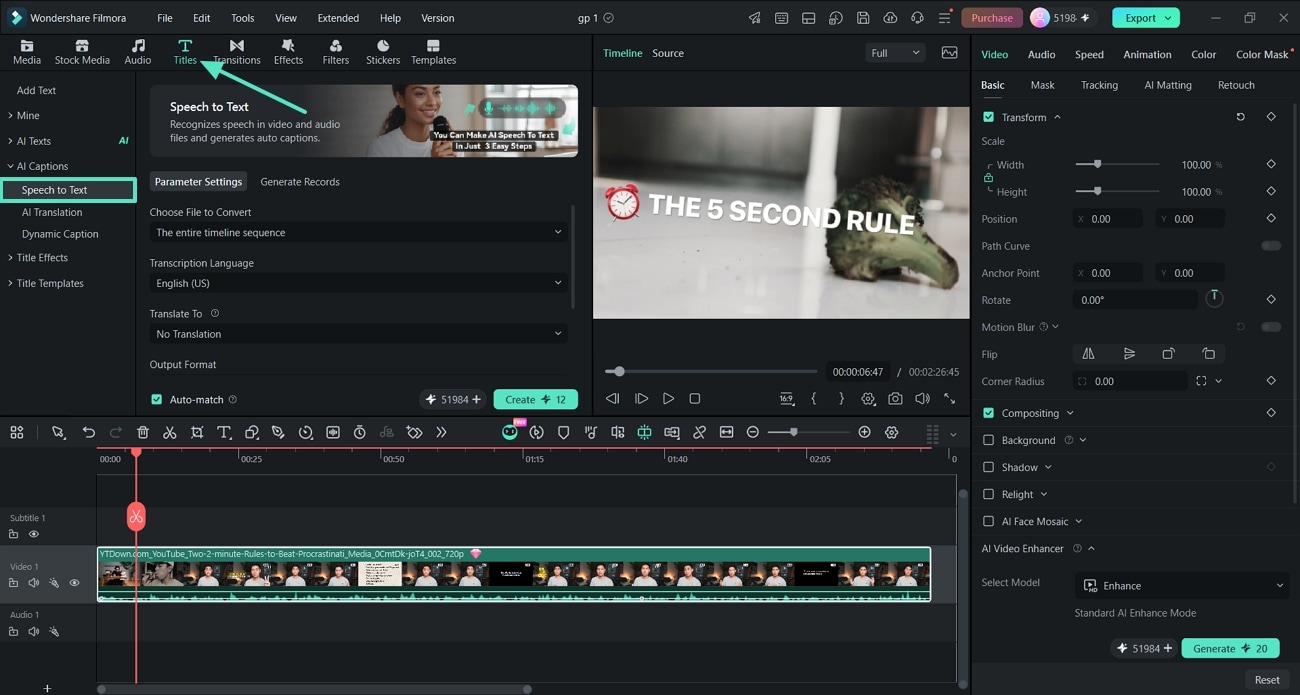
Import your video into Filmora and add it to the timeline. Open Titles → AI Captions → Speech to Text. Choose the spoken language and configure the available transcription settings, then start generating the captions.
02of 03Review and Edit the Generated Captions
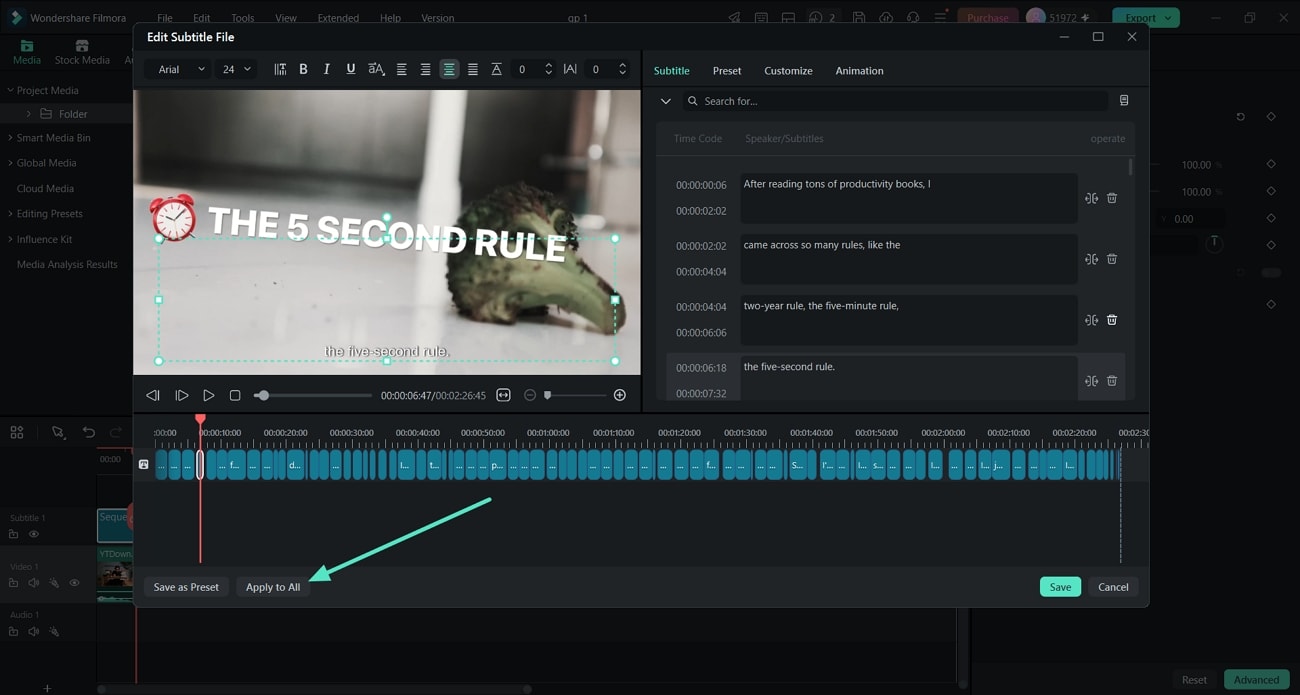
After transcription, Filmora adds the generated captions to your project. Review the text and correct any names, terminology, punctuation, or transcription errors before finalizing the video.
03of 03Customize the Caption Style
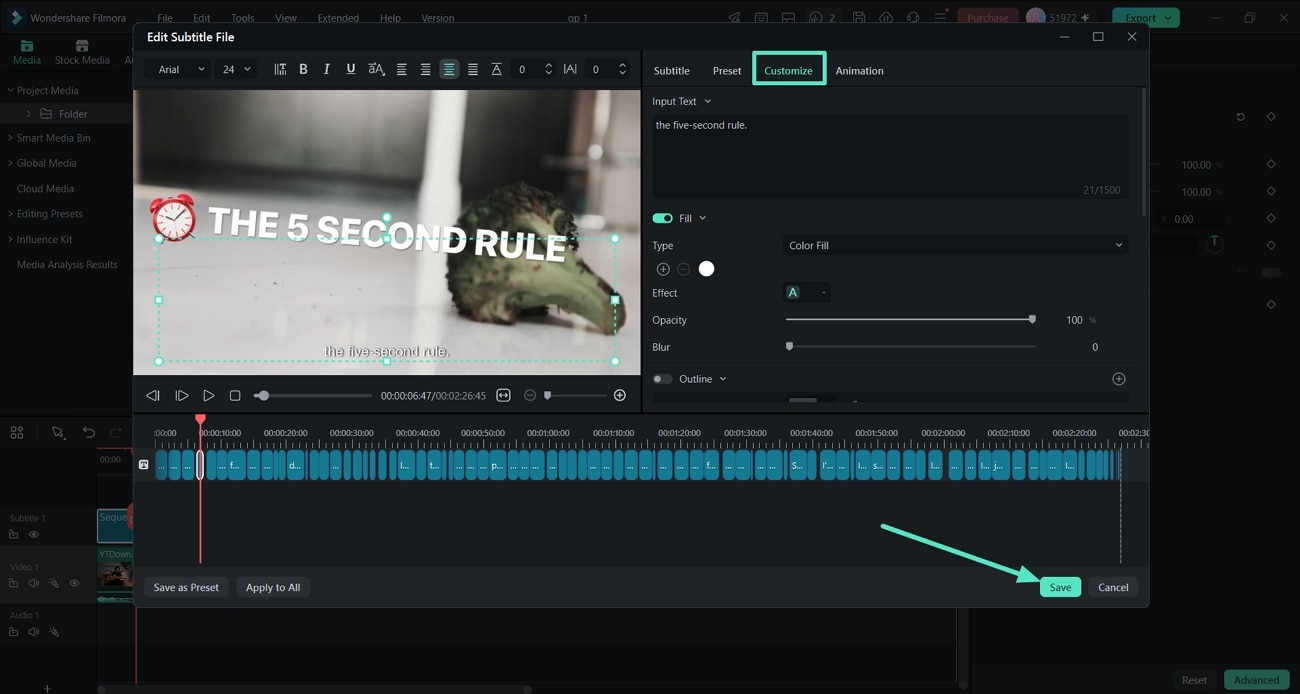
Use Filmora's text and caption controls to customize the visual appearance. Depending on your design, you can adjust elements such as the font, color, outline, shadow, opacity, and available caption templates.
Method 2. Create Animated Dynamic Captions
If you want captions that visually react to spoken dialogue, Filmora also provides Dynamic Captions.
01of 03Open Dynamic Captions
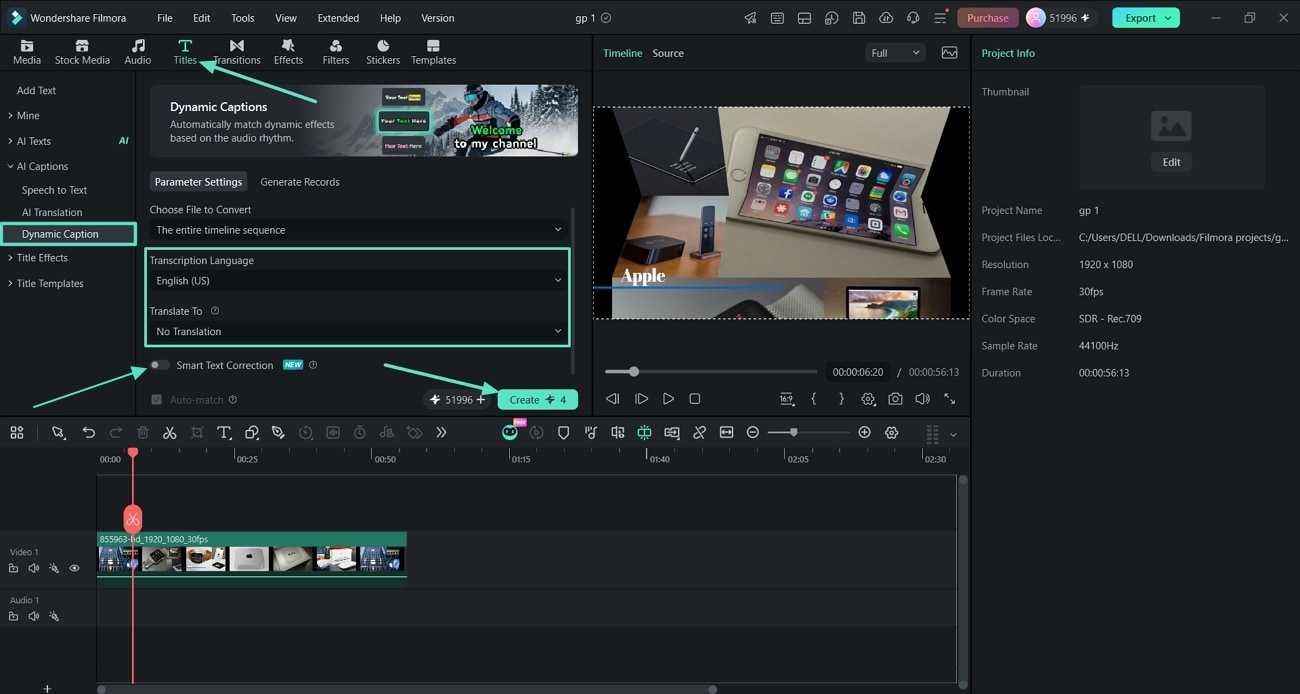
Go to Titles → AI Captions → Dynamic Captions. Choose the source language and configure the available caption or translation settings before generating the text.
02of 03Choose Active Words or Key Words
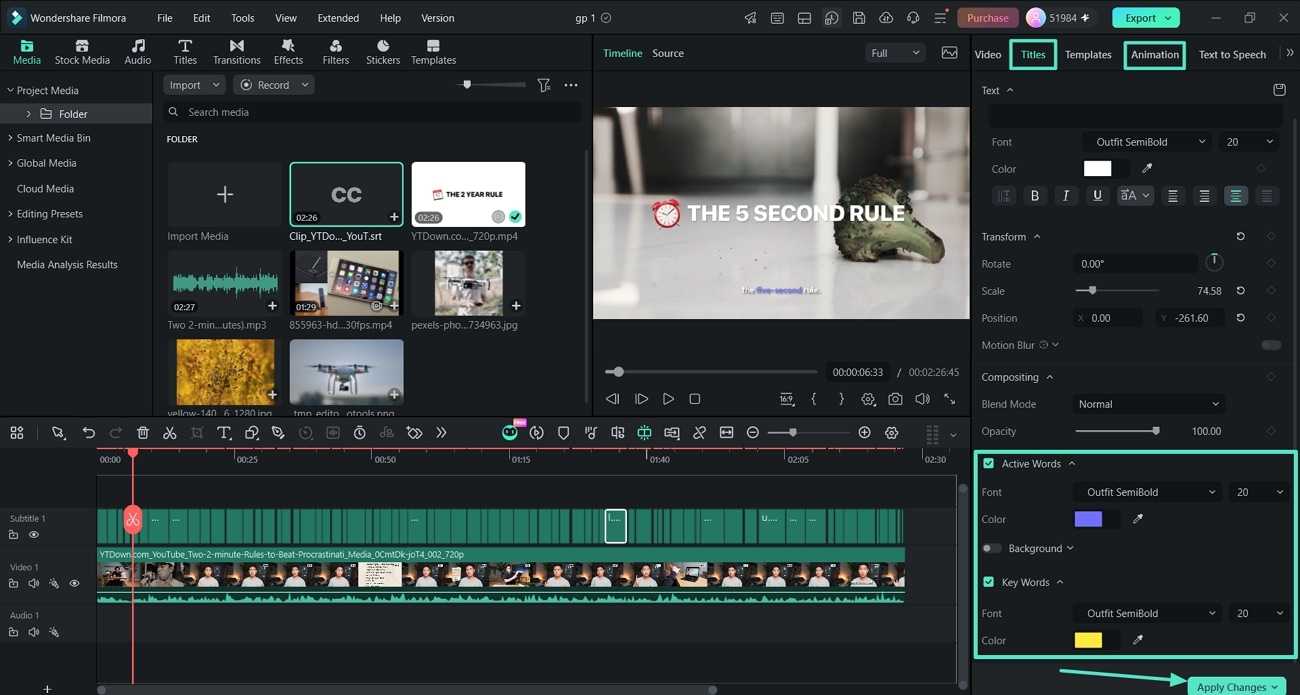
After generating Dynamic Captions, choose how Filmora should emphasize the dialogue. Active Words highlights words as they are spoken, while Key Words identifies important words or phrases for emphasis. You can also select an available caption animation.
03of 03Emphasize Important Spoken Words
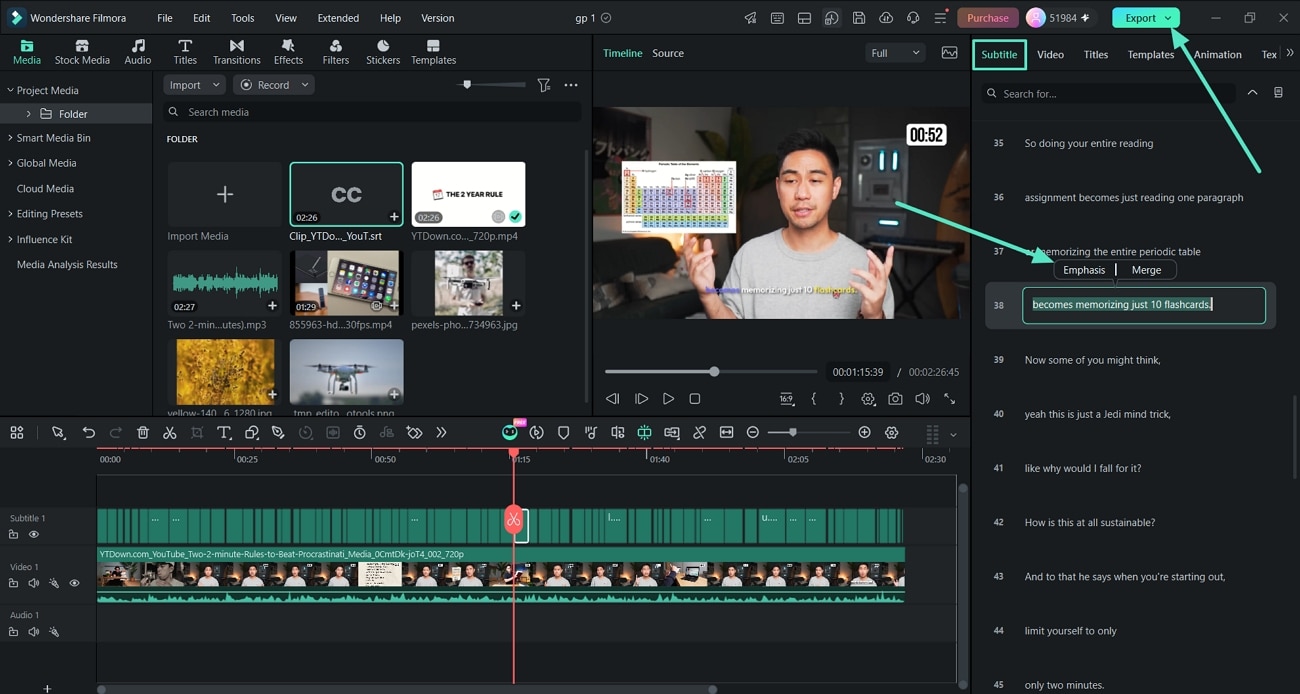
When individual words need additional visual emphasis, select the relevant caption text and apply the Emphasis control. This can help important phrases stand out without manually creating separate text layers.
For the complete workflow, see the Filmora Auto Caption Guide for Windows or the Filmora Auto Caption Guide for Mac.
Part 4. How to Choose an Auto Caption Generator
The right automatic caption generator for video depends on what you plan to do after transcription. Consider the following factors before choosing a tool:
| What to Check | Why It Matters |
|---|---|
| Speech-to-Text | Determines whether the tool can automatically convert spoken dialogue into synchronized captions. |
| Language Support | Important when you create videos in multiple spoken languages. |
| Caption Translation | Useful when the same video needs subtitles for audiences who speak different languages. |
| Manual Editing | Automatic transcription should always be reviewable so names and specialized terms can be corrected. |
| Caption Styling | Fonts, colors, positioning, templates, and animation affect readability and visual consistency. |
| Speaker Detection | Useful for interviews, podcasts, meetings, and other multi-speaker videos. |
| Subtitle Export | SRT, VTT, and similar formats can be useful when captions need to be uploaded separately to another platform. |
| Video Editing | A full editor can reduce tool switching when captions are only one part of a larger video workflow. |
Browser-based tools such as Kapwing, SubtitleBee, VEED, and Zubtitle can be convenient for quick online captioning. A desktop editor such as Filmora may be more appropriate when caption generation needs to stay connected to a larger editing workflow involving timeline editing, audio, effects, caption animation, or multilingual versions.
Frequently Asked Questions
What is an automatic caption generator?
An automatic caption generator uses speech recognition to convert spoken audio into synchronized text. Depending on the tool, you may also be able to edit, style, translate, animate, or export the generated subtitles.
Can AI automatically generate captions from a video?
Yes. AI-powered speech-to-text tools can analyze spoken dialogue and automatically generate synchronized captions. The result should still be reviewed because audio quality, accents, names, background noise, and specialized terminology can affect transcription.
Can Filmora automatically generate captions?
Yes. Filmora provides Speech to Text for automatically generating editable captions and Dynamic Captions for animated, speech-synchronized text. Filmora's current Auto Caption feature supports more than 50 source languages.
How accurate are Filmora's automatic captions?
Filmora reports up to 99% transcription accuracy for clear audio. Actual results vary with recording quality, background noise, accents, overlapping speakers, names, and specialized terminology, so generated captions should still be reviewed.
Can Filmora translate automatically generated captions?
Yes. Filmora Desktop can translate generated captions into more than 30 supported languages and create a synchronized translated subtitle track.
What is the difference between Speech to Text and Dynamic Captions in Filmora?
Speech to Text focuses on converting spoken audio into synchronized editable captions. Dynamic Captions adds a more visual workflow, including Active Words for word-by-word highlighting and Key Words for emphasizing important words and phrases.
Do automatic captions need manual editing?
Usually, yes. Even high-quality speech recognition can misinterpret names, accents, technical terms, or speech recorded in noisy environments. Reviewing the transcription before publishing helps improve accuracy and readability.
Conclusion
An automatic caption generator can significantly reduce the time required to subtitle video content. Online tools such as Kapwing, SubtitleBee, VEED, and Zubtitle provide browser-based options for generating and styling captions without installing a desktop editor.
For projects that require captioning alongside more extensive video editing, Wondershare Filmora Auto Caption combines Speech to Text, Dynamic Captions, 50+ source languages, caption translation into 30+ languages, multi-speaker detection, Active Words, Key Words, templates, and caption animations within the same editing environment.
Whichever tool you choose, review automatically generated captions before publishing to make sure the wording, timing, speaker information, and terminology match the original audio.