- • How to Edit Videos for YouTube
- 2.1 How to Use YouTube Video Editor
- 2.2 How to Use YouTube Enhancements Tool
- 2.3 How to Edit Title, Description, and Tags
- 2.4 How to Edit Audio on YouTube
- 2.5 How to Add Logo or Watermark
- 2.6 How to Edit the Video Length on YouTube
- 2.7 How to Edit Uploaded YouTube Videos
- 2.8 How to Remove YouTube Videos
- 2.9 How to Add Music to YouTube Video
- 2.10 How to Edit Channel Description
- 2.11 How To Add Custom Thumbnails
- 2.12 How to Blur Faces or Objects
- 2.13 How to remove black bars from existing videos
- 2.14 What is YouTube Creative Commons
- 2.15 Standard YouTube License vs. Creative Commons
- 2.16 How to Add YouTube Annotations and Cards
- 2.17 How to Change the Privacy Setting
- 2.18 How to Add Subtitles and Closed Captions
How to Change the Privacy Setting on Your YouTube Videos
Oct 11, 2026• Proven solutions
 TL;DR:
YouTube visibility settings dictate video access: choose Public for broad discovery, Unlisted to share hidden videos via a URL, or Private to restrict viewing to explicitly invited Google accounts.
● Unlisted videos are not password-protected, meaning anyone who receives the URL can forward it to unapproved viewers who can watch the content without signing in.
● Private video recipients cannot gain access with just a link; they must be manually added to an approved list in YouTube Studio and actively sign in to the corresponding email address.
● Keep new uploads set to Private by default to safely review the processed video, thumbnail, and copyright checks before changing the status to Public or Unlisted.
Ask AI for a summary
 ChatGPT
 Perplexity
 Gemini
 Claude
 Grok
Grok
YouTube privacy settings help you decide who can watch your videos and where those videos can appear. Before you publish a video, it is worth choosing the right visibility level for your audience, because the setting affects search results, recommendations, channel pages, playlists, and link sharing. YouTube offers three main options: Public, Unlisted, and Private. This guide explains the differences between them, shows you how to change a video's visibility, and provides practical tips for sharing videos safely.
The best setting depends on your goal. Choose Public when you want to reach the widest possible audience. Choose Unlisted when you want to share a video with anyone who has the link, but do not want it to appear in public discovery features. Choose Private when access should be limited to specific Google accounts. You can change the setting later, so you can keep a new upload private while reviewing it and publish it when the video is ready.
- Public vs. Unlisted vs. Private
- How to Change YouTube Privacy Settings
- How to Share Private Videos
- Privacy Tips and Common Questions
Want to make your YouTube videos more engaging before you upload them? Wondershare Filmora is an easy-to-use video editor for beginners and experienced creators. You can trim clips, add captions, adjust audio, and export a polished video in a few steps.
 Secure Download

Public vs. Unlisted vs. Private
Each visibility option controls how people can find and watch your video. The choice does not change the quality of the upload, but it does change the video's distribution and access rules. Understanding these differences will help you avoid sharing a draft publicly or assuming that an unlisted video is fully private.
Public videos
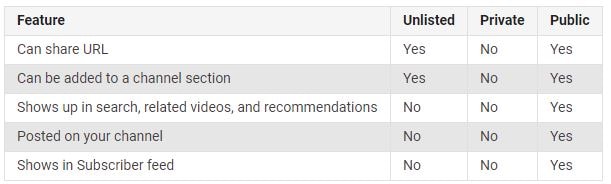
A public video can be watched by anyone on YouTube. It may appear in YouTube search results, recommendations, related videos, subscriber feeds, playlists, and your channel's Videos tab. Public videos are the right choice for tutorials, product reviews, music videos, educational content, and other videos that are ready for a broad audience.
Public visibility can help a video reach more viewers, but it also means that other people may share the link, embed the video on a website, or discuss it on social media. Check the title, thumbnail, description, captions, and comments before publishing. If the video contains personal information, client material, or unfinished work, use another setting until you are ready.
Unlisted videos
An unlisted video can be watched by anyone who has the link. It generally does not appear in YouTube search results, recommendations, subscriber feeds, or the public Videos tab on your channel. This makes Unlisted useful for sending a preview to a small group, collecting feedback on a rough edit, sharing a private event recording, or placing a video inside a members-only page on another website.
Unlisted does not mean password protected. Anyone who receives the link can forward it to someone else, and the recipient can watch the video without being added to an approved list. Treat an unlisted URL as shareable information. If the content must be limited to named viewers, use Private instead.
Private videos
A private video can be watched only by you and the Google accounts that you explicitly invite. The video does not appear in public search results, recommendations, your public channel page, or regular public playlists. A person who receives the URL cannot watch the video unless their account has permission.
Private is the best option for personal archives, confidential client reviews, internal training, family footage, and videos that are still being prepared. Viewers must sign in to the invited Google account, so confirm that you have entered the correct email address. If a viewer reports that the video is unavailable, ask them to check which account is active in their browser or YouTube app.
For more details, see the official YouTube privacy settings guide. YouTube may update its interface, but the three visibility levels and their core access rules remain the same.
How to Change YouTube Privacy Settings
You can choose a visibility setting while uploading a video or change it later in YouTube Studio. The exact labels may look slightly different on desktop and mobile, but the workflow is similar. Before saving, review the selected setting carefully, especially when the upload contains personal, copyrighted, or unreleased material.
Method 1: Choose a setting during upload
Start an upload in YouTube Studio and complete the video details, such as the title, description, thumbnail, audience selection, and subtitles. In the Visibility step, choose Public, Unlisted, or Private. Public publishes the video for everyone, Unlisted makes it available through the link, and Private restricts access to approved accounts. Select Save or Publish to apply the setting when YouTube finishes processing the upload.
For a new video, Private is a useful default while you check the final edit. You can watch the processed version, verify the audio and captions, and confirm that the thumbnail appears correctly before changing the video to Public or Unlisted.
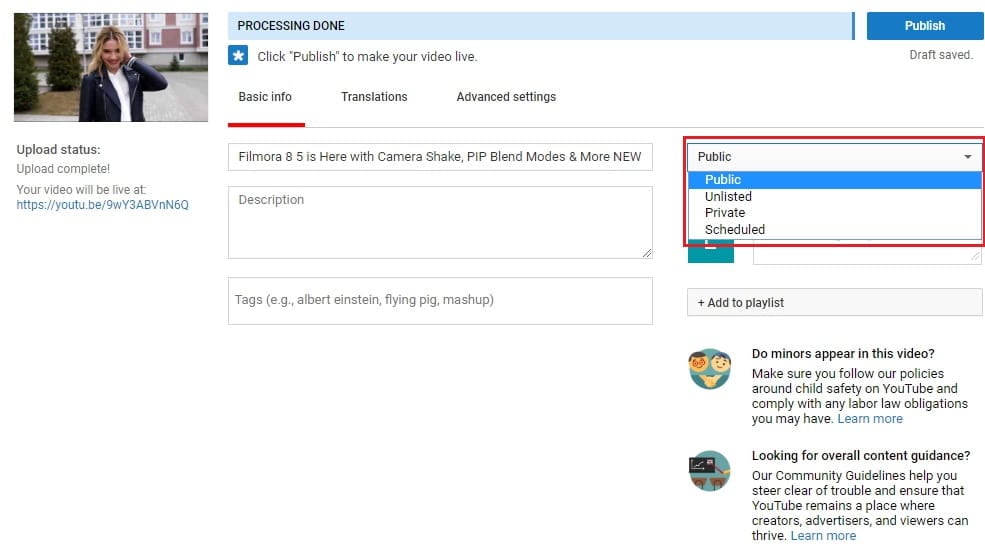
Method 2: Change an existing video's visibility
To update a video that is already uploaded, open YouTube Studio and select Content. Find the video, open its details, and locate the Visibility section. Choose the new setting, then save the change. On some versions of the interface, visibility is represented by familiar icons: a globe for Public, a link for Unlisted, and a lock for Private.
Changing a video from Public to Unlisted or Private removes it from public discovery areas, but people who already received the old link may still have access if the new setting allows it. Changing a video from Private to Public can make it discoverable immediately, so check the title, description, comments, and copyright status first.

On the video details page, look below the thumbnail and select the current visibility value to open the menu. Choose your preferred privacy level and save the update. If the new setting does not appear right away, refresh YouTube Studio and confirm that the change was saved. Account permissions, scheduled publishing, age restrictions, or copyright checks can also affect what viewers see.
How to Share Private Videos
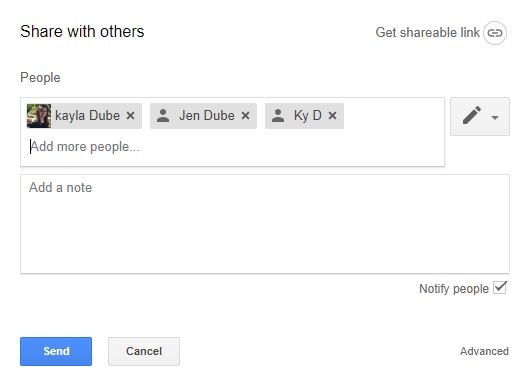
If a video is set to Private, you can invite specific viewers from the video's details page. Open the Visibility section, select Private, and use the sharing option to enter the email addresses connected to the viewers' Google accounts. You can choose whether YouTube should send an email notification. After you save the invitations, each viewer must sign in to the invited account to watch the video.
Use the exact account address that the viewer will use on YouTube. A work address and a personal Gmail address may be treated as different accounts, even when they belong to the same person. If you need to remove access later, return to the private sharing panel and delete the viewer from the approved list.
Private sharing is different from sending a link in a group chat. The link alone does not grant permission. If a viewer cannot open the video, ask them to sign in, switch to the invited account, and open the link again. You can also verify that the video is still set to Private and that the invitation was saved successfully.
Privacy Tips and Common Questions
1. Is an Unlisted video completely private?
No. Anyone with the URL can watch it and share the URL with another person. Use Private when you need account-level access control.
2. Can a Private video be embedded on a website?
Private videos are not intended for unrestricted embedding. Viewers still need permission and must be signed in to an approved account.
3. Can I change a video from Unlisted to Public later?
Yes. Open the video in YouTube Studio, change Visibility to Public, and save. The video may then appear in search, recommendations, subscriber feeds, and your channel page.
4. What should I use for client review?
Unlisted is convenient when the client can safely receive and protect a link. Private is safer when only named accounts should have access, but it requires the client to sign in with an approved Google account.
5. What should I check before publishing?
Review the audience setting, personal information, licensed music, captions, end screens, cards, thumbnail, and comments. Also confirm that the visibility menu shows the setting you intended.
When a video contains sensitive material, avoid posting the URL in a public comment, public document, or open social post. Keep a record of who received an unlisted link, and remove private access when a project is complete. These simple habits reduce accidental sharing without making your workflow difficult.
Conclusion
YouTube's Public, Unlisted, and Private settings give you flexible control over your audience. Public is designed for discovery, Unlisted is designed for link-based sharing, and Private is designed for restricted access. Choose the setting that matches the sensitivity of your content, review the audience before you publish, and update the setting whenever your sharing needs change.
With the right privacy setting and a polished edit, you can share videos confidently while keeping drafts, client work, and personal recordings under control.
Today, we're going to show you the differences between cards and annotations, and how to add them in YouTube videos.
by Richard Bennett Oct 12, 2026 16:59 PM
Richard Bennett
staff Editor