




 ChatGPT
 Perplexity
 Gemini
 Claude
 Grok
Grok
Captions have become an essential part of short-form video. On TikTok, Instagram Reels, YouTube Shorts, and other social platforms, viewers may watch with the sound off, while captions help make spoken content easier to follow and more accessible.
CapCut provides both manual text tools and Auto Captions for creators who want to add subtitles quickly. This guide explains how to add captions in CapCut, how its automatic caption workflow works, and how Filmora can help when you need more control over automatic transcription, animated captions, word highlighting, and subtitle styling.
In this article
Part 1: Why Add Captions to Videos?
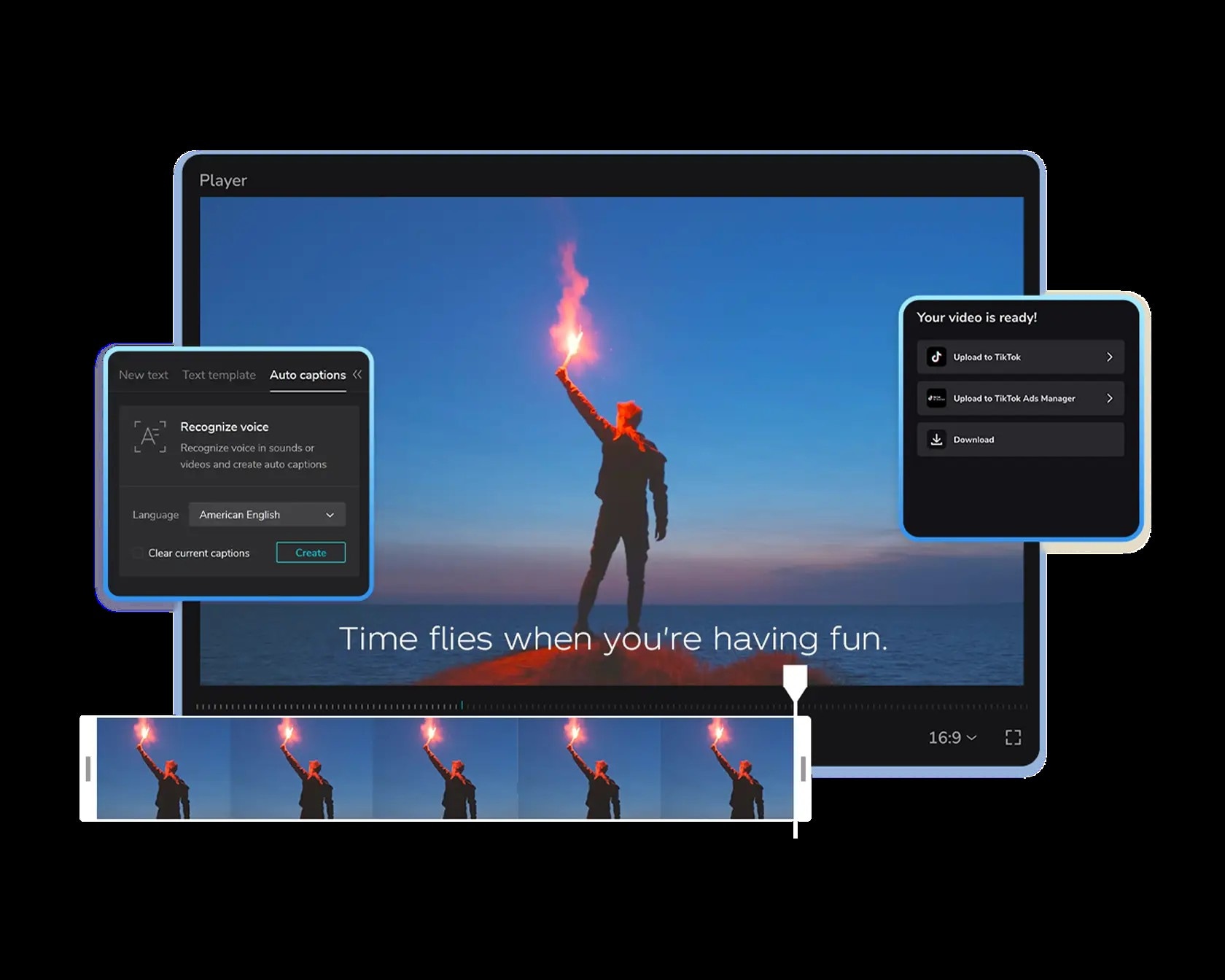
Captions display spoken dialogue as on-screen text. They can help viewers understand videos without sound, improve accessibility for people who are deaf or hard of hearing, and make dialogue easier to follow when speech is fast or difficult to hear.
Make Videos Easier to Follow Without Sound
Social videos are often watched in environments where viewers cannot or do not want to turn on the audio. Adding readable captions lets the message remain understandable even when the video is muted.
Improve Accessibility
Captions make spoken information available as text, helping viewers who are deaf or hard of hearing as well as people who may have difficulty understanding the spoken language or accent.
Keep Attention on Spoken Content
For Shorts, Reels, TikTok videos, tutorials, interviews, and talking-head content, well-timed captions can visually reinforce important words and help viewers follow the dialogue.
Part 2: How to Add Captions in CapCut Manually
Manual captions give you direct control over every line of text. This method can work well for short clips, punchlines, hooks, or videos where only selected phrases need to appear on screen.
Step 1: Create a Project and Import Your Video
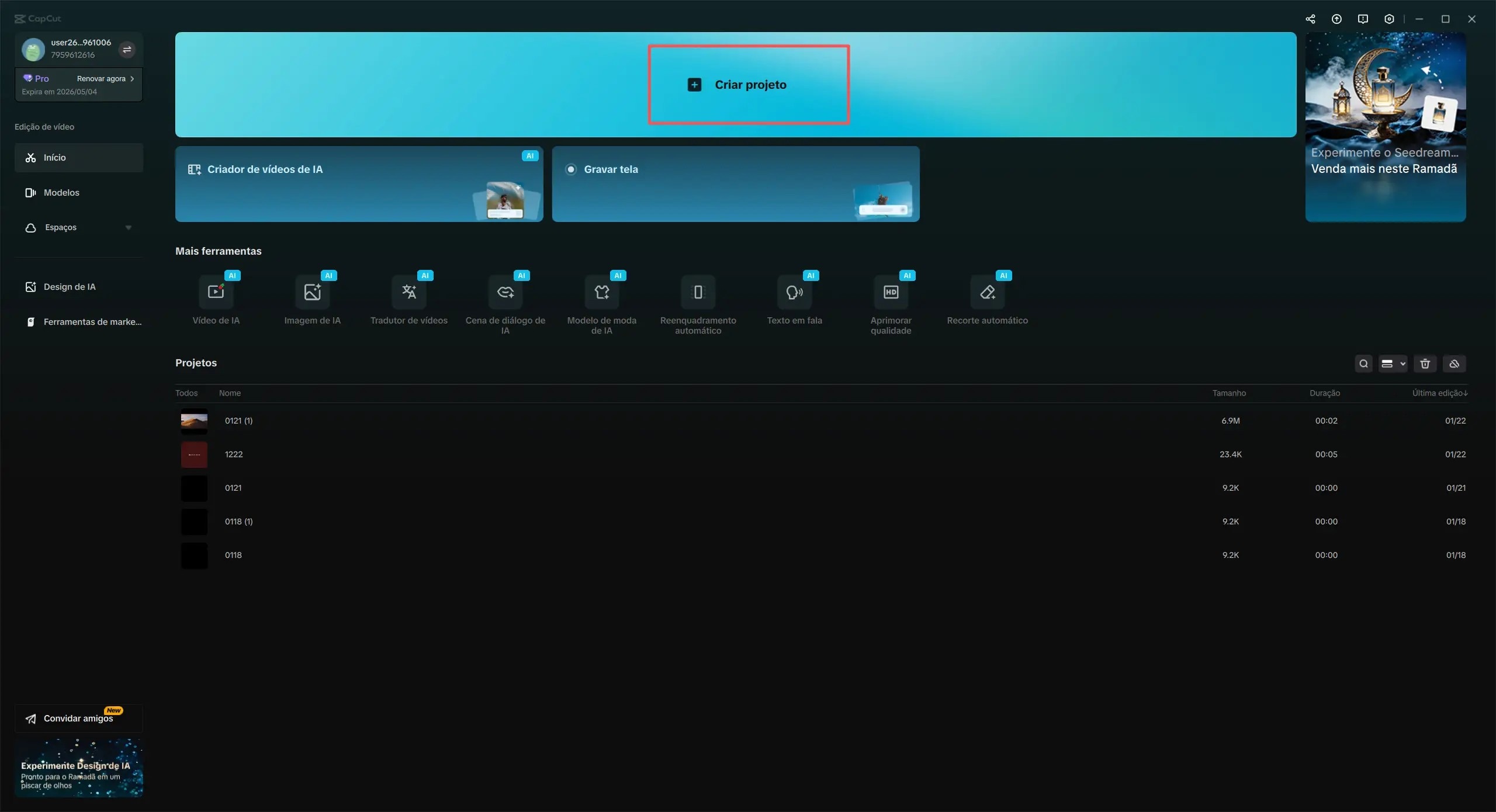
Open CapCut and create a new project. Import your video and add it to the editing timeline.
Step 2: Add a Text Layer
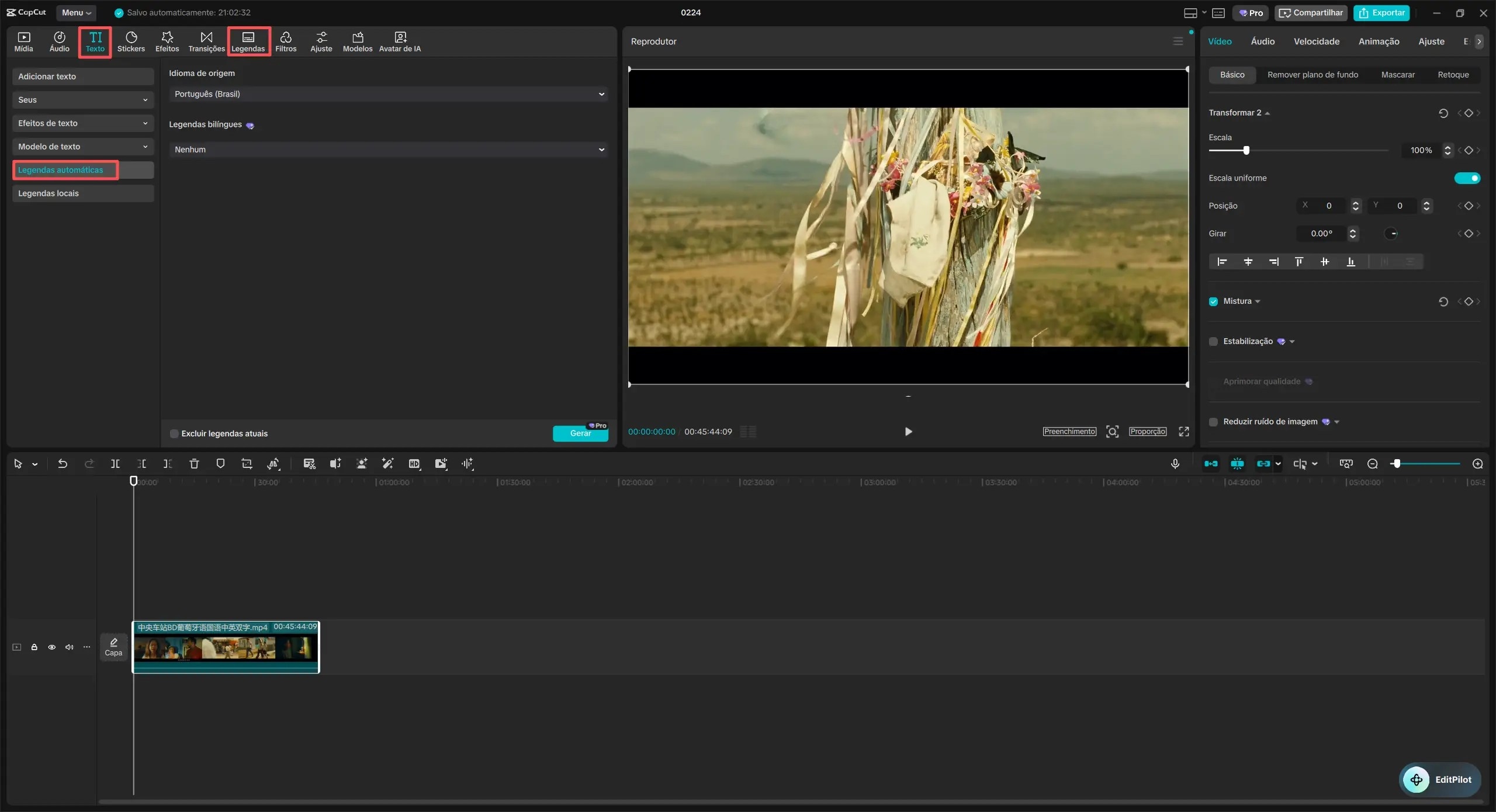
Open the Text menu and choose Add Text. Enter the words you want to display and position the text in the video preview.
Step 3: Adjust the Caption Timing and Style
Adjust the duration of each text element on the timeline so that it matches the spoken dialogue. Then customize the font, size, color, position, and other available text settings.
- Tip: Keep each caption concise enough to read comfortably while the corresponding dialogue is being spoken.
Part 3: How to Add Auto Captions in CapCut
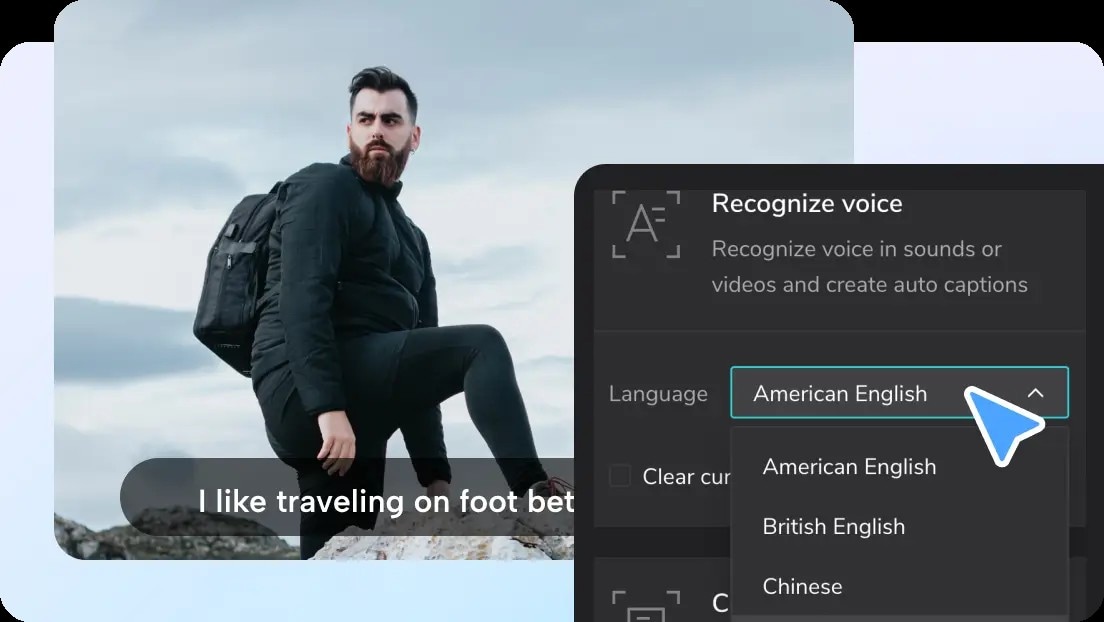
For dialogue-heavy videos such as vlogs, interviews, tutorials, and talking-head content, manually typing every subtitle can be time-consuming. CapCut's Auto Captions feature uses speech-to-text technology to generate captions from spoken audio automatically.
Generate Auto Captions in CapCut
- Open Auto Captions: Select the available Auto Captions option in CapCut's text or caption tools.
- Select the audio source: Choose the video or audio content you want CapCut to transcribe.
- Choose the language: Select the spoken language when required and start automatic caption generation.
- Review the transcript: Check the generated captions and correct recognition, punctuation, or timing errors.
- Customize the captions: Adjust the available text style and positioning before exporting the video.
Why Should You Review AI-Generated Captions?
Automatic speech recognition can save considerable transcription time, but no caption generator is error-free. Background noise, overlapping speakers, accents, names, technical terminology, and unclear recordings can affect the generated transcript.
Always review automatically generated captions before publishing, especially when accuracy is important.
Part 4: Common Caption Problems and How to Avoid Them
Whether you create captions manually or generate them with AI, several issues can affect readability and accuracy.
- Transcription errors: Names, specialist terminology, accents, or unclear dialogue may be recognized incorrectly.
- Poor synchronization: Captions that appear too early or too late can make dialogue difficult to follow.
- Inconsistent styling: Different fonts, sizes, or colors across caption segments can make the video look unpolished.
- Overly long captions: Too much text on screen at once can make captions difficult to read.
- Unsafe positioning: Captions placed too close to the edges can be covered by platform controls, usernames, buttons, or other interface elements.
A good caption workflow should therefore combine automatic transcription with easy text correction, consistent styling, readable positioning, and flexible visual controls.
Part 5: Create Auto and Dynamic Captions with Filmora
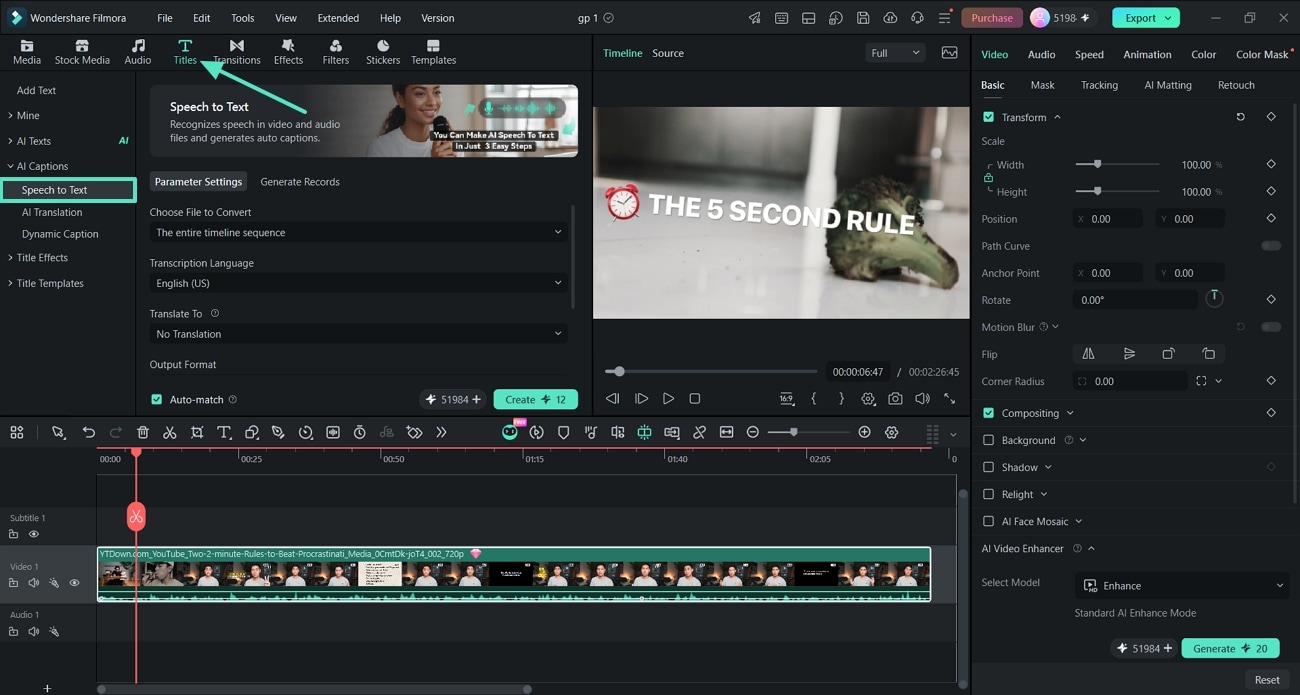
If you want to generate captions while keeping the entire workflow inside a desktop video editor, Filmora Auto Caption combines speech-to-text transcription with caption editing and styling.
Filmora provides two useful workflows: Speech to Text for generating editable subtitles and Dynamic Captions for creating animated captions that can visually emphasize spoken words.
According to Filmora, Auto Caption can reach up to 99% transcription accuracy with clear audio. It supports transcription in 50+ source languages and caption translation into 30+ languages.
What Can You Do with Filmora Auto Caption?
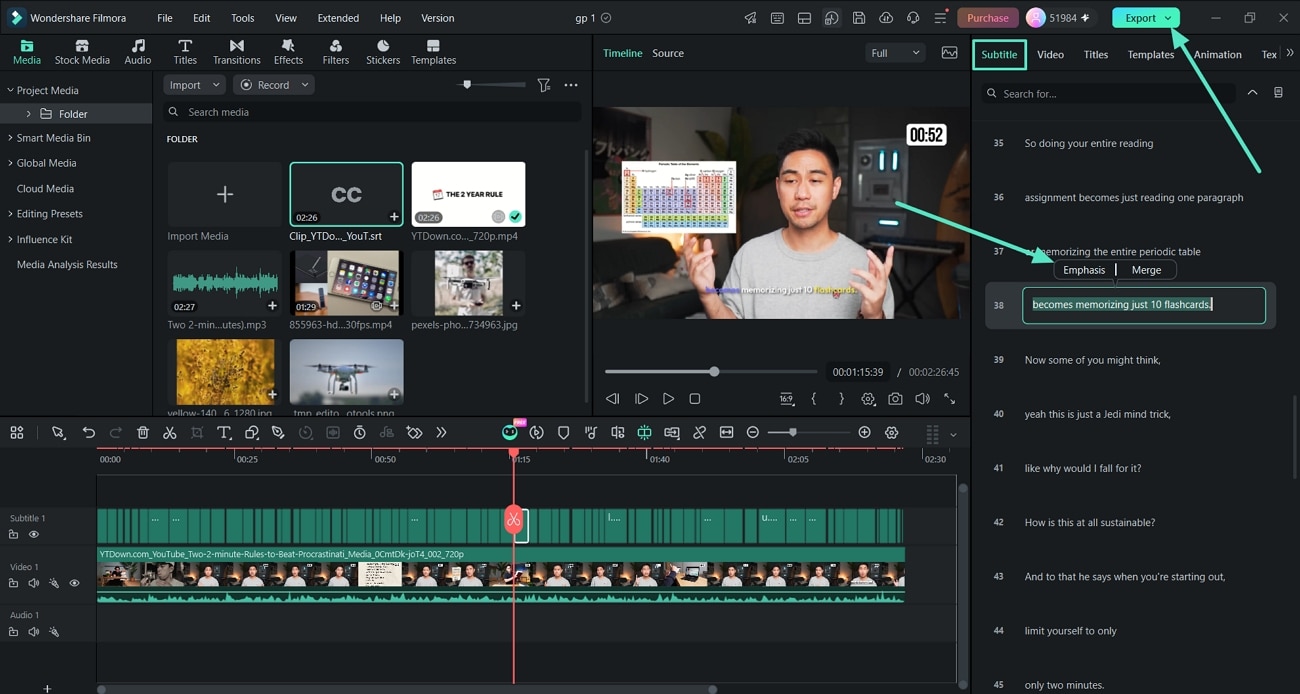
- Generate subtitles automatically: Convert spoken dialogue into synchronized captions with speech-to-text.
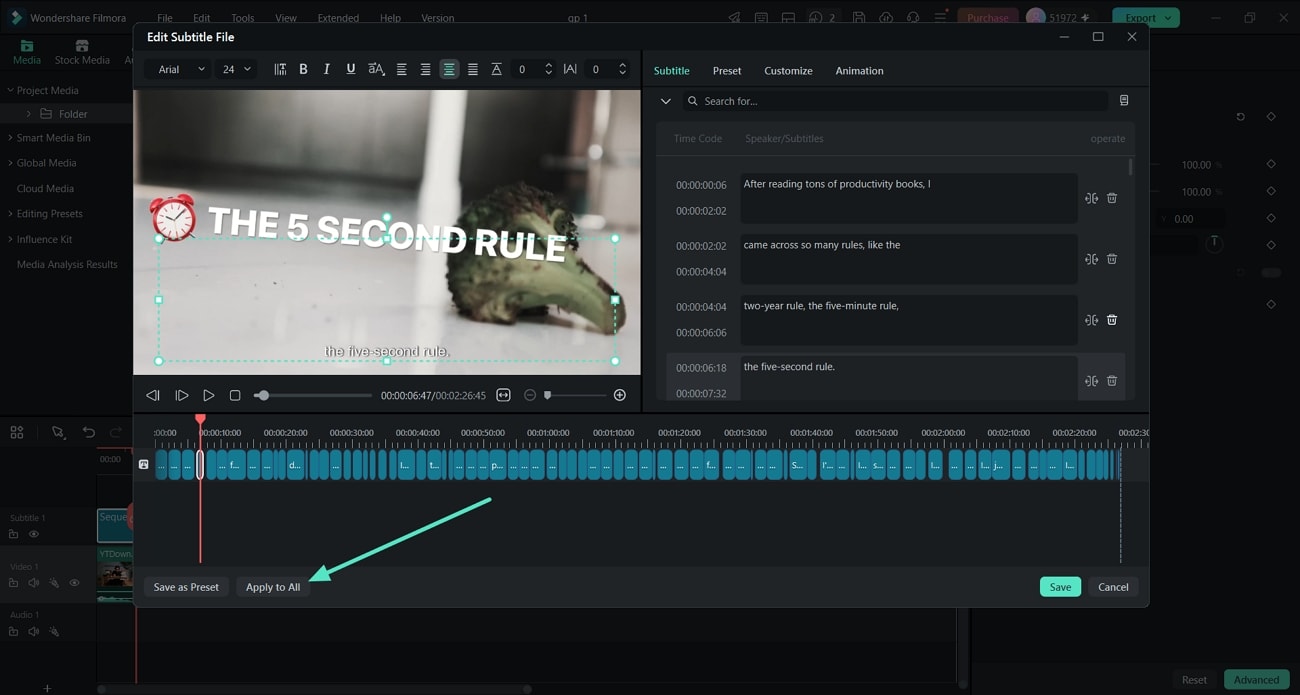
- Edit the transcript: Review and correct generated caption text directly in the editing workflow.
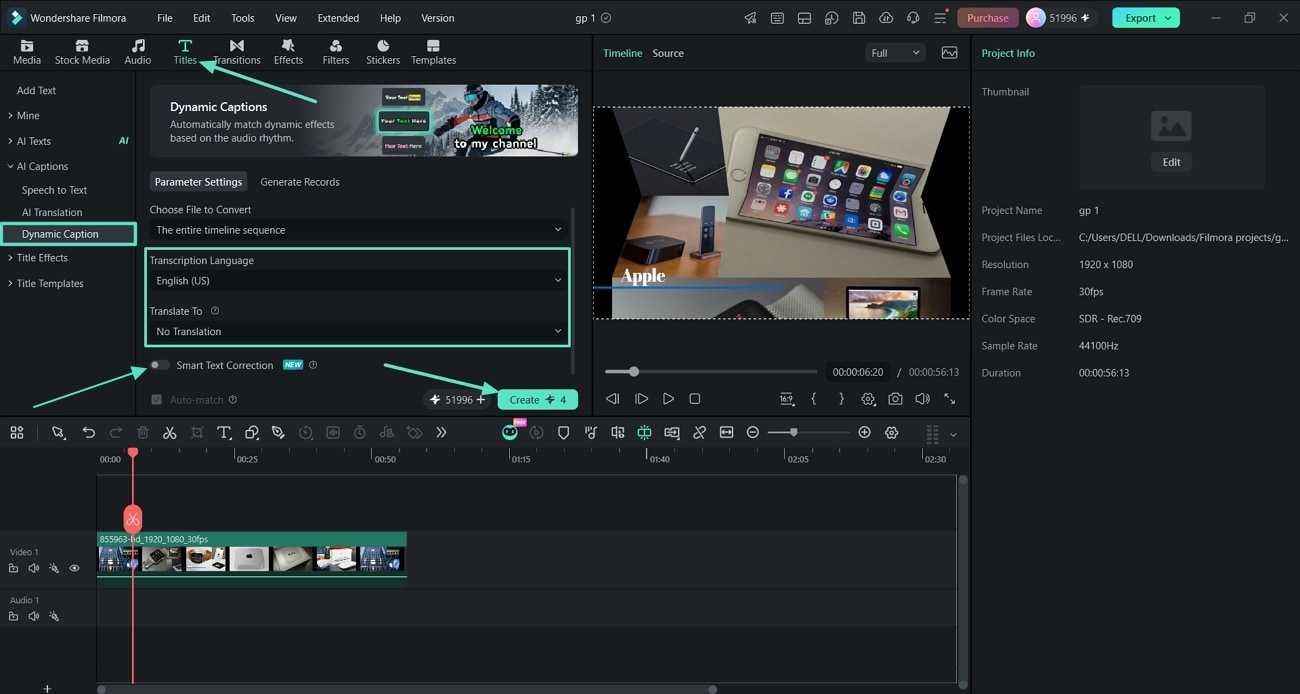
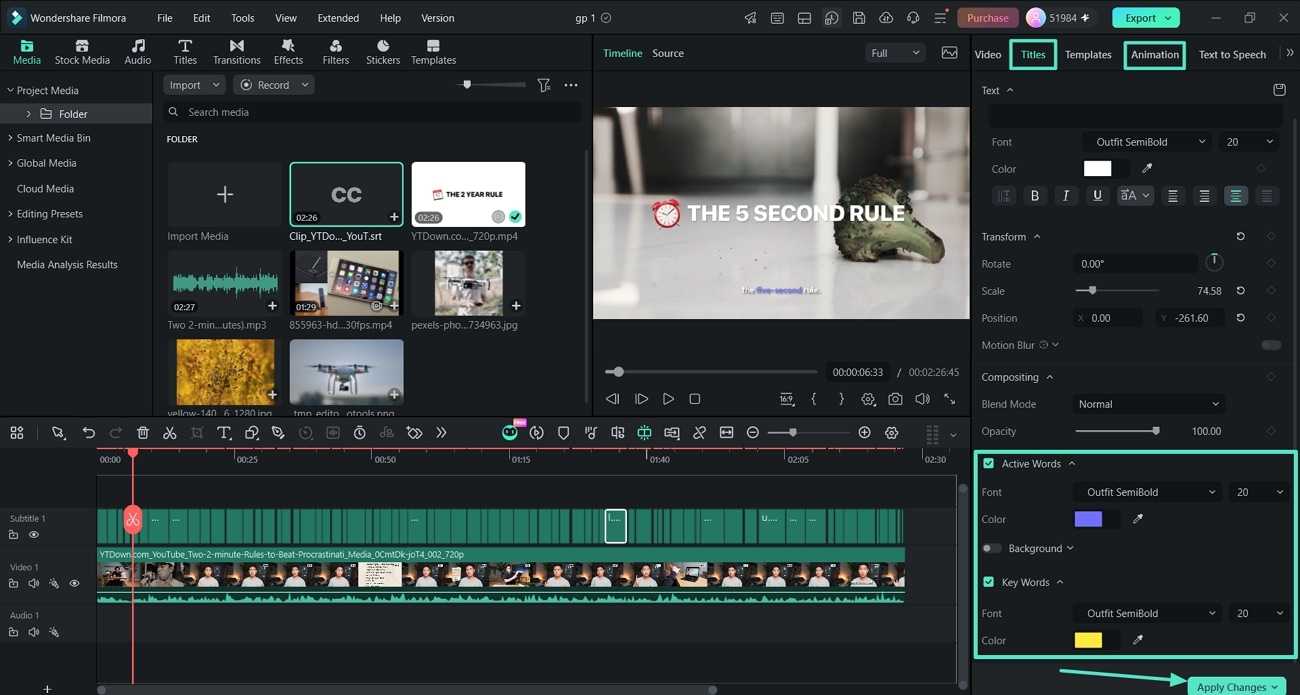
- Create Dynamic Captions: Turn spoken dialogue into animated on-screen captions.
- Highlight Active Words: Visually emphasize words as they are spoken.
- Highlight Key Words: Draw attention to important words and phrases.
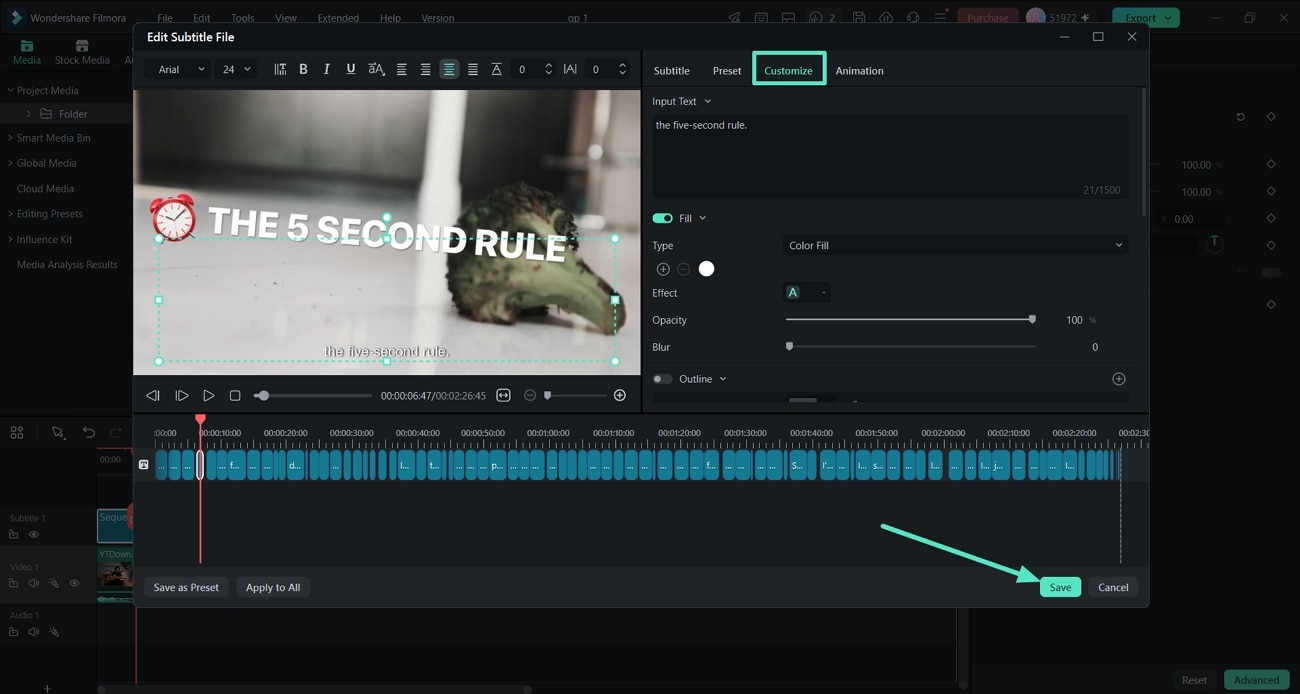
- Customize caption styles: Adjust fonts, colors, outlines, shadows, glow, animations, and other visual settings.
- Translate captions: Create translated subtitle tracks for multilingual audiences.
How to Generate Auto Captions in Filmora
How to Create Dynamic Captions in Filmora
For Shorts, Reels, TikTok videos, podcasts, tutorials, and talking-head content, Filmora's Dynamic Captions can turn dialogue into animated captions and visually emphasize individual words or phrases.
CapCut Auto Captions vs. Filmora Auto Caption
| Feature | CapCut | Filmora |
|---|---|---|
| Automatic speech-to-text captions | Yes | Yes |
| Manual caption correction | Yes | Yes |
| Caption styling | Yes | Yes |
| Animated captions | Available caption styles and effects | Dynamic Captions with Active Words, Key Words, and emphasis |
| Published transcription accuracy | No single universal percentage stated in current help documentation | Up to 99% with clear audio, according to Filmora |
| Best fit | Quick social and mobile-first caption workflows | Caption generation, styling, animation, and full timeline editing in one desktop workflow |
Both tools can automate basic subtitle creation. The practical difference is workflow: CapCut is convenient for quick social edits, while Filmora combines automatic transcription with a broader desktop editing workflow and dedicated Dynamic Caption controls.
Explore Filmora Auto Caption →
For detailed instructions, see the Filmora Auto Caption Guide for Windows or the Auto Caption Guide for Mac.



Part 6: Tips for Better Captions on Social Media
Automatic transcription can save time, but good caption design still depends on readability, timing, and placement. Keep these practices in mind when creating captions for vertical social videos:
- Keep captions readable: Avoid displaying too many words at once. Break longer dialogue into shorter, natural segments.
- Use strong contrast: Make sure text remains readable against changing backgrounds. Outlines, shadows, or backgrounds can help.
- Stay inside safe areas: Keep important captions away from interface elements commonly displayed near the edges of TikTok, Reels, and Shorts.
- Highlight selectively: Emphasize important words rather than styling every word aggressively.
- Review AI transcription: Check names, numbers, technical terms, punctuation, and unclear dialogue before publishing.
- Keep styles consistent: Use a consistent font, color system, and animation treatment throughout the video.
Conclusion
CapCut provides both manual text tools and Auto Captions, making it convenient for creators who want to add subtitles to social videos quickly. For short clips, its built-in caption workflow may be all you need.
If your workflow requires more control over automatic transcription and caption design, Filmora Auto Caption provides Speech to Text alongside Dynamic Captions, Active Words, Key Words, emphasis, caption styling, and translation tools within a full video editing workflow.
Frequently Asked Questions About Adding Captions in CapCut
Can CapCut automatically add captions to a video?
Yes. CapCut provides an Auto Captions feature that uses speech recognition to generate subtitles from spoken audio. You should review the generated text before exporting because names, accents, background noise, and specialist terms can affect transcription accuracy.
Can I manually edit captions generated by CapCut?
Yes. After generating captions, you can review and edit the recognized text and adjust available styling and timing settings before exporting the video.
What is the difference between Auto Captions and Dynamic Captions?
Auto Captions primarily convert speech into synchronized text. Dynamic Captions go further by making the captions part of the visual presentation. Filmora Dynamic Captions, for example, can highlight Active Words, emphasize Key Words, and apply animated caption styles to spoken dialogue.
Can Filmora automatically add subtitles?
Yes. Filmora Auto Caption uses speech-to-text technology to generate synchronized subtitles automatically. Filmora reports up to 99% transcription accuracy with clear audio and supports more than 50 source languages.
Can Filmora translate generated captions?
Yes. Filmora can translate generated captions into more than 30 supported languages, allowing creators to produce synchronized subtitle tracks for multilingual audiences.