


 ChatGPT
 Perplexity
 Gemini
 Claude
 Grok
Grok
Motion tracking lets you follow a moving person, object, or selected area in a video and make another element move with it. Instead of manually repositioning text, images, stickers, mosaics, or effects frame by frame, tracking software analyzes the target's movement and applies that movement data automatically.
In Wondershare Filmora, you can use Motion Tracking to pin text to a person, attach a logo or image to a moving object, blur a moving face, highlight athletes in sports footage, and create other object-following effects.
This guide explains the main types of video tracking and shows you how to do motion tracking in Filmora with text, images, and multiple subjects. It also explains when to use Filmora's newer Camera Tracking and Planar Tracking tools instead.
In this article
Part 1. Different Types of Motion Tracking
Video tracking is a broad category, and different tracking methods solve different editing problems. Some follow individual points or objects, while others analyze flat surfaces, body movement, or camera movement.
Common tracking techniques include:
- Point Tracking – follows one or more identifiable visual points through consecutive frames. It is useful when a target contains a clear, distinctive feature that can be tracked reliably.
- Planar Tracking – analyzes the movement and perspective of a flat or approximately flat surface, such as a screen, billboard, sign, or wall.
- Facial Tracking – follows facial features such as the eyes, eyebrows, nose, mouth, or face outline. It is commonly used for face-aware effects, filters, masks, and other facial editing workflows.
- Body Tracking – follows body movement and can be used for effects, animation, sports content, dance videos, and other people-focused workflows.
- 3D Camera Tracking – analyzes how the original camera moved through a three-dimensional scene. It is primarily used for VFX and matchmoving, where digital elements need to match the perspective and movement of live-action footage.

Part 2. How to Do Motion Tracking in Filmora
Filmora Motion Tracking analyzes the movement of a selected target and lets you link another element to that movement.
You can use the tracking data to make text, images, graphics, videos, mosaics, or other supported elements follow a person or object throughout the shot.
- Track the movement of a selected person, object, or area.
- Pin text to a moving target.
- Attach images, graphics, or video elements to tracked movement.
- Use mosaics to cover moving faces or other areas.
- Add callouts and visual elements that follow the action.
For more reliable tracking, choose footage where the target is clearly visible and visually distinguishable from its surroundings. Heavy motion blur, occlusion, very small targets, and low contrast can make tracking more difficult.
1. Motion Tracking with Text in Wondershare Filmora
Motion-tracked text is useful when a label, name, price, description, or other piece of information needs to stay connected to a moving person or object.
For example, you can make a person's name follow them through an interview, display product information beside a moving device, or add a callout that follows an object through a demonstration.
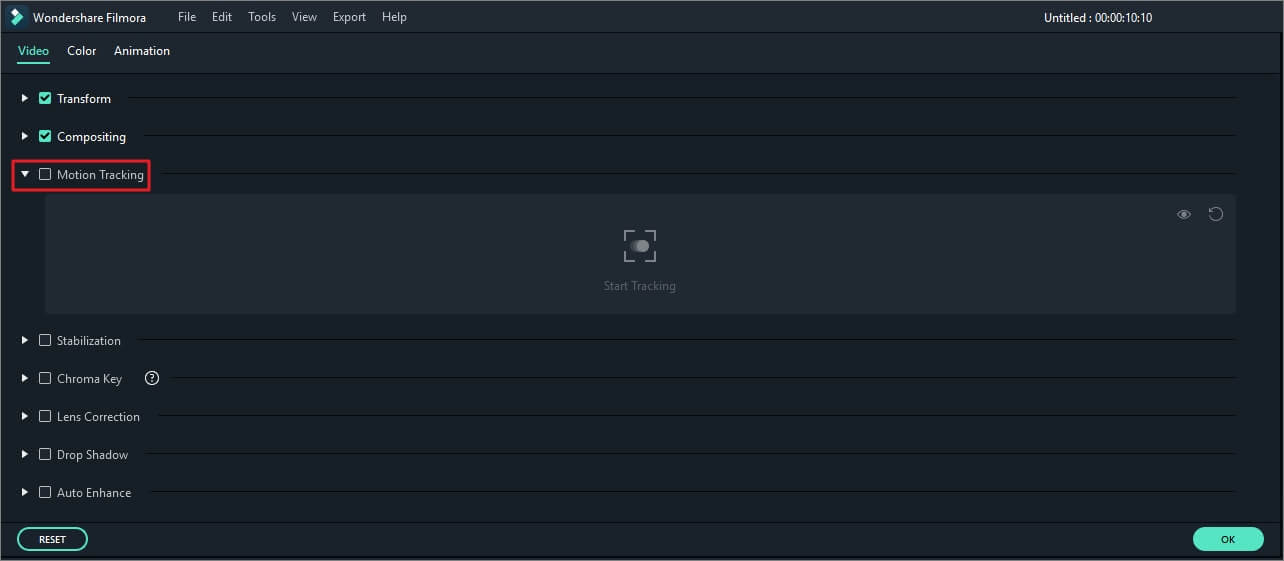
01of 04Enable Motion Tracking
Import your video into Filmora and add it to the timeline. Select the video clip to open its editing controls, then enable Motion Tracking.
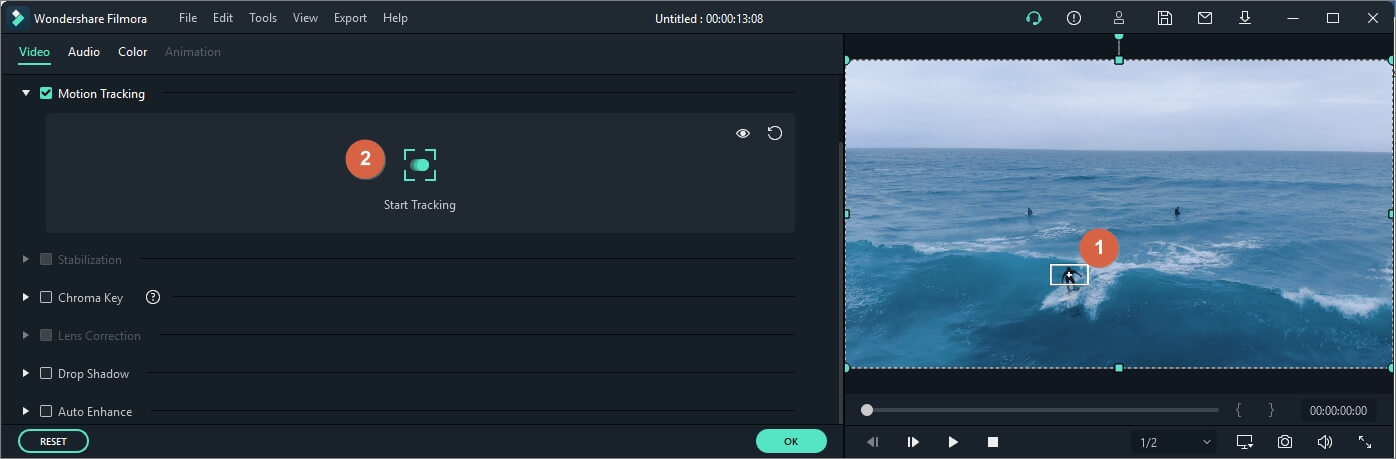
02of 04Select the Target and Start Tracking
Move the tracker box over the person, object, or area you want to follow. Adjust the box so it focuses on the intended target, then click Start Tracking to analyze its movement.
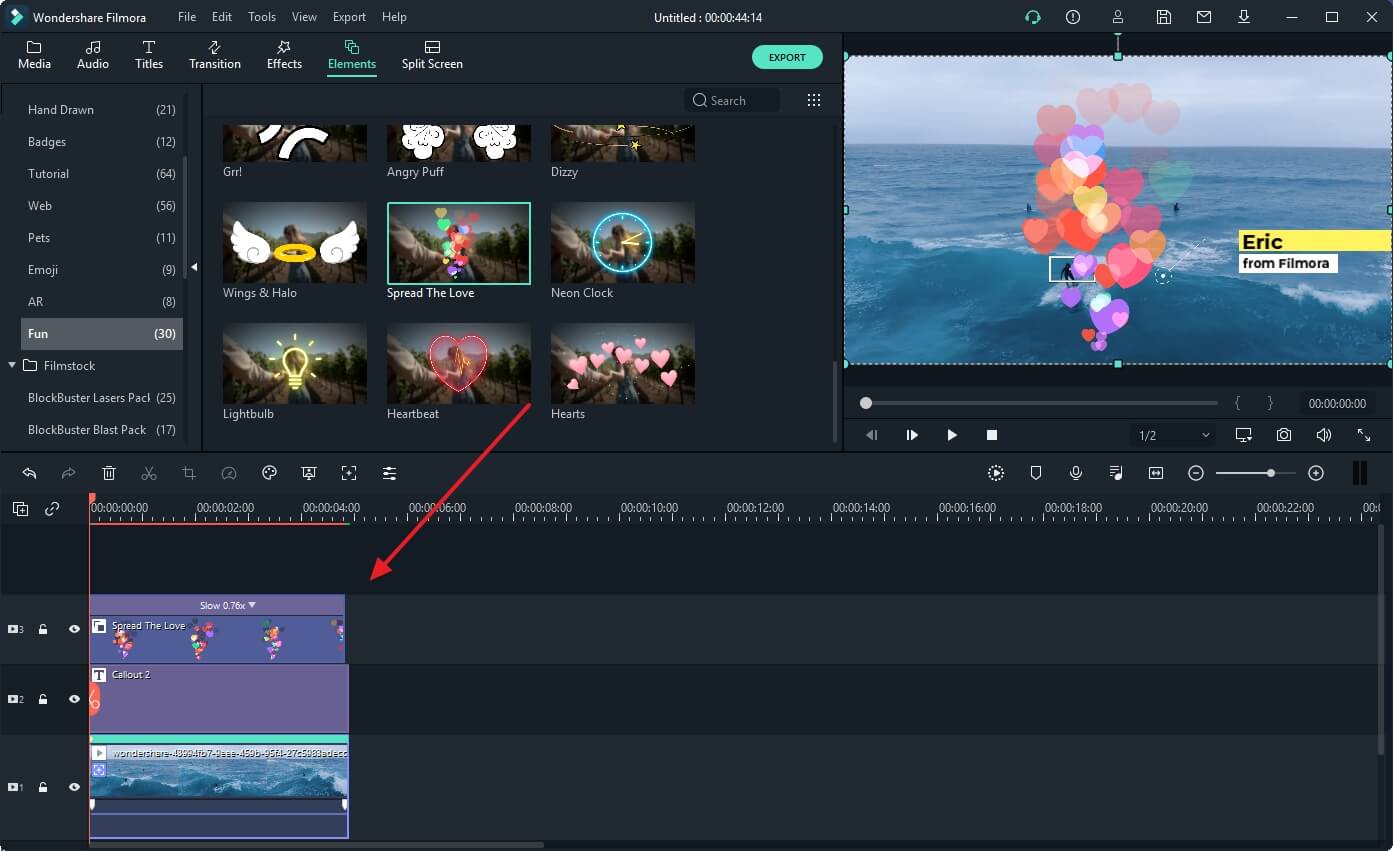
03of 04Add the Text or Other Element
Add a title to the track above your video. You can also use an image, graphic, video, or another supported element depending on the effect you want to create.
Adjust the element's position, size, orientation, and appearance before linking it to the tracked movement.
04of 04Link the Element to the Tracked Target
Select the motion-tracked video clip and open the Motion Tracking controls. Use the follower or linked-element menu to select the text or other element you want to follow the tracked movement.
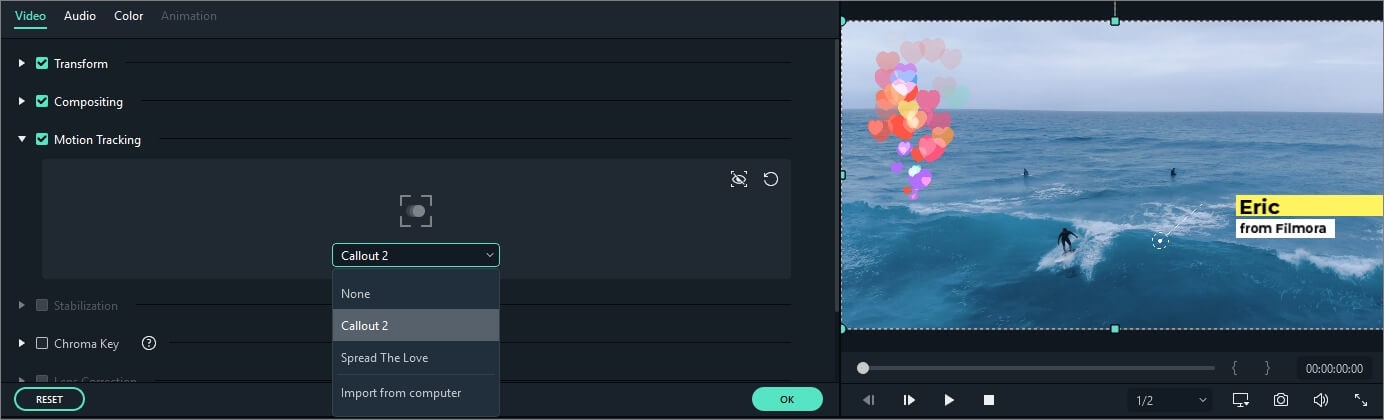
Play the video to review the result. You can refine the follower's size and position in the preview and switch the linked element when needed.
For the complete official workflow, see the Filmora Motion Tracking Guide.
2. Motion Tracking with Images in Wondershare Filmora
The same Motion Tracking workflow works with images. This is useful for attaching a logo, graphic, icon, sticker, product label, or another visual element to a moving object.
01of 03Track the Moving Target
Add the video to the timeline, enable Motion Tracking, position the tracking box around the object you want to follow, and start the tracking analysis.
02of 03Add Your Image
Import an image from your computer or select a suitable visual asset. Drag the image onto a track above the source video.
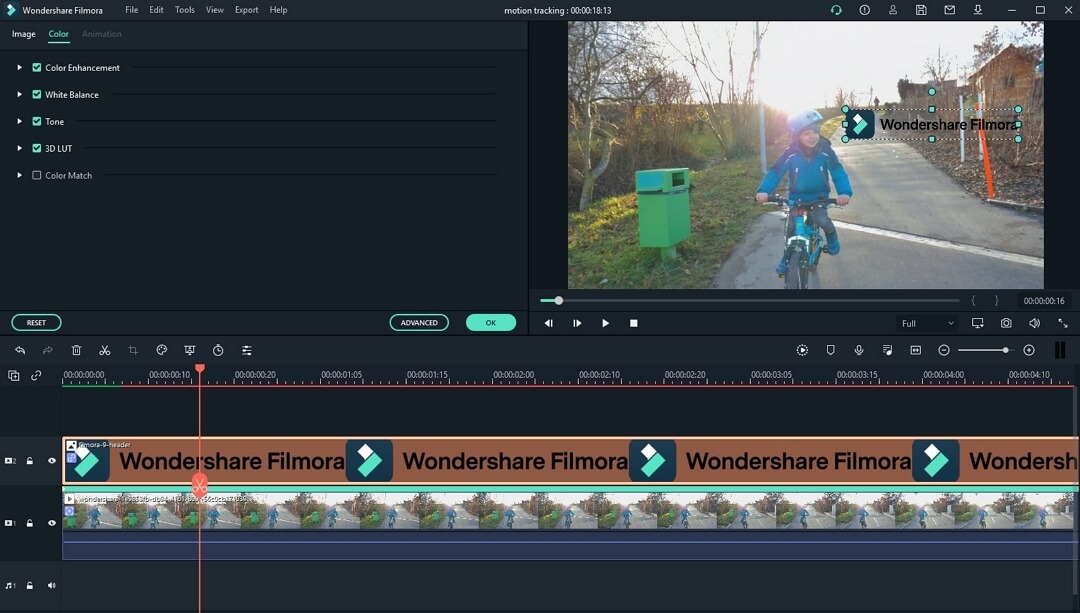
03of 03Link the Image to the Tracking Data
Resize, rotate, and position the image where you want it to appear relative to the target. Select the tracked video clip and choose the image as the follower so it moves with the tracking data.
3. Motion Tracking Multiple People in Sports Videos
Sports footage is a common use case for Motion Tracking. Labels, arrows, circles, graphics, or other elements can help viewers follow a particular player or action.
When separate tracking results are required for multiple people, one workflow is to use duplicated copies of the source clip so each copy can carry its own tracking target and linked element.
01of 05Duplicate the Source Clip
Import the video and place it on the timeline. Duplicate the clip and place the copy directly above the original.

02of 05Track the First Person
Select the original clip, enable Motion Tracking, position the tracking box around the first person, and start the tracking analysis.

03of 05Track the Second Person
Manage the visibility of the duplicated clip as needed, then repeat the tracking process on the second clip using the second person as the tracking target.

04of 05Add and Link the First Element
Add the visual element you want to associate with the first tracked person. Select the corresponding tracked clip and link the element to its Motion Tracking data.

05of 05Add the Second Element and Preview
Add another element for the second person and link it to the tracking data on the duplicated clip. Adjust the appearance and position of each element, then preview the complete result.

Part 3. Motion Tracking vs. Camera Tracking vs. Planar Tracking
Filmora provides several tracking workflows, so choosing the correct feature depends on what you want to follow and what should move as a result.
| Feature | Motion Tracking | Camera Tracking | Planar Tracking |
|---|---|---|---|
| Core Idea | Element follows target | Frame follows subject | Content follows surface |
| Tracking Target | Person, object, or selected area | Head, body, or custom target | Flat or planar surface |
| Result | Text, image, sticker, mosaic, or effect moves with the target | Video framing adjusts to follow the selected subject | Inserted content follows the movement and perspective of a surface |
| Typical Uses | Labels, callouts, graphics, mosaics, effects | Vlogs, talking heads, dance, fitness, pets, products | Screen replacement, signs, billboards, walls |
When to Use Filmora Camera Tracking
If you don't need to attach text or another element to the subject and instead want the video frame itself to follow the subject, use Filmora Camera Tracking.
Camera Tracking automatically follows a selected subject and helps keep it better framed as it moves. Filmora provides three target modes:
- Head: Follow a person's head in interviews, lessons, presentations, talking-head videos, or vlogs.
- Body: Follow full-body movement in dance, fitness, sports, or other action footage.
- Custom: Define another target such as a pet, product, prop, detail, or other moving object.
How to Use Camera Tracking in Filmora
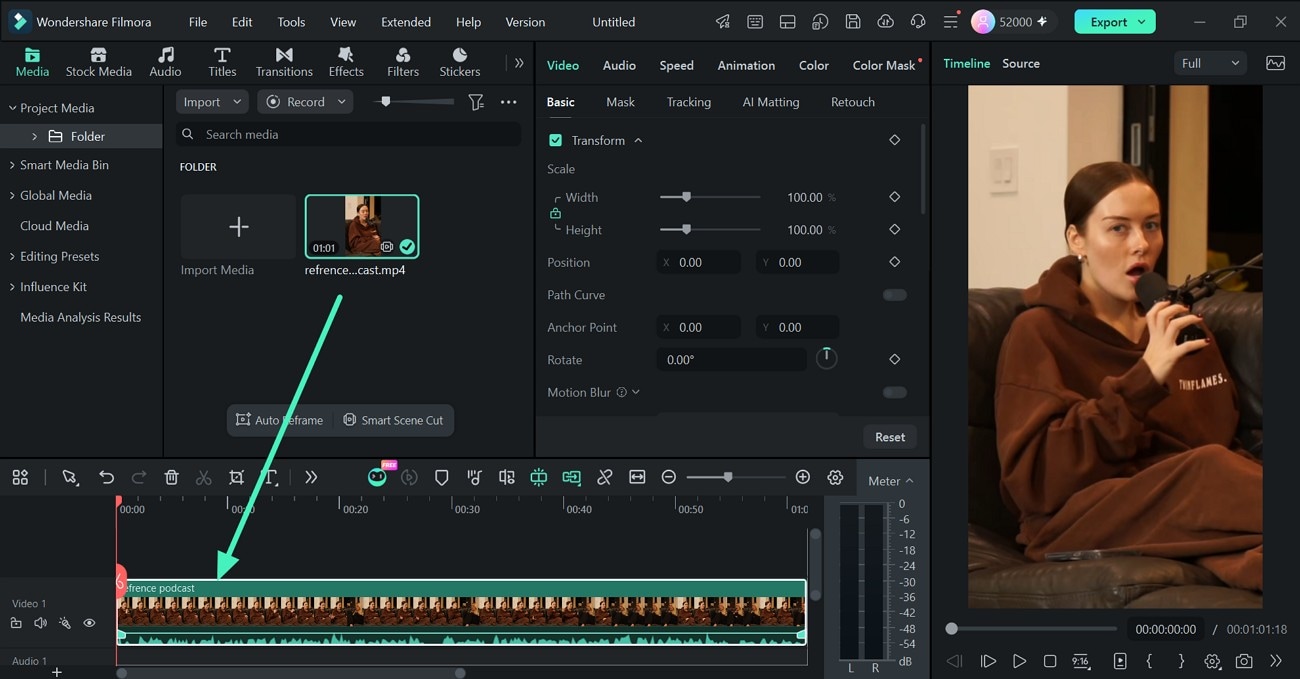
01of 03Import Your Video and Add It to the Timeline
Launch Filmora and create a new project. Import the video you want to track, then drag the clip onto the timeline.
02of 03Choose a Tracking Target and Start Tracking
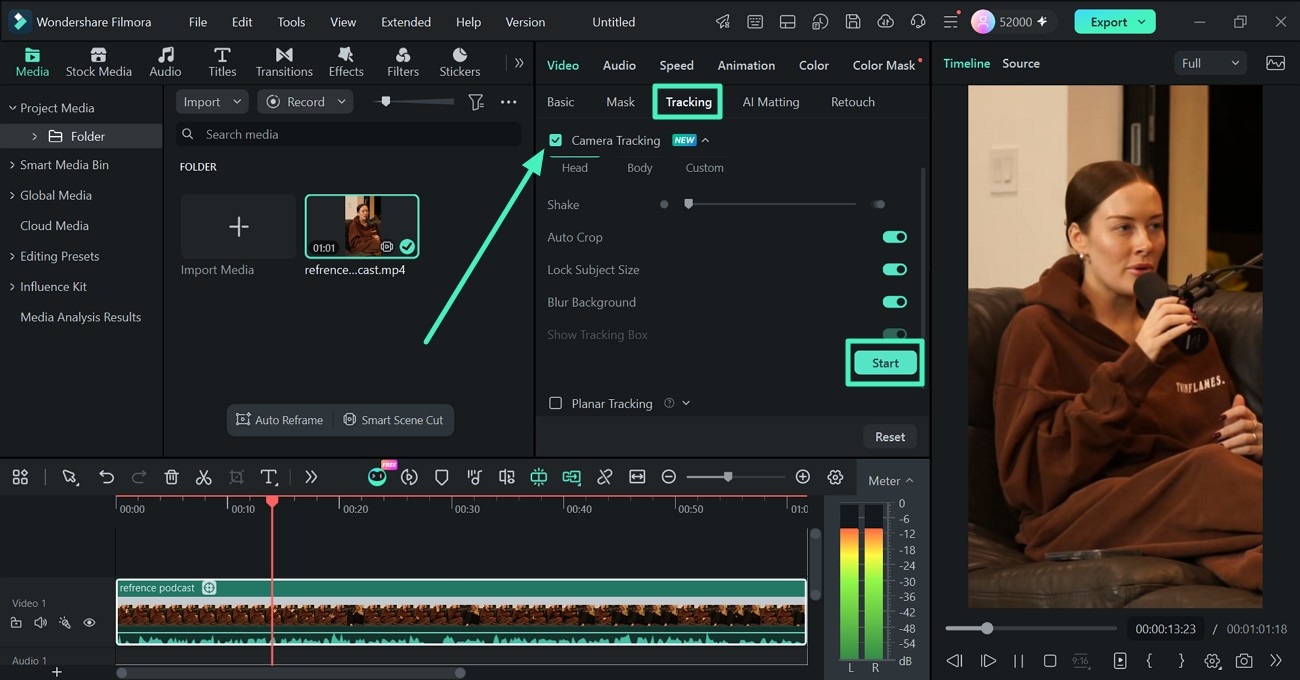
Select the video clip and go to Video → Tracking → Camera Tracking. Choose Head, Body, or Custom depending on what you want Filmora to follow.
Adjust the available tracking and framing controls as needed, then click Start to analyze the subject's movement.
03of 03Preview and Fine-Tune the Result
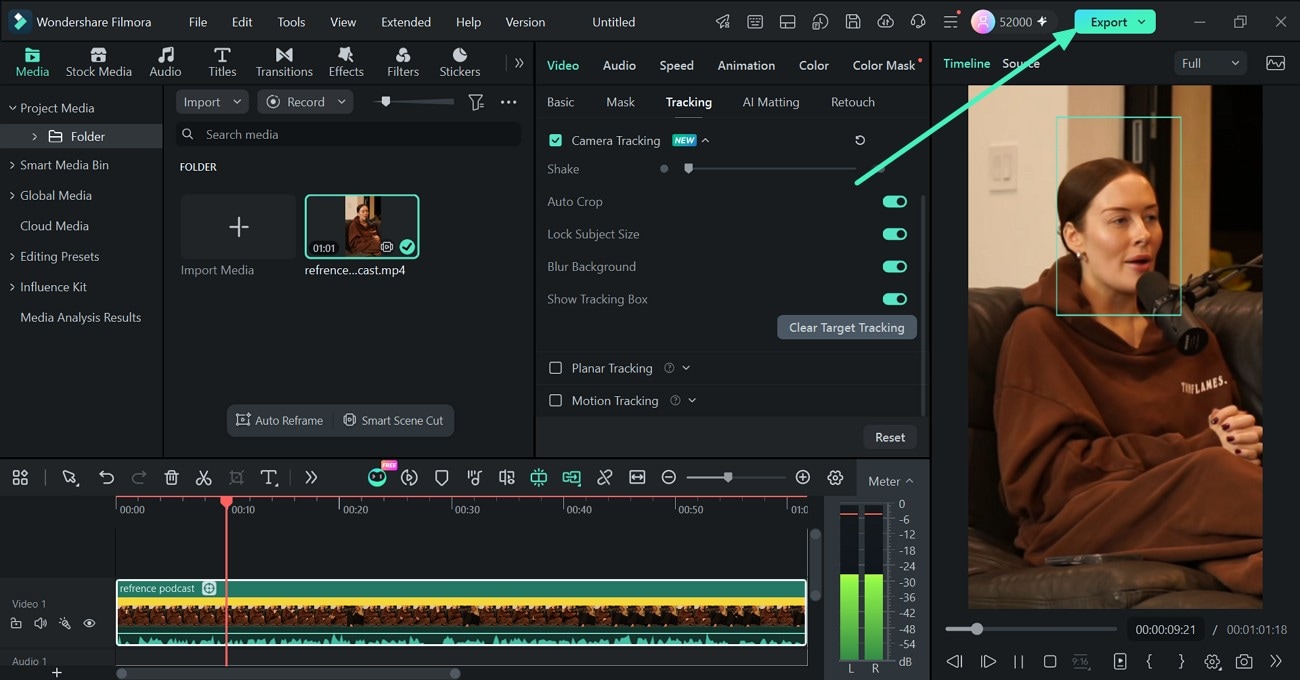
Once Camera Tracking is complete, preview the result and check how the frame follows the selected subject. Adjust the available tracking settings if needed.
When the framing looks right, click Export to save the finished video.
For the complete workflow, see the Filmora Camera Tracking Guide for Windows or Camera Tracking Guide for Mac.
When to Use Planar Tracking
Use Planar Tracking when your target is a surface rather than a single moving point or object.
For example, if you want to replace content on a phone screen, billboard, sign, wall, or another flat surface, Planar Tracking can analyze the surface's movement and perspective so the inserted content stays aligned more naturally.
Part 4. More Motion Tracking Ideas You Can Try
Once you understand the basic Motion Tracking workflow, the same technique can be applied to many different types of video.
- Blur Moving Faces: Make a mosaic or blur follow a person who moves around the frame.
- Cover License Plates: Track a moving vehicle and keep a mosaic over its license plate.
- Add Product Callouts: Make feature labels or pricing information follow a product during a demonstration.
- Highlight Sports Players: Add names, arrows, circles, or graphics that follow specific athletes.
- Add Moving Branding: Attach a logo or graphic to a moving object.
- Create Social Video Effects: Make stickers, emojis, graphics, or other visual elements follow people and objects.
- Highlight Real Estate Features: Attach labels to specific details while the camera or subject moves through a property.
- Add Travel Video Callouts: Connect labels or graphics to moving vehicles, people, landmarks, or other points of interest.
Frequently Asked Questions
What is motion tracking in video editing?
Motion tracking analyzes the movement of a person, object, or selected area through video frames. The resulting tracking data can then be used to make another element, such as text, an image, sticker, mosaic, or effect, follow that target.
Does Filmora have Motion Tracking?
Yes. Filmora Motion Tracking can track a moving target and link supported elements such as text, images, mosaics, and other visual elements to the tracked movement.
What is the difference between Motion Tracking and Camera Tracking in Filmora?
Motion Tracking keeps the original framing and makes another element follow a moving target. Camera Tracking makes the video frame itself follow a selected Head, Body, or Custom target to maintain more consistent subject framing.
Can Filmora track multiple people?
Multiple targets can be handled through separate tracking setups. One workflow is to duplicate the source clip so each copy can carry its own tracking target and linked element. Complex shots may require additional adjustment when subjects overlap or leave the frame.
Can I make text follow a moving object in Filmora?
Yes. Track the moving target with Motion Tracking, add a title to the project, and link the title to the tracking data. The text can then follow the tracked movement through the shot.
Can Filmora automatically keep a moving person in frame?
Yes. For that workflow, use Filmora Camera Tracking rather than Motion Tracking. Camera Tracking can follow a person's head or body, or another custom target, and automatically adjust the framing as the subject moves.
Why does Motion Tracking sometimes lose the target?
Motion blur, occlusion, fast movement, small targets, low contrast, or a visually complex background can make tracking more difficult. Using clear footage and choosing a visually distinctive tracking target generally produces more reliable results.
Conclusion
Motion tracking in Filmora can reduce repetitive frame-by-frame editing when you want text, images, mosaics, graphics, or other supported elements to follow a moving person or object. The same basic workflow can be used for product callouts, sports highlights, privacy blurs, branding, social content, tutorials, and other video projects.
Filmora also provides separate tracking tools for different editing goals. Use Motion Tracking when an element should follow an object, Camera Tracking when the frame should follow the subject, and Planar Tracking when content needs to remain attached to a moving surface.