Technology has reshaped the way we connect with the world, and one of its most impressive breakthroughs is real-time translation. Thanks to this technology, language is no longer a barrier, as conversations can be translated instantly for clear and easy communication.
Definition
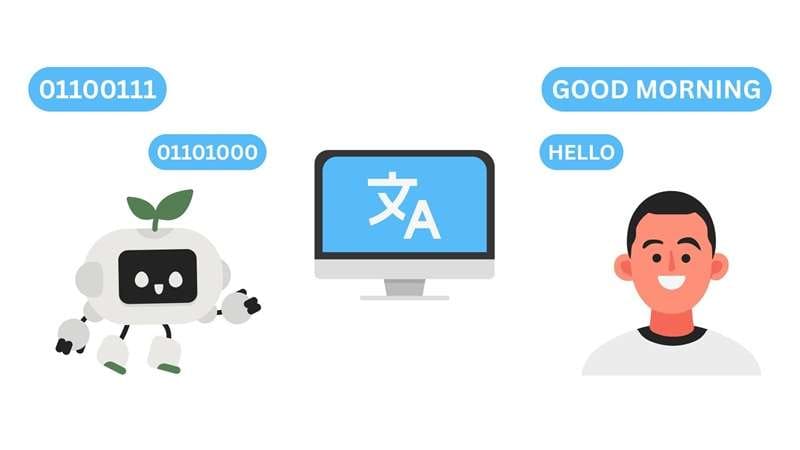
Real-time translation is a technology that converts speech or text from one language into another in real time, making communication possible between people who don't share the same language.
This technology offers a faster and more practical solution to traditional translation methods, which often fall short due to delays or limited accessibility. It has become an essential tool in travel, business, healthcare, education, and everyday communication.
Technical Breakdown: How Does Real-Time Translation Work?
Advances in artificial intelligence and modern technologies have superseded the traditional approach of converting spoken words into text before translation. It relies on several core technologies working together to capture speech, convert it into another language, and deliver it back in natural-sounding speech or text.
Core Technology:
Natural Language Processing (NLP):
Real-time voice translation uses NLP and machine learning to detect language, interpret meaning, and generate translations instantly. It works by analyzing speech patterns, breaking them into recognizable units, and using neural networks to understand context before producing accurate voice or text output in the target language.
Automatic Speech Recognition (ASR) and Text-to-Speech (TTS):
For the foundation of modern voice translation, ASR and TTS work together to convert spoken language into accurate text and then back into natural-sounding speech. ASR leverages neural networks to handle accents, noise, and varied speech patterns, while TTS produces expressive, human-like voices, enabling seamless real-time communication.
Neural Machine Translation (NMT):
In addition to speech, real-time translation also relies on Neural Machine Translation (NMT). NMT uses deep neural networks trained on massive multilingual datasets to recognize patterns and deliver highly accurate translations. Unlike older rule-based or phrase-based systems, NMT considers the full context of a sentence, which makes translations more natural, fluent, and closer to human language.
Current State
Today, real-time translation systems can handle complex conversations, adapt to different accents, and deliver speech that sounds remarkably human. It can even keep up with modern slang and trends.
Language support varies by platform. For example, free real-time translators like Google Translate can translate more than 100 languages. Widely spoken languages such as English, Spanish, and Mandarin tend to achieve near-human translation quality, while low-resource languages may still face challenges due to limited training data.
Benefits of Real-Time Translation
Better Communication:
Real-time translation makes it easier for people to connect across different languages, helping build understanding and smoother collaboration without a language barrier.
Saves Time and Money:
Since there's no need to rely on traditional translation services, conversations happen instantly, cutting both waiting times and translation costs.
Better Accessibility:
Non-native speakers can follow conversations more easily. Information becomes clearer and easier to understand, making interactions more inclusive.
Improved Customer Experience:
With real-time translation, businesses can cater to a global audience and provide better customer service by offering real-time translation options.
Human Translator vs Machine-Based Real-Time Translation
Compared to the traditional ways of using a human translator or interpreter, there are a few key differences that set machine-based real-time translation apart.
Aspect
Human Translator
Machine-based Real-Time Translation
Accuracy
Highly accurate, especially for nuanced or technical content.
Good for simple text; often struggles with nuance.
Context Understanding
Excellent cultural and emotional awareness.
Limited; may misinterpret the meaning.
Speed
Slower, requires time to interpret.
Instant translation with minimal delay.
Language Range
Limited to the translator's expertise.
Supports multiple languages on a single platform.
Adaptability
Flexible with style and audience.
Often literal; less natural flow.
Fee
Expensive, especially for experts.
Some tools are free or low-cost.
Availability
Needs scheduling.
Accessible anytime.
Privacy
High if working with trusted professionals.
Risk of data being stored online.
Best For
Legal, medical, or high-stakes talks.
Travel, casual chats, fast business use.
Application Section - When/Where to Use Real-time Translation
Since language is something we rely on every day, the practical use of real-time translation can be seen in countless areas of life and work.
Real-World Applications of Real-Time Translation
Industry Impact
Travel and Tourism:
With real-time translation, travelers can navigate foreign environments more confidently, while tourism providers deliver better service and attract more international visitors.
Business and International Communication:
For multinational companies, real-time translation tools allow instant communication with clients, partners, and employees worldwide. This technology helps speed up negotiations, improves collaboration, and opens doors to global markets, even for small businesses.
Education and Language Learning:
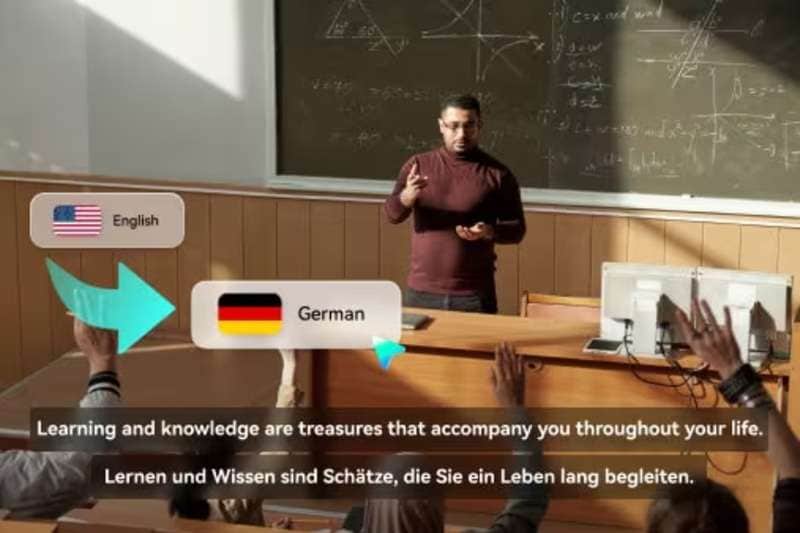
Students can now attend lectures, read study materials, and collaborate with peers from different countries without language being a limitation. Real-time translation also supports language learning by giving immediate feedback and exposure to multiple languages, making global classrooms more inclusive.
Healthcare and Medical Services:
When receiving medical care in a foreign country, patients can explain their symptoms and understand treatment instructions more clearly through real-time translation. Doctors and nurses can provide better care by understanding patient concerns, reducing miscommunication, and ensuring treatments are delivered well.
Case Studies
ChatGPT Realtime Translation:
As one of the leading AI language models, ChatGPT-4o is capable of translating conversations instantly with natural and context-aware responses. Ask ChatGPT to act as a translator, and it will deliver pretty accurate translations as you speak. Another mindblowing thing about this application is how human-like the generated voices sound during live translation.
Ever been in an important meeting where some participants struggle to follow along because of language differences? Microsoft Teams has solved this problem by adding real-time captions and translation directly into its platform. If you enabled the live captions feature, the captions will appear on screen as people speak. You can choose from around 40 supported languages.
Real-time translation has also extended into wearable smart devices. The Ray‑Ban Meta smart glasses, for example, provide a stylish way to combine fashion with cutting-edge technology. Beyond functioning as everyday eyewear, they include built-in AI features that can translate Spanish to English in real time, among other languages.
Along with all the benefits it brings, real time voice translation still has its own set of challenges.
Accuracy Issues:
While real-time translation has improved significantly, it can still mistranslate words with multiple meanings or phrases that don't translate directly. This issue can cause confusion in professional or sensitive settings.
Context and Cultural Nuances:
AI-powered translation tools often miss subtle cultural references, humor, and tone. What sounds polite in one language might come across as blunt or even rude in another. Without cultural context, translations can lack emotional depth.
Privacy Concerns:
Professional translators are trusted because they handle sensitive information with discretion. Real-time translation tools, however, often process data through cloud servers. This creates a risk of sensitive information being exposed or misused if proper security measures aren't in place.
Dependence on the Internet:
Most real-time translators rely heavily on cloud processing. Without a stable internet connection, translation quality can drop, and offline options are usually limited to basic phrases or a few languages.
Future Outlook
Real-time translation is set to become even more reliable and seamless as AI continues to advance. Adaptive AI is emerging as a key trend, which allows translation systems to learn and adjust on the spot rather than providing word-for-word output.
However, the most promising path forward is a collaborative model where AI provides speed and scalability, while human expertise ensures precision and cultural sensitivity. This combination will redefine translation not just as a technical solution, but as a strategic asset in our globalized world.
Practical Demonstration Section - How to Translate Recorded Content
While the future of real-time voice translation looks promising, many situations still require post-translation. This is especially true when you need to refine and share recorded material like webinars, interviews, tutorials, or corporate presentations.
Post-translation is where you ensure that translations are accurate, contextually correct, and culturally sensitive. AI has also made this process much easier by automatically generating translations and captions. After that, you can review it, make edits, and fine-tune the delivery.
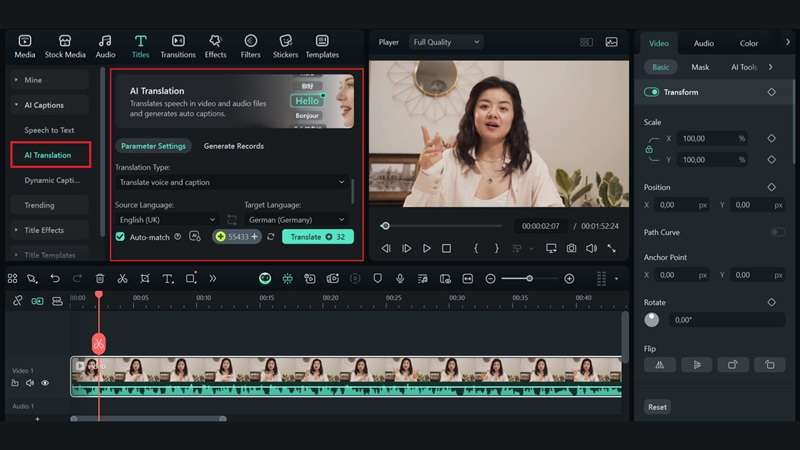
The tool you can use for this post-translation process is Wondershare Filmora. Filmora is a video editor with a built-in AI Translation tool, supporting more than 20 languages worldwide. With it, you can generate standard captions or dynamic ones that follow the words spoken in your video with precise timing.
How Filmora Helps You Translate Videos
Wide Language Coverage:
Filmora's AI translation tool supports both widely spoken and less common languages, including English, hindi, Chinese, Japanese, Korean, Indonesian, Bengali, and more.
Automatic Subtitle Creation:
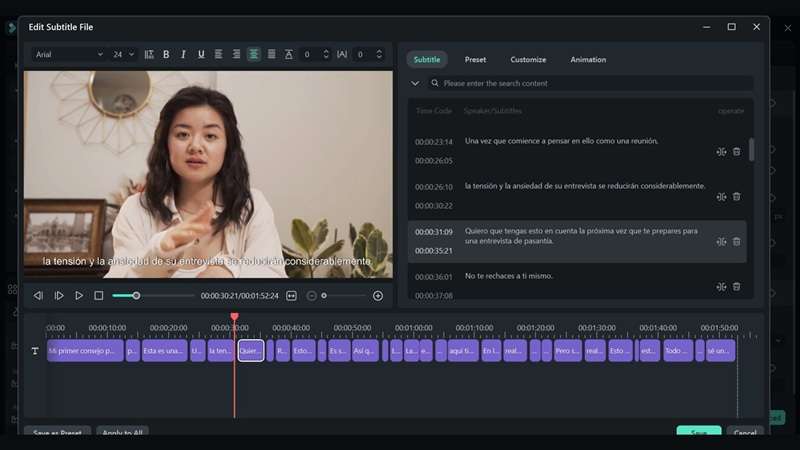
Filmora uses advanced speech recognition to generate subtitles for your videos automatically. You can fine-tune the text for better accuracy and even export the captions as an SRT file for other platforms.
Reliable Translation Quality:
With accuracy rates exceeding 90%, Filmora's AI translator delivers clear and precise translations to ensure your message is conveyed correctly in the targeted language, thus minimizing manual work.
Filmora gives you full control over subtitle design and translation adjustments, so you can customize captions and layouts to always match your video's style and format.
How to Translate in Filmora:
Step 1
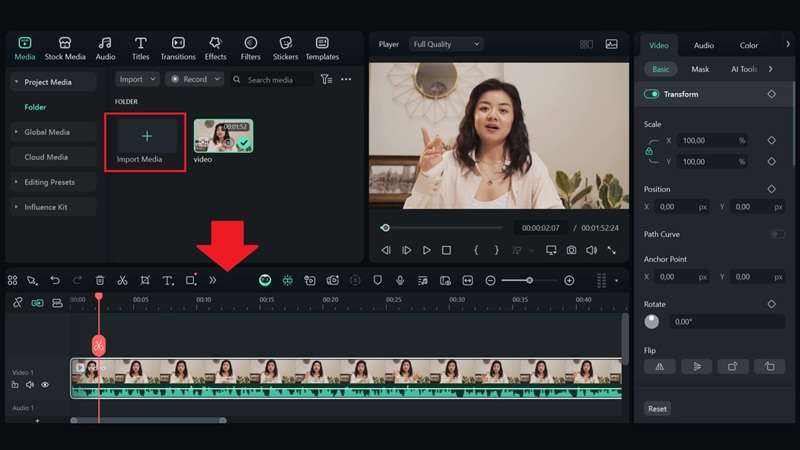
Add Your Video: Import the video or audio you want to translate by clicking the Import button. Then, drag it onto the timeline to get started.
Step 2
Apply AI Translation: Click on the AI Video Translation option under the Titles > AI Captions tab. Choose your target language and translation style, then start the translation process.
Step 3
Review, Edit, and Save: Once the translation is finished, you'll see the subtitles and translated audio automatically synced with your video in the timeline. Double-click the caption track to make any adjustments. Then, export to save your video.
What is the difference between real-time translation and traditional translation?
Real-time translation provides instant conversion of speech or text between languages as the conversation happens, while traditional translation involves human translators working on text or speech after it has been delivered, which takes more time and is not instantaneous.
Can real-time translation work without an internet connection?
Most real-time translation services require an internet connection for accurate results, as they rely on cloud-based processing. However, some apps offer limited offline functionality for basic phrases in popular languages.
How accurate is real-time translation technology?
Modern real-time translation has improved significantly, achieving over 90% accuracy for widely spoken languages like English, Spanish, and Mandarin. However, accuracy can vary for less common languages, complex sentences, or specialized terminology.
Is real-time translation secure for confidential conversations?
Security varies by platform. While some services encrypt data and offer privacy protections, others may store conversations on their servers. For highly sensitive information, it's recommended to use trusted professional translation services with established privacy protocols.
Can real-time translation handle specialized terminology in fields like medicine or law?
While real-time translation has improved in technical domains, it may still struggle with highly specialized terminology in fields like medicine or law. For critical applications in these areas, human expert translators are still recommended for maximum accuracy.










 Secure Download