


 ChatGPT
 Perplexity
 Gemini
 Claude
 Grok
In this article
Understanding Goal Line Technology in Football
Football has always had its disputed goals, but goal-line technology exists to make sure the argument stops at the data. When Japan beat Spain at the 2022 World Cup on a goal that appeared to have come from out of play, it was the cameras that had the final word, not the referee's eyes. With the 2026 World Cup bringing even more advanced officiating tools to the pitch, here's everything you need to know about goal-line technology.
What Is Goal-Line Technology?
In technical terms, goal-line technology (GLT) is an electronic system that determines whether the ball has completely passed over the goal line between the goalposts and beneath the crossbar. If it does, a goal is given. If even a millimeter of the ball is hanging over the line, play keeps rolling.
⚽ The Golden Rule: A goal is only scored in football when the WHOLE ball has completely crossed the goal line. Not half of it. Not mostly. The entire ball.
How Goal-Line Technology Works
From the fan's seat, goal-line technology in football feels almost instant. The ball crosses the line, the referee checks the watch, and the decision is made. But behind that quick moment, there is a lot going on.
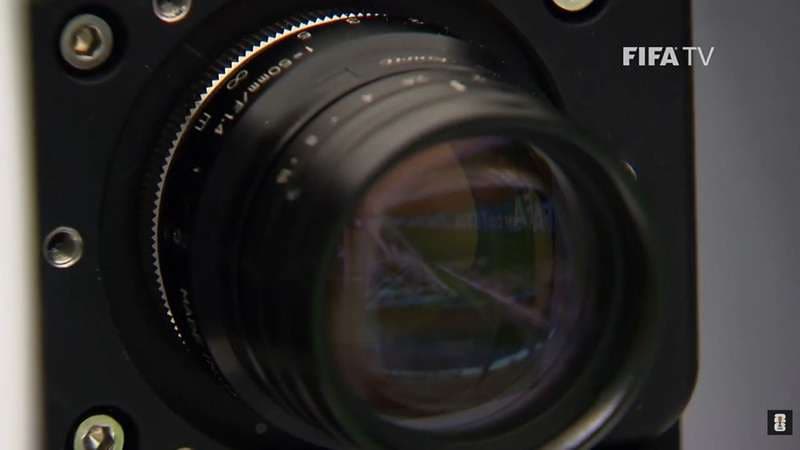
There are two primary methods approved by FIFA to track the ball:

⌚ Real-Time Referee Notifications
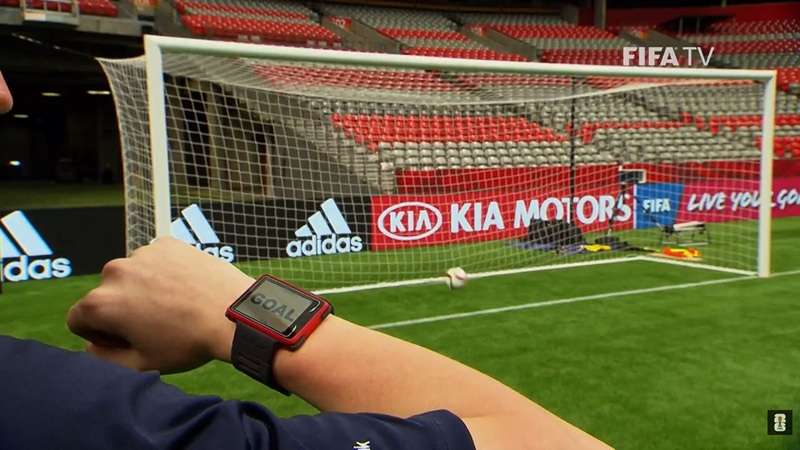
No matter which goal-line technology system is actively running, the calculation finishes in less than a single second. If the ball passes the line entirely, an encrypted signal instantly triggers a vibration and a bright message reading "GOAL" on the referee's smartwatch. If the watch stays quiet, the game keeps going without a single interruption.
Goal-Line Technology vs VAR: They're Not the Same Thing
It is incredibly common for everyday casual fans to hear names like VAR tossed around and assume it is doing the same exact thing as goal-line technology in football. But they are actually completely distinct tools with totally separate jobs!
Here is the clean comparison:
| Feature | Goal-Line Technology | VAR |
| Main Job | Checks if the ball fully crossed the goal line | Reviews major match-changing decisions |
| Response Time | Under 1 second, fully automated | Several minutes of human review |
| Who Reviews It | No human review, it's machine-decided | A team of video officials in a remote room |
| Fan Visibility | No replay shown during review | Broadcast replays shown to stadium & TV |
| Referee Authority | System sends alert; referee decides | VAR team advises; referee can go to pitchside monitor |
| Game Flow Impact | None, seamless and instant | Can pause game for several minutes |
| Where It Monitors | Exclusively the goal line | The entire pitch and all decisions |
When Goal-Line Technology Is Used
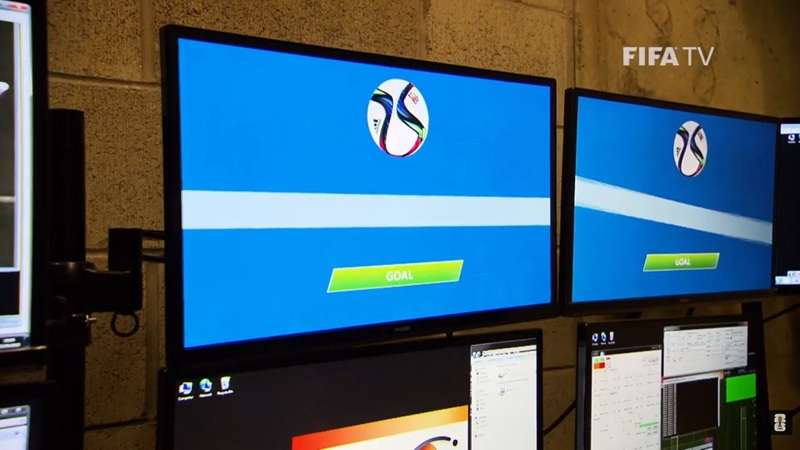
Goal-line technology in football is used when the ball is near or over the goal line and there is a question over whether a goal has been scored.
For example:
- A goalkeeper catches the ball on or behind the line.
- A defender clears the ball off the line.
- The ball hits the post, bounces down, and spins near the line.
- A crowded goalmouth makes it impossible for the referee to see clearly.
If the whole ball crosses the line, the referee gets the alert.
When VAR Is Used
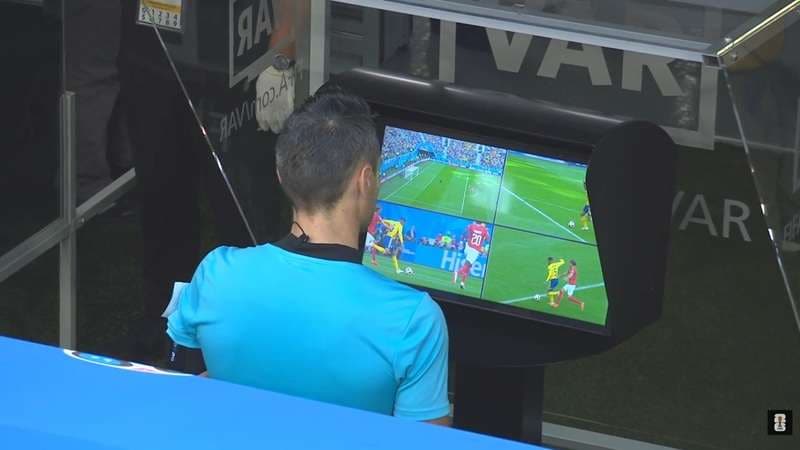
VAR, on the other hand, is a reactive system. A team of video officials watches the game from a remote operations room and can flag situations to the on-field referee for review. The four situations that can trigger a VAR review are:
- A goal being scored (to check for fouls or offside in the build-up).
- Penalty decisions.
- Direct red card incidents.
- Cases of mistaken identity (wrong player being carded).
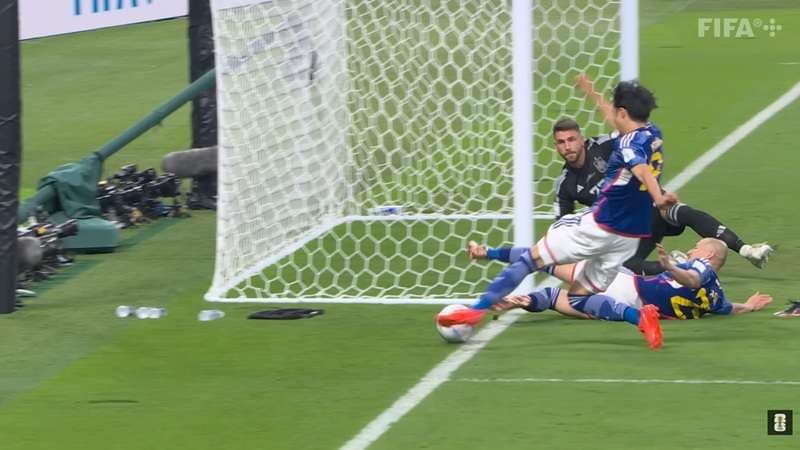
This is why Japan vs Spain in the 2022 World Cup confused so many people. Japan's second goal was checked because the ball looked like it may have gone out of play before the assist. VAR used goal-line camera images to see if part of the ball was still on the line.
Goal-Line Technology in the FIFA World Cup
The World Cup is where goal-line technology has had its most dramatic moments, partly because the stakes are so impossibly high, and partly because billions of people are watching every frame.
It took years of bad calls, public pressure, testing, and very awkward replays for FIFA to finally accept the technology. Below is the story in a simpler timeline:
| Year | What Happened |
| 2010 | Frank Lampard's disallowed goal against Germany at the World Cup becomes a major turning point in the debate. |
| 2012 | IFAB officially approves goal-line technology, amending the Laws of the Game for the first time to permit its use in football |
| 2013 | Goal-line technology appears at the FIFA Confederations Cup in Brazil |
| 2014 | Goal-line technology debuts at the FIFA World Cup in Brazil. The Goal Control system uses 14 high-speed cameras (7 per goal) filming at 500 frames per second with a 5mm margin of error |
| 2018 | GLT continues at the Russia World Cup alongside the introduction of VAR for the first time at a World Cup |
| 2022 | GLT is used again at the FIFA World Cup in Qatar, while goal-line camera images also become part of wider VAR discussions |
| 2026 | The World Cup heads to the USA, Canada, and Mexico, GLT and VAR both firmly established as standard tools in the officiating toolkit |
🎯 Moments That Made History
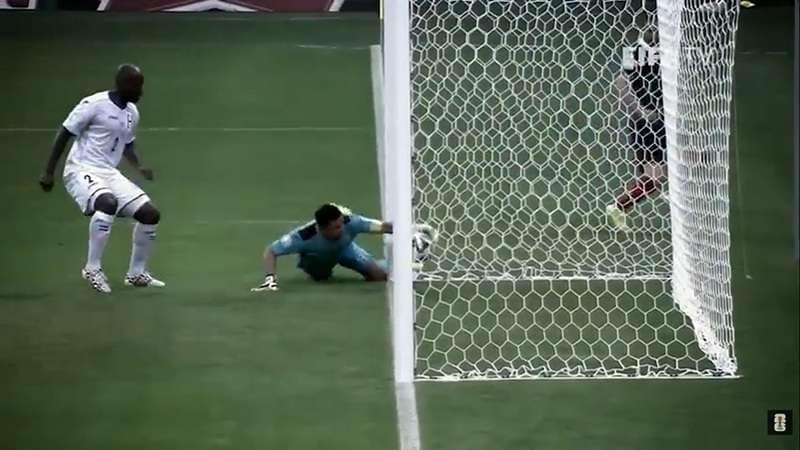
The very first goal ever confirmed by goal-line technology at a World Cup was in a match between France vs Honduras in the 2014 edition. Karim Benzema's shot bounced off the post, and Honduran goalkeeper Noel Valladares attempted to save the rebound, but the system confirmed the ball had fully crossed the line. It was ruled an own goal against Valladares. France won 3-0. The moment history was made.
Other Parts of the Game Affected by New Football Tech
Goal-line technology is only one piece of the bigger football tech puzzle. As tournaments grow, the tools around refereeing also keep changing. The World Cup 2026 has some newer officiating changes and tech developments, as reported by The Athletic, including:
How to Create Football Analysis Videos with Wondershare Filmora
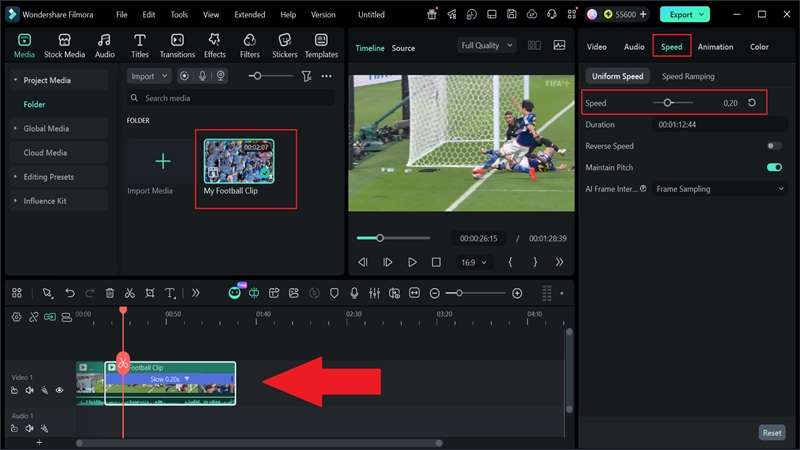
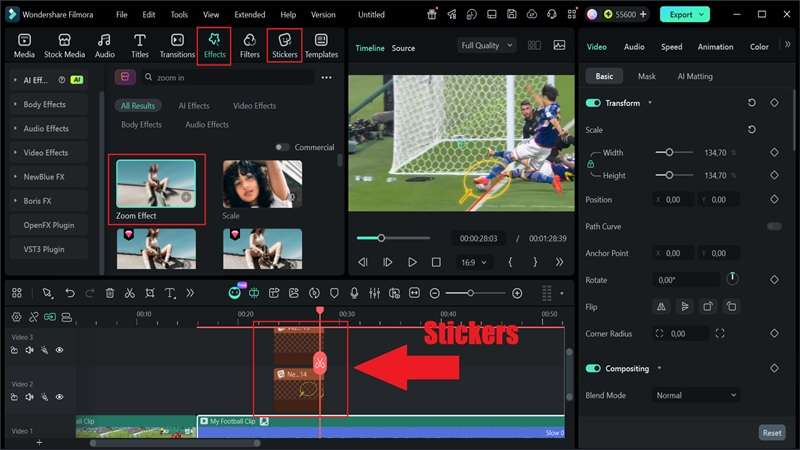
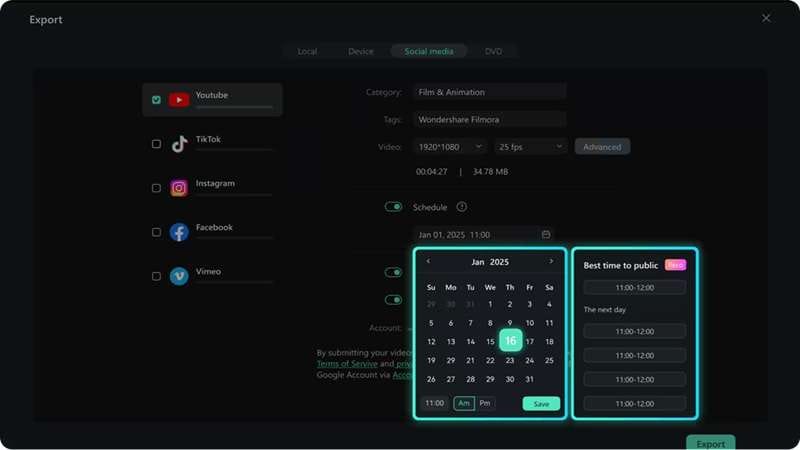
Now that you're fully versed in how goal-line technology in football works, why not use that knowledge to create content? Football analysis videos are absolutely massive right now, and moments like the Japan vs Spain controversy are exactly the kind of thing that racks up millions of views when broken down well.
For that kind of content, Wondershare Filmora is the editor that makes your life genuinely easy. It's an all-in-one video editing platform that handles everything from slow-motion replays to polished on-screen graphics.
So, instead of just telling people what happened, you can show the exact moment, freeze the frame, mark the line, and explain the decision clearly. Follow these steps to create your own football analysis video.
Conclusion
Goal-line technology doesn't make as much noise as VAR. But when the ball skims the line, and everything is on the line, it delivers a clear answer to keep the game fair.
If you love breaking down these big plays and sharing your thoughts with the football community, having Filmora makes it incredibly easy to turn raw match footage into professional, eye-catching analysis videos. With its smooth tools and quick social sharing features, you can easily highlight every single critical goal line decision and keep your audience locked into the action.