

 100% Security Verified | No Subscription Required | No Malware


 ChatGPT
 Perplexity
 Gemini
 Claude
 Grok
Grok
Good color editing starts with the basics. Before creating a cinematic grade, it helps to correct the footage itself—fix the white balance, balance the exposure, refine contrast, and make sure highlights and shadows retain the detail you want.
Wondershare Filmora brings these essential controls together under Color > Basic. You can adjust LUTs, white balance, lighting, sharpness, and vignette settings manually, or use Auto Color for a faster starting point before fine-tuning the result.
In this article
Color Correction vs. Color Grading
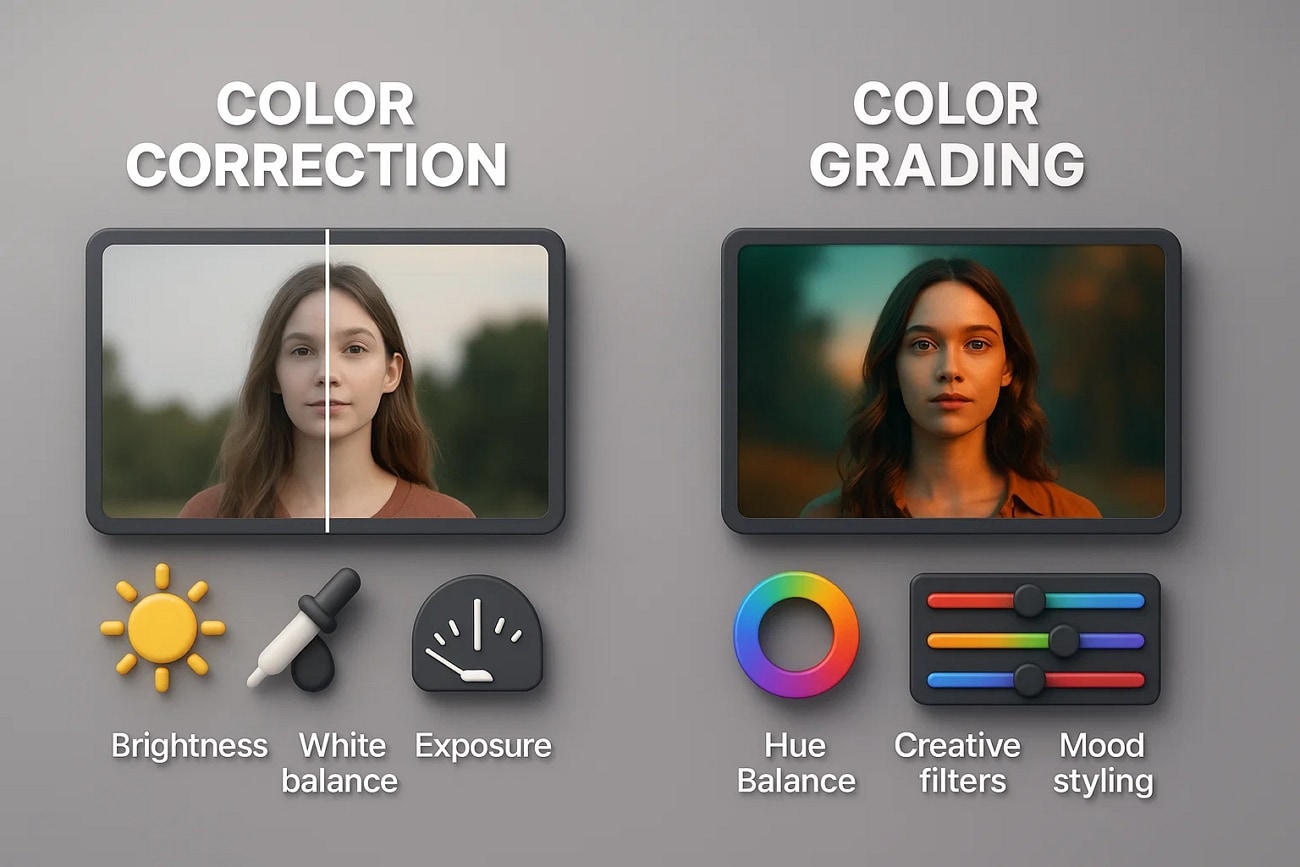
Color correction and color grading are related, but they have different goals.
- Color correction fixes technical problems such as incorrect white balance, exposure, contrast, saturation, and inconsistent colors.
- Color grading builds on the corrected image to create a particular visual style, atmosphere, or mood.
A practical workflow is to correct first and grade second. Start with Filmora's Basic color controls to establish a balanced image, then move into HSL, Curves, Color Wheels, LUTs, or other creative tools when you want more precise control over the final look.
Filmora Basic Color and Tone Adjustment Tools
Filmora organizes its essential color and tone controls under Color > Basic. Each section addresses a different part of the image.
- LUT: Apply a built-in or custom LUT and control its intensity with Strength.
- Color: Correct white balance automatically, use an Eyedropper, or manually adjust Temperature and Tint.
- Light: Adjust Exposure, Brightness, Contrast, Highlight, and Shadow.
- Adjust: Use Sharpen to refine the apparent detail of the footage.
- Vignette: Control the appearance around the edges of the frame and draw more attention toward the subject.
- Auto Color: Automatically balance the overall appearance of the footage and control the result with Strength.
These controls can be used independently or combined. For example, you might correct white balance first, refine exposure and shadows, and then apply a LUT at reduced strength to establish the final style.
 secure download

How to Adjust Video Color and Tone in Filmora
Import your footage into Filmora, add it to the timeline, and select the clip. Open Color > Basic in the properties panel to access the main color adjustment controls.
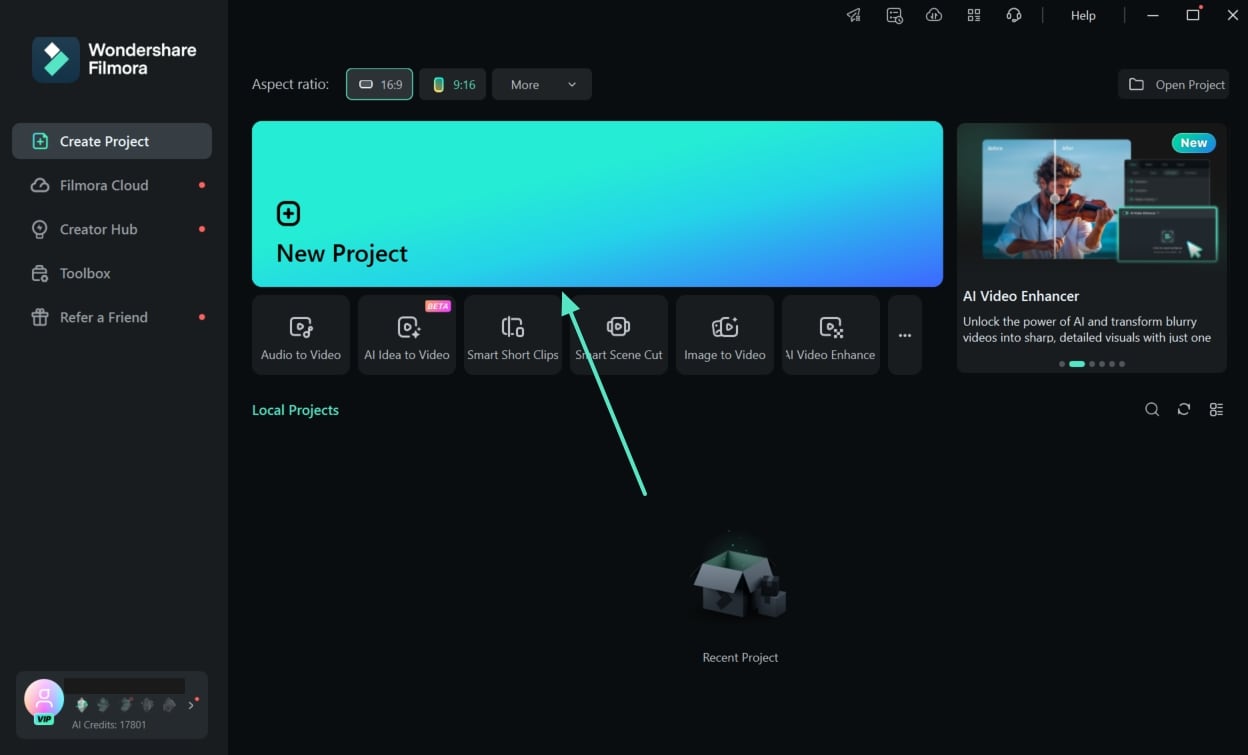
1. Apply and Adjust a LUT
Open Color > Basic > LUT and enable the LUT controls. Choose one of Filmora's available LUTs or select Load new LUT... to import your own.
After applying a LUT, use Strength to control how strongly it changes the image. A LUT does not have to be used at full intensity—a lower value can create a more subtle result while preserving the character of the original footage.
If your video contains people, Protect Skin Tones can help reduce unwanted changes to skin after a LUT is applied.
2. Correct White Balance
Open Color > Basic > Color when the footage looks too warm, too cool, or has an unwanted color cast.
Filmora gives you several ways to correct white balance:
- Auto: Let Filmora automatically adjust the white balance.
- Eyedropper: Select a neutral area in the footage as the white balance reference.
- Temperature: Move the image toward a warmer or cooler appearance.
- Tint: Refine green or magenta color casts.
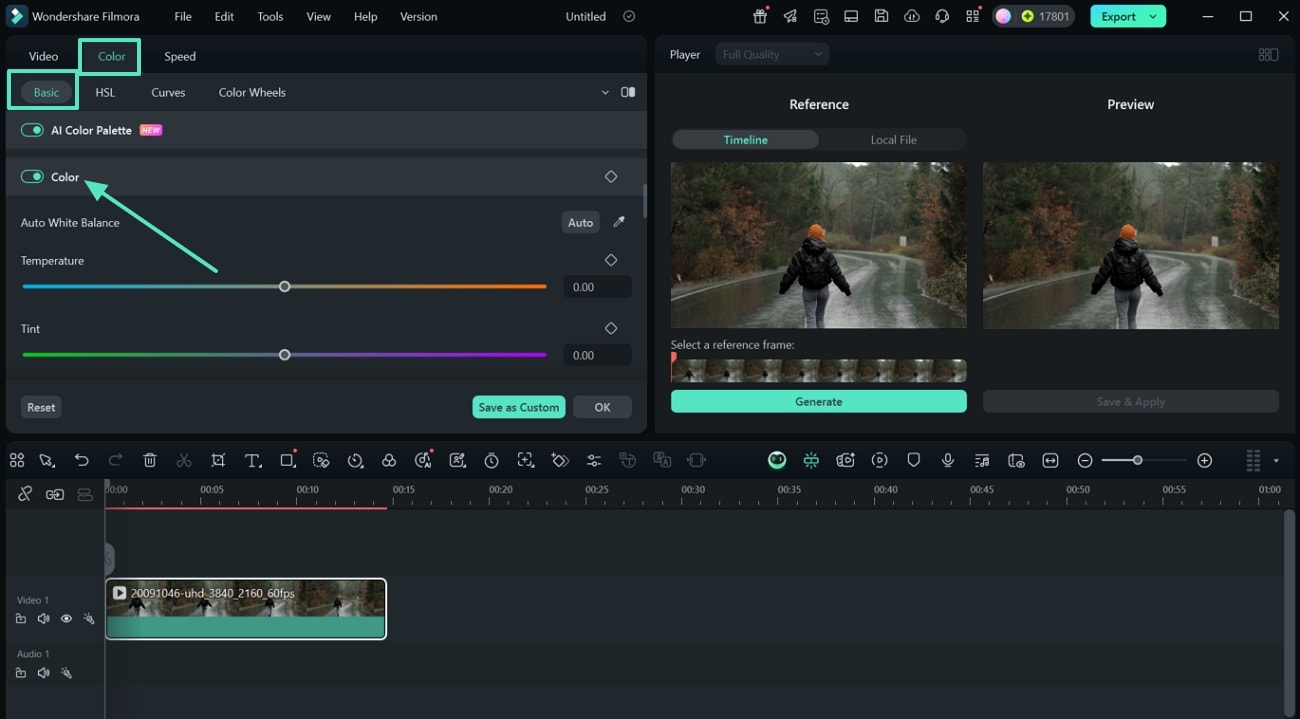
White balance is usually worth correcting before you create a stronger creative grade. Otherwise, a LUT or other stylized adjustment can amplify an existing color cast.
3. Adjust Exposure and Lighting
If the video appears too bright, too dark, flat, or overly contrasty, open Color > Basic > Light.
Filmora provides separate controls for:
- Exposure: Changes the overall exposure level.
- Brightness: Adjusts the general brightness of the image.
- Contrast: Changes the difference between lighter and darker areas.
- Highlight: Refines brighter parts of the frame.
- Shadow: Refines darker areas of the frame.
Rather than relying on one slider, use these controls together. For example, an overexposed scene may benefit from reduced Exposure and Highlights while retaining enough Shadow detail to keep the image balanced.
4. Sharpen Video Details
Open Color > Basic > Adjust and enable the section to access Sharpen.
Move the Sharpen slider while monitoring the preview. Increasing sharpness can make edges and details appear more defined, but excessive sharpening can make footage look unnatural, so use it according to the source material.
You can use Reset to restore the original value or Save as Custom if you want to reuse the adjustment later.
5. Add a Vignette
Open Color > Basic > Vignette to adjust the appearance around the outer areas of the frame.
A subtle vignette can help guide attention toward the main subject or center of the shot. Adjust the available parameters while checking the preview rather than treating the vignette as a fixed preset.
Once the effect looks right, you can save the settings as a custom configuration for reuse.
6. Use Auto Color for Faster Correction
If you want a faster starting point, enable Auto Color under Color > Basic.
Filmora automatically adjusts the overall appearance of the footage, helping balance color and lighting without requiring you to configure every parameter manually.
Use the Strength slider to control how strongly Auto Color affects the clip. You can then continue refining the result with White Balance, Light, HSL, Curves, or other controls.
Auto Color works particularly well as a starting point: apply the automatic correction first, review the result, and then make manual adjustments where needed.
For the complete current workflow, see the Filmora Color Adjustment Guide for Windows or Color Adjustment Guide for Mac.
Fine-Tune Colors With HSL, Curves, and Color Wheels
Once the basic image is balanced, Filmora provides more precise controls for individual colors and tonal regions.
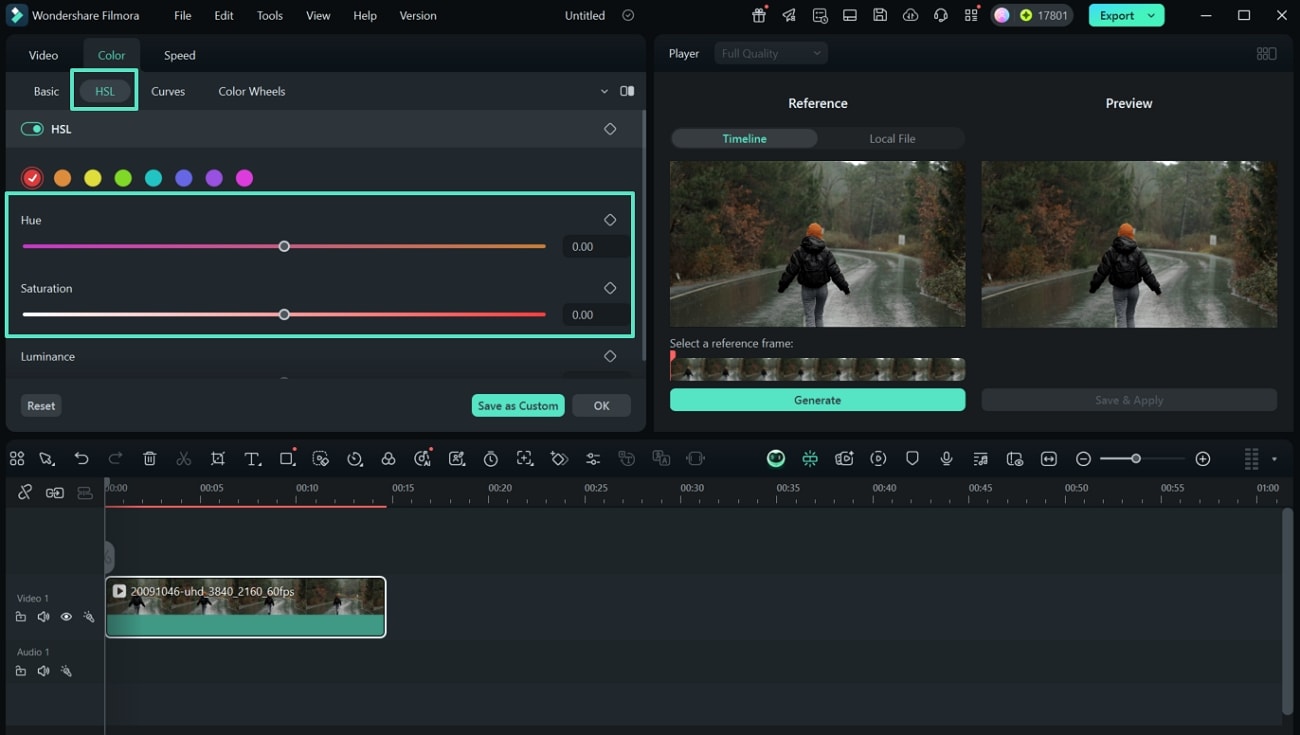
Adjust Individual Colors With HSL
Open HSL to select a particular color range and adjust its Hue, Saturation, and Luminance.
This is useful when one color needs refinement without making the same change across the entire image.
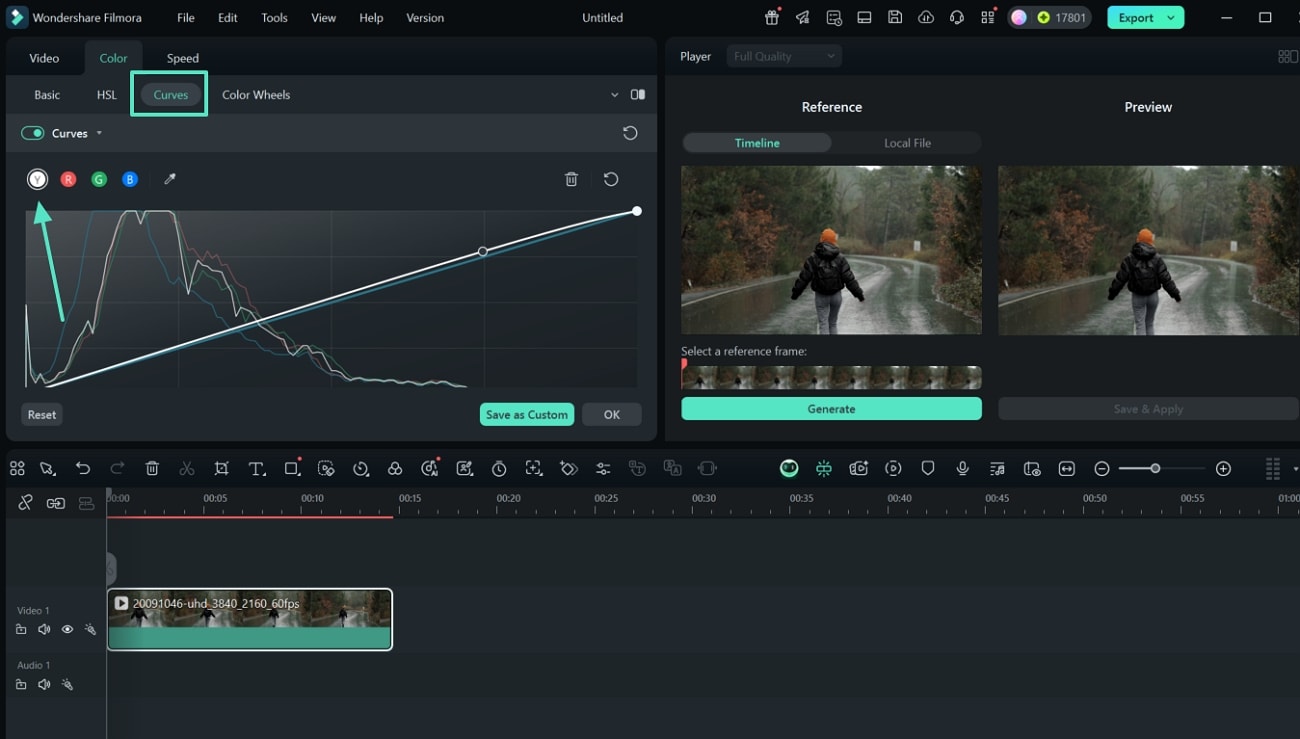
Fine-Tune Tonal Values With Curves
Open Curves for more precise tonal and color-channel adjustments. The Y curve controls overall luminance, while individual R, G, and B channels provide more detailed color control.
Adjust Shadows, Midtones, and Highlights With Color Wheels
Use Color Wheels when you want separate control over the color of Shadows, Midtones, and Highlights. This is particularly useful during creative color grading after the basic correction has been completed.
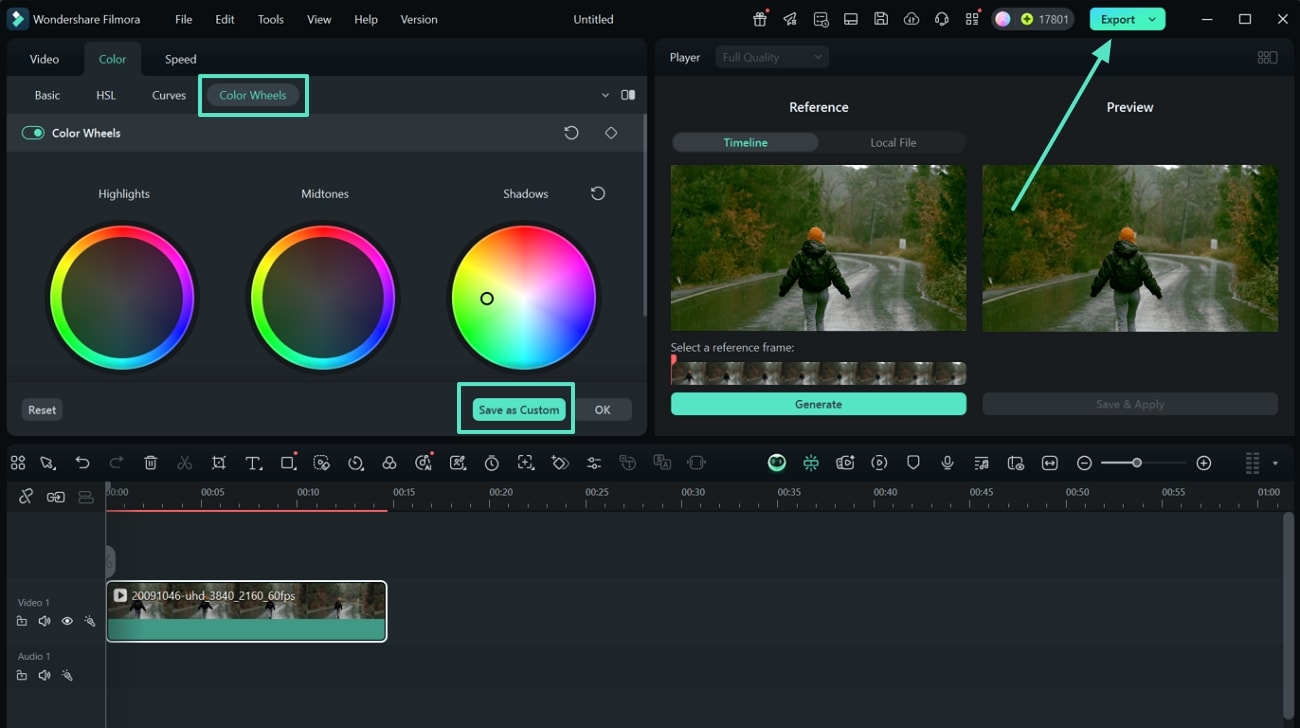
If you create a combination of adjustments that you want to reuse, select Save as Custom to preserve the settings.
How to Adjust Video Colors on the Filmora App
If you prefer to edit on a smartphone, the Filmora App also provides controls for adjusting video color.
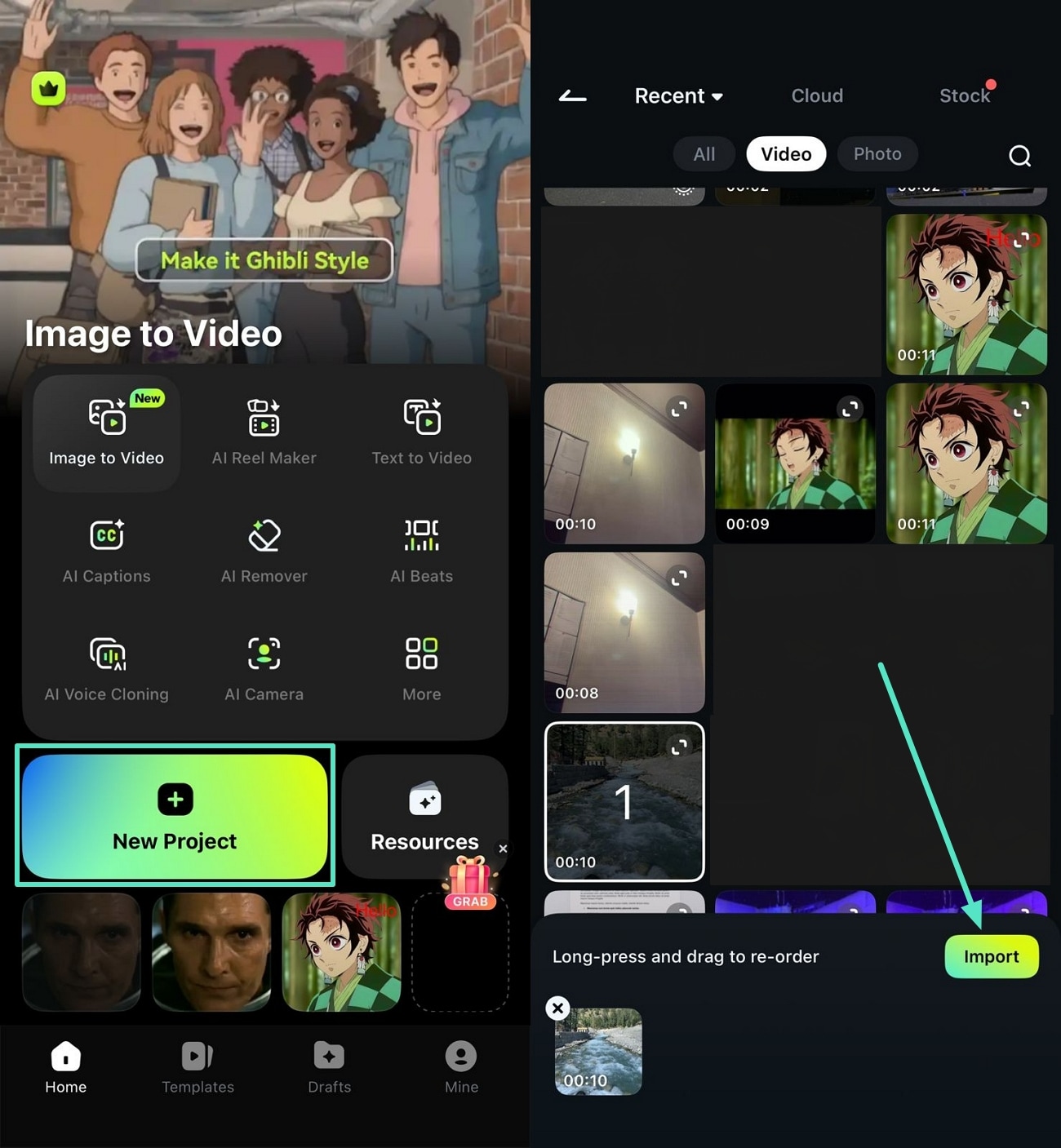
Step 1. Import Your Video
Launch the Filmora App, tap New Project, select your video, and add it to the editing timeline.
Step 2. Open Adjust and HSL
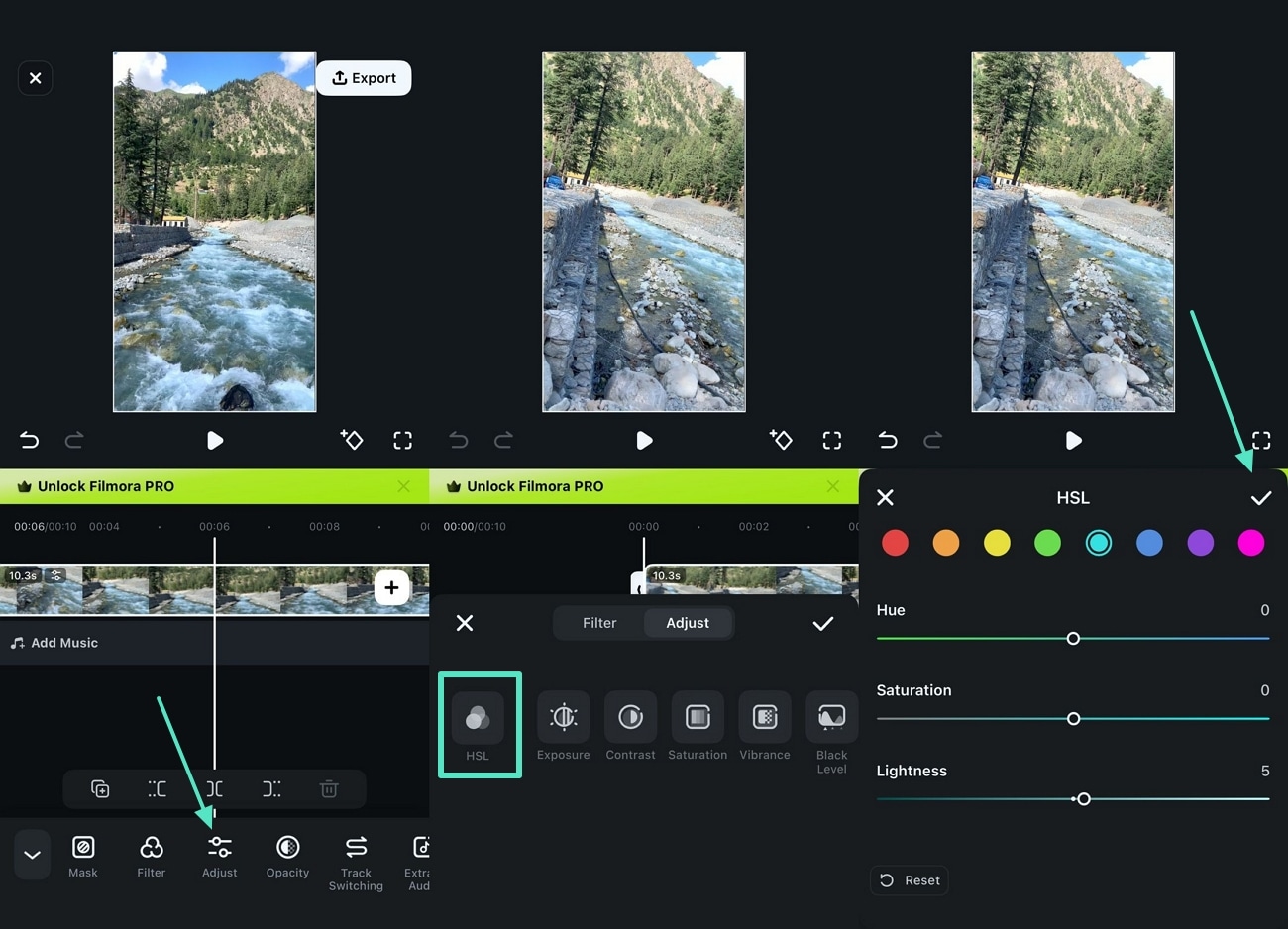
Select the clip and tap Adjust in the editing toolbar. Open HSL when you want to modify an individual color range.
Select a color and adjust its Hue, Saturation, and Lightness while previewing the result.
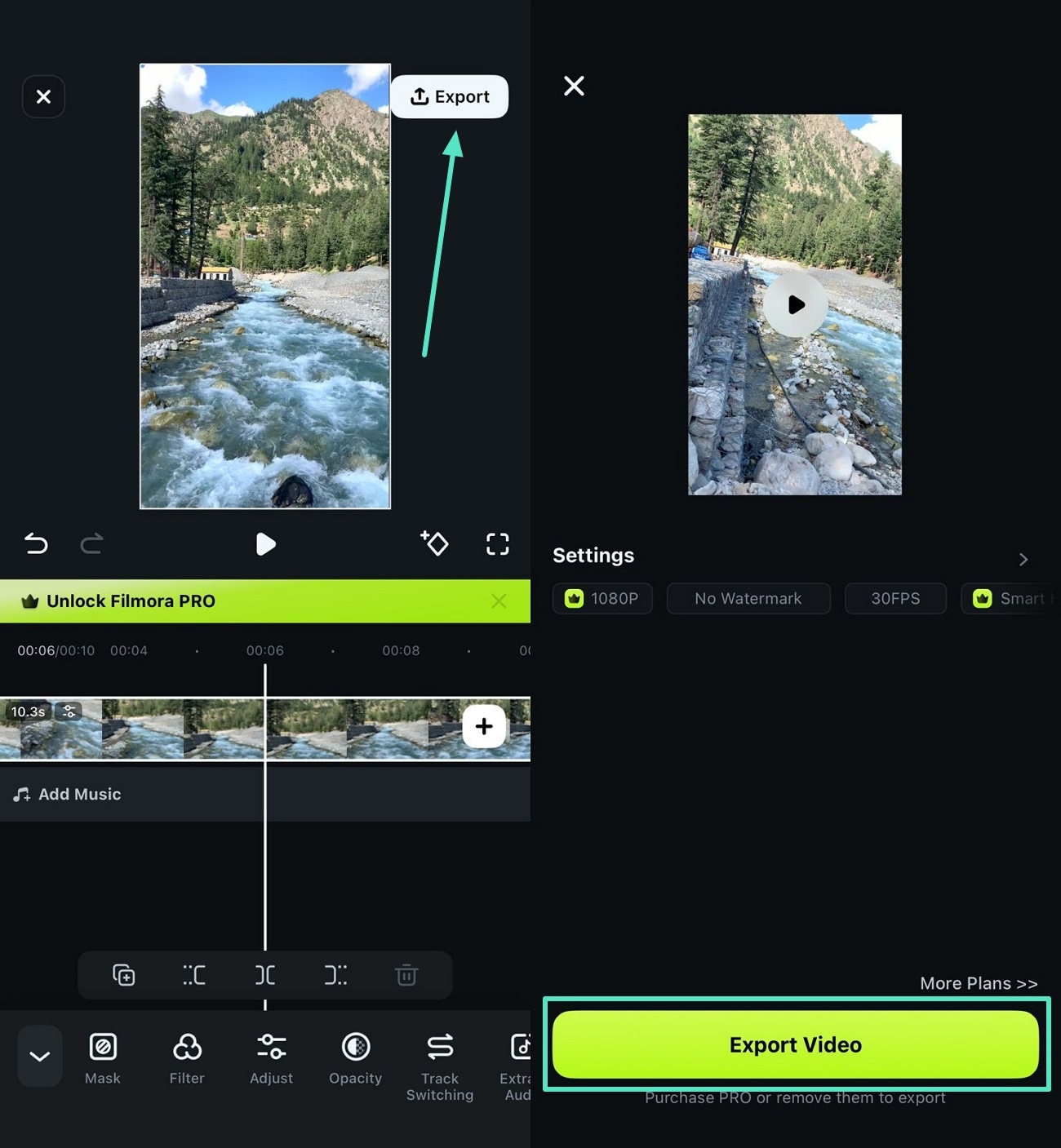
Step 3. Preview and Export
Review the edited video and make any final adjustments. When you're satisfied with the result, tap Export and configure the output settings before saving the video.
Conclusion
Effective video color editing starts with a balanced image. Filmora's Basic Color controls bring LUTs, white balance, lighting, sharpening, vignette, and Auto Color into one workflow, making it possible to correct common color and tone issues before moving into more detailed grading.
For a faster workflow, start with Auto Color and refine the result manually. For greater control, adjust White Balance and Light first, then move into HSL, Curves, and Color Wheels when individual colors or tonal regions need more precise treatment.
secure download