
For the Best Results, Use the Latest Version.
Filmora User Guide for Mac
-
Preparations for Mac
-
Account (Mac)
-
Get Started & Basic Settings (Mac)
- Release Notes for Mac
- Latest Version and Features for Mac
- Get Started on Mac - Full Guide
- Download/register/uninstall on Mac
- Panel Layout on Mac
- Keyboard Shortcuts in Mac
- Touchbar on Mac
- Change playback quality on Mac
- Render preview files on Mac
- Manage Timeline in Mac
- Media for use on Mac
- Logo Reveal For Mac
- Marked Favorites for Mac
-
Compatibility & Tech Specs (Mac)
-
Performance Settings (Mac)
-
-
Creating Projects - Mac
-
Creating New Projects (Mac)
-
-
Importing & Recording - Mac
-
Importing (Mac)
-
Recording (Mac)
-
-
Video Editing for Mac
-
Basic Video Editing for Mac
- Edit Live Photos on Mac
- Enable/Disable Clip for Mac
- Magnetic Timeline For Mac
- Dual Monitor Setup for Video Editing on Mac
- Select All Clips on Timeline
- Auto Ripple for Mac
- Split & Cut Videos on Mac
- Compositing on Mac
- Crop and zoom on Mac
- Playback Zoom Level for Mac
- Change Speed on Mac
- Play Video in Reverse on Filmora for Mac
- Mark In and Mark Out for Mac
- Markers for Mac
- Group Clips in Filmora for Mac
- Customized Backgrounds for Videos and Images in Mac
- Video Snapshot for Mac
- Freeze Frame on Mac
- Auto enhance on Mac
- Applying Drop Shadow for Mac
- Adjustment Layer for Mac
- Mark Clips in Filmora for Mac
- Video Editing Ruler – Mac
- Apply Transforming for Mac
-
Advanced Video Editing for Mac
- Keyframe Motion Blur for Mac
- Camera Tracking for Mac
- Keyframe Path Curve for Mac
- Text Animation Path for Mac
- Create Multi-Camera Clip for Mac
- Filmora Motion Blur | Mac
- Drawing Tools for Mac | Filmora Guide
- Track Matte for Mac
- Compound Clips for Mac
- 360° Video Reframing for Mac
- AI Video Enhancer for Mac
- Video Chapters in Filmora for Mac
- Filmora Flicker Removal Guide | Mac
- Multi-Clip Editing for Mac
- Keyframe Graph Editor for Mac
- Create Multi-Screen Videos in Filmora on Mac
- Animation Keyframing for Mac
- Masking in Filmora on Mac
- PIP (Picture in Picture) in Filmora on Mac
-
AI-Powered Video Editing for Mac
- Smart Scene Cut for Mac
- Smart Short Clips for Mac
- Filmora AI Eye Contact - Mac
- Filmora Image to Video for Mac
- AI Idea to Video for Mac
- AI Text-to-Video for Mac
- AI Media Analysis for Mac
- Instant Cutter Tool on Mac
- AI Face Mosaic for Mac
- Filmora Image to Prompt for Mac
- Filmora AI Image Enhancer Guide – macOS
- Planar Tracking for Mac
- Filmora AI Relight - Mac
- AI Extend For Mac
- AI Script-to-Video for Mac
- AI Text-Based Editing in Mac
- Create With Instant Mode on Mac
- ChatGPT Plugin - AI Copywriting on Mac
- AI Smart Cutout in Filmora for Mac
- Auto reframe on Mac
- Lens Correction in Filmora for Mac
- AI Portrait Cutout on Mac
- Scene detection on Mac
- AI Smart Masking for Mac
- AI Mate Editing for Mac
- Motion Tracking on Mac
- Video Stabilization for Mac
- AI Video/Photo Object Remover for Mac
- AI Smart Search for Mac
- AI Skin Tone Protection for Mac
- Green screen on Mac
- Super Slow Motion with Optical Flow for Mac
- AI Stylizer for Mac
- Video Denoise for Mac
-
-
Audio Editing for Mac
-
Basic Audio Editing for Mac
-
Advanced Audio Editing for Mac
-
AI-Powered Audio Editing for Mac
- Audio To Video for Mac
- AI Sound Effect for Mac
- Smart BGM Generation on Mac
- AI Voice Enhancer for Mac
- Audio Stretch for Mac
- AI Audio Denoise for Mac
- Auto Synchronization on Mac
- AI Vocal Remover for Mac
- AI Auto Beat Sync for Mac
- AI Music Generator for Mac
- AI Voice Cloning on Mac
- Silence Detection on Mac
-
-
Text Editing for Mac
-
Basic Text Editing for Mac
-
Advanced Text Editing for Mac
-
AI-Powered Text Editing for Mac
-
-
Video Customizations for Mac
-
Video Effects (Mac)
-
Audio Effects (Mac)
-
Transitions (Mac)
-
Stickers (Mac)
-
Filters (Mac)
-
Color Editing (Mac)
-
Animations (Mac)
-
Templates (Mac)
-
Asset Center (Mac)
-
-
Exporting & Share & Cloud Backup - Mac
Filmora 15 User Guide in PDF
Filmora 13 & 14 User Guide in PDF
Filmora 12 User Guide in PDF
Filmora 11 User Guide in PDF
Filmora 9 & 10 User Guide
Adjust Video Colors in Filmora (Mac)
Filmora for Mac provides a collection of color controls for correcting footage and creating a more consistent visual look. Under "Color > Basic," you can apply LUTs, balance color, refine lighting, sharpen details, and add a vignette. For a faster starting point, Auto Color can automatically improve the overall color balance before you make further adjustments.
Index
Apply a LUT to Your Video
A LUT can quickly transform the color style of footage without requiring you to adjust multiple parameters individually. Filmora for Mac includes ready-made LUTs and supports custom LUTs for creating a particular visual look.
Step 1. Access the LUT Controls
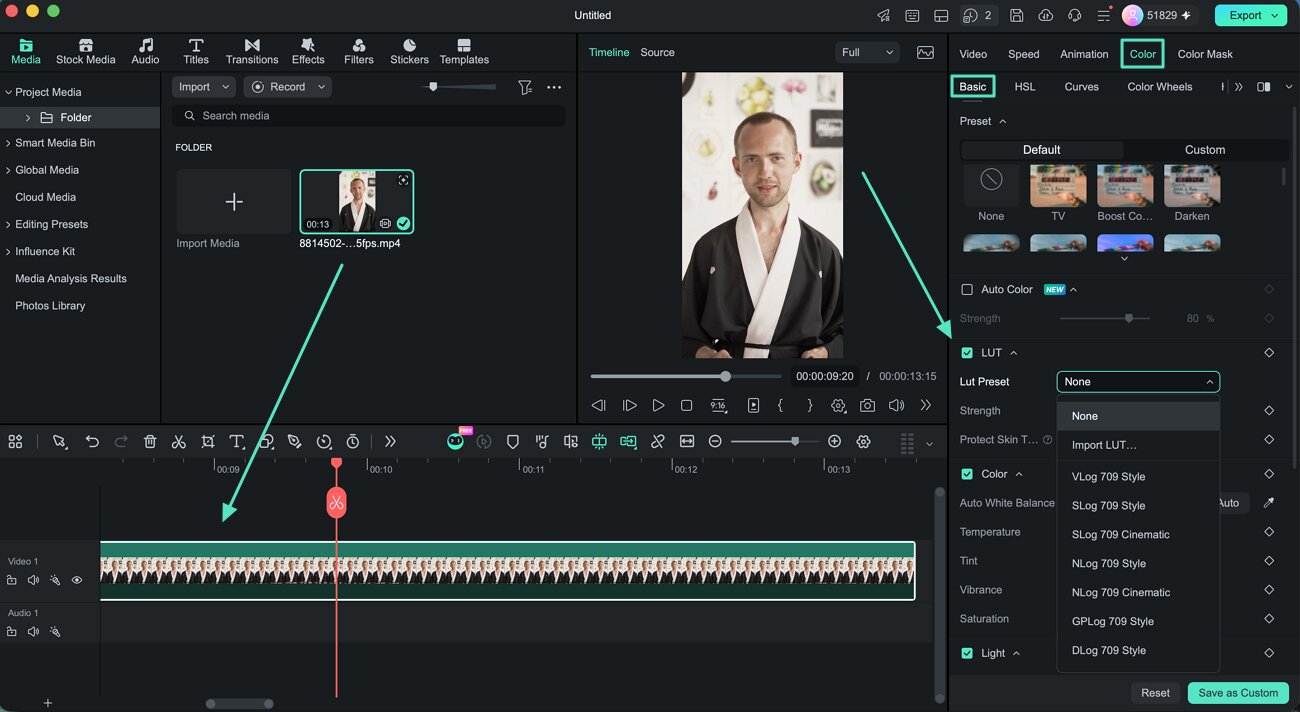
Add your footage to the Timeline and select the clip you want to edit. In the settings panel, open Color > Basic and enable LUT to display its controls.
Step 2. Choose and Customize a LUT
Browse the available LUTs and select one that suits your footage. To use an external LUT, choose Import LUT... and import it. Use Strength to increase or reduce its effect, and adjust Protect Skin Tones when you want to preserve more natural-looking skin colors.
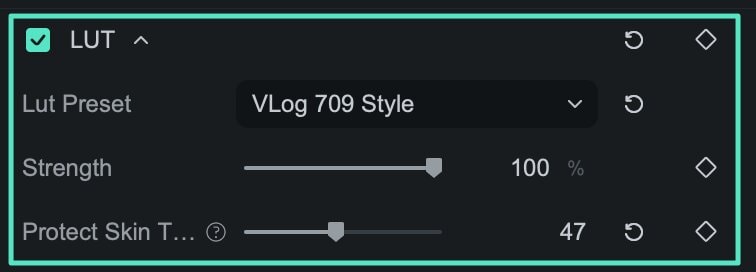
Note: Select None when you want to remove the LUT. Filmora also supports exporting the grading of a selected clip as a .cube LUT and managing imported LUTs through Editing Presets > LUT.
Balance Video Colors
Incorrect white balance can make footage appear overly warm, cool, green, or magenta. The Color controls let you correct these shifts automatically or manually with Temperature and Tint.
Step 1. Access the Color Controls
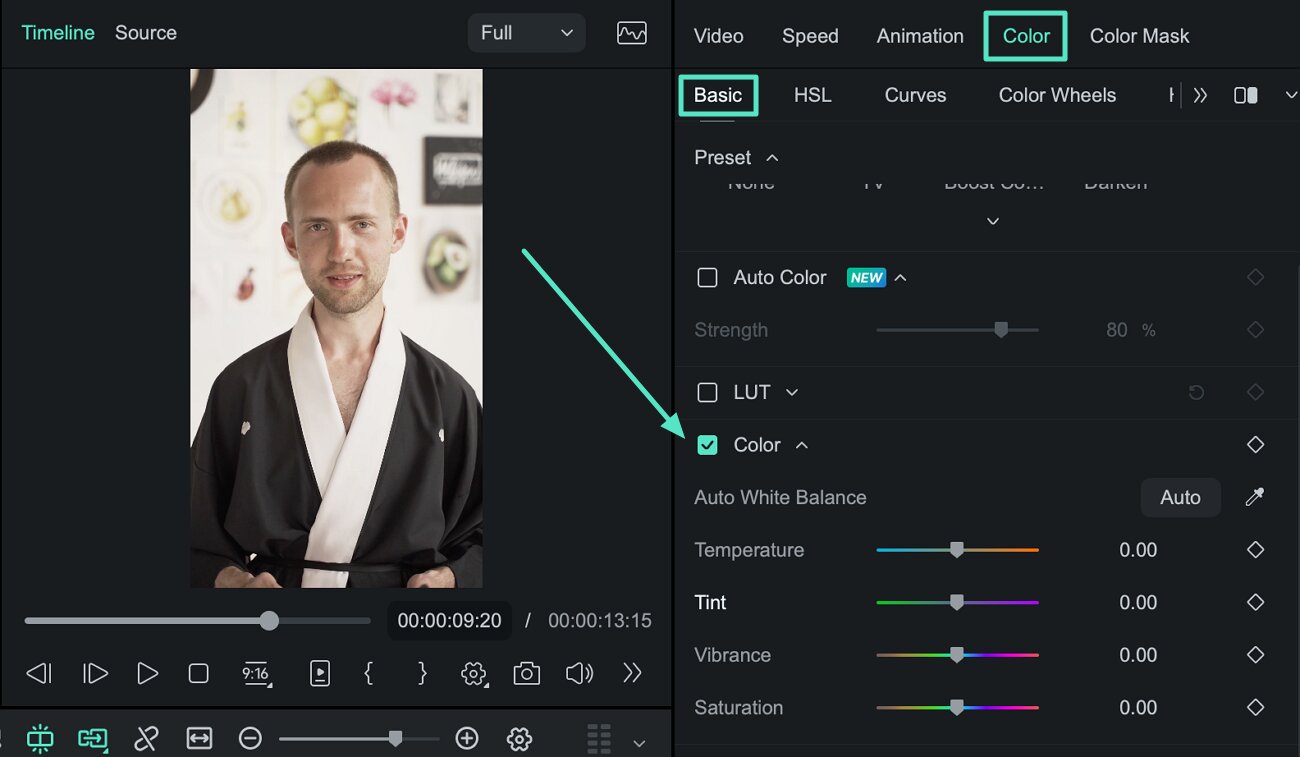
Click the required clip on the Timeline, then open Color > Basic in the settings panel. Enable Color to display the white balance options.
Step 2. Correct the White Balance
Choose Auto to let Filmora balance the colors automatically, or use the Eyedropper to reference a neutral area in the footage. For greater control, change Temperature to shift between cooler and warmer tones, then adjust Tint to balance green and magenta tones.
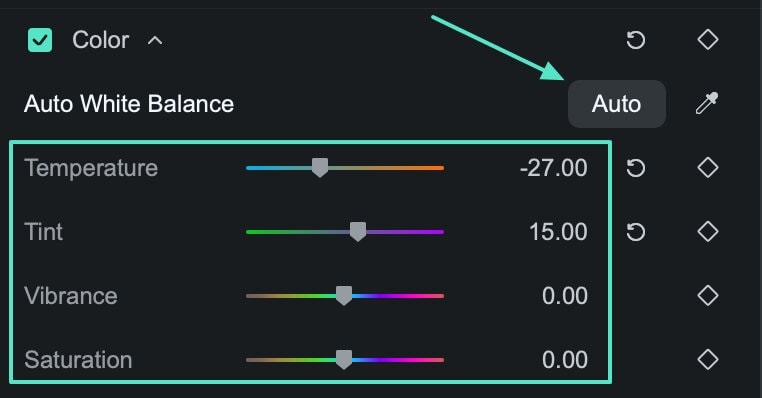
Note: Reset the values if you want to return to the previous settings. You can also add keyframes when the color adjustment needs to change at different points in the clip.
Refine Video Lighting
Lighting controls are useful when footage is underexposed, overly bright, low in contrast, or losing detail in its brightest or darkest areas.
Step 1. Enable the Light Controls
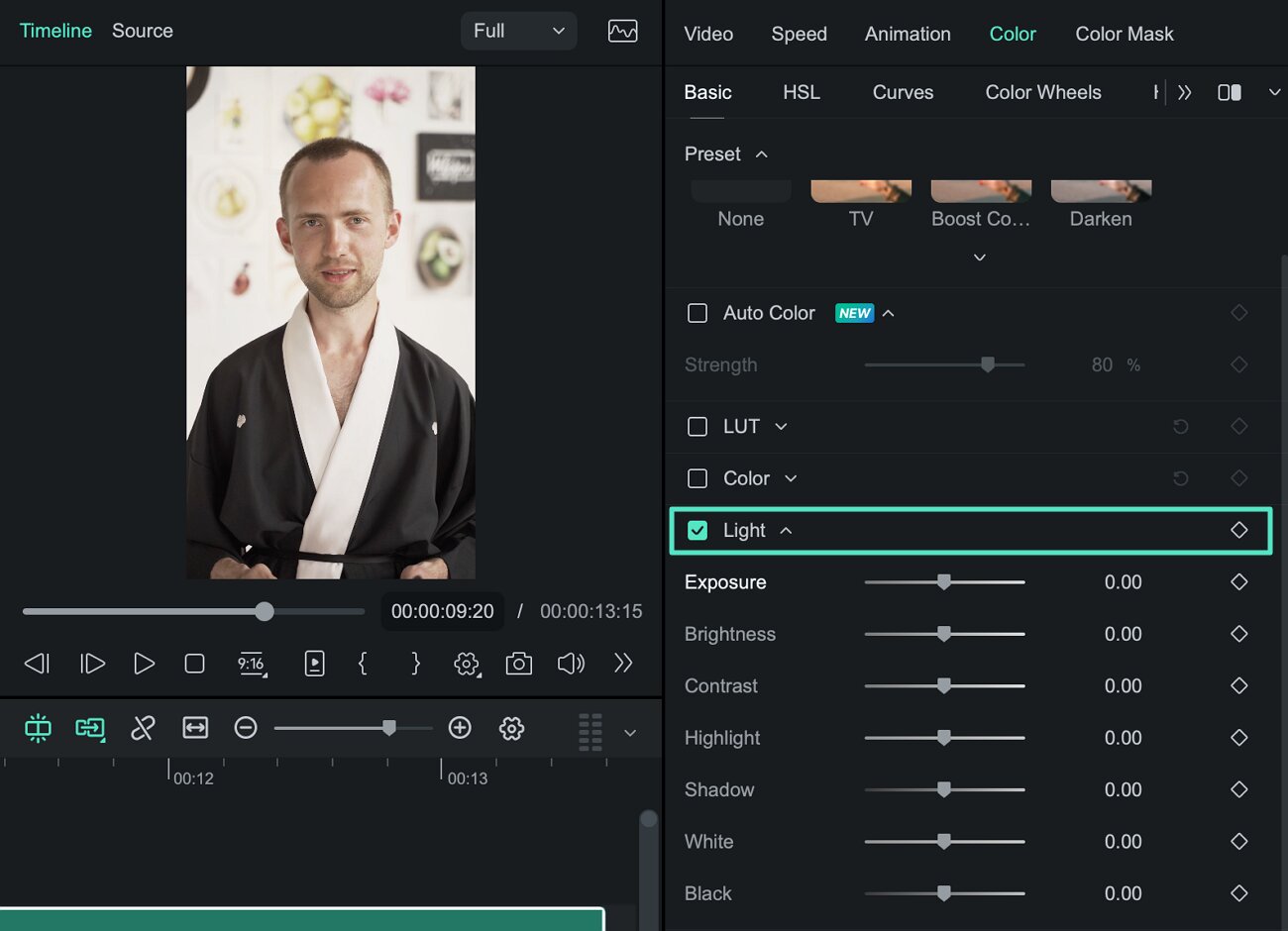
Select your clip and navigate to Color > Basic > Light. Turn on Light to display the available tonal adjustments.
Step 2. Balance Light and Contrast
Use Exposure and Brightness to control the overall light level, then adjust Contrast to change the separation between light and dark areas. Refine Highlight and Shadow to work more specifically with brighter and darker portions of the image.
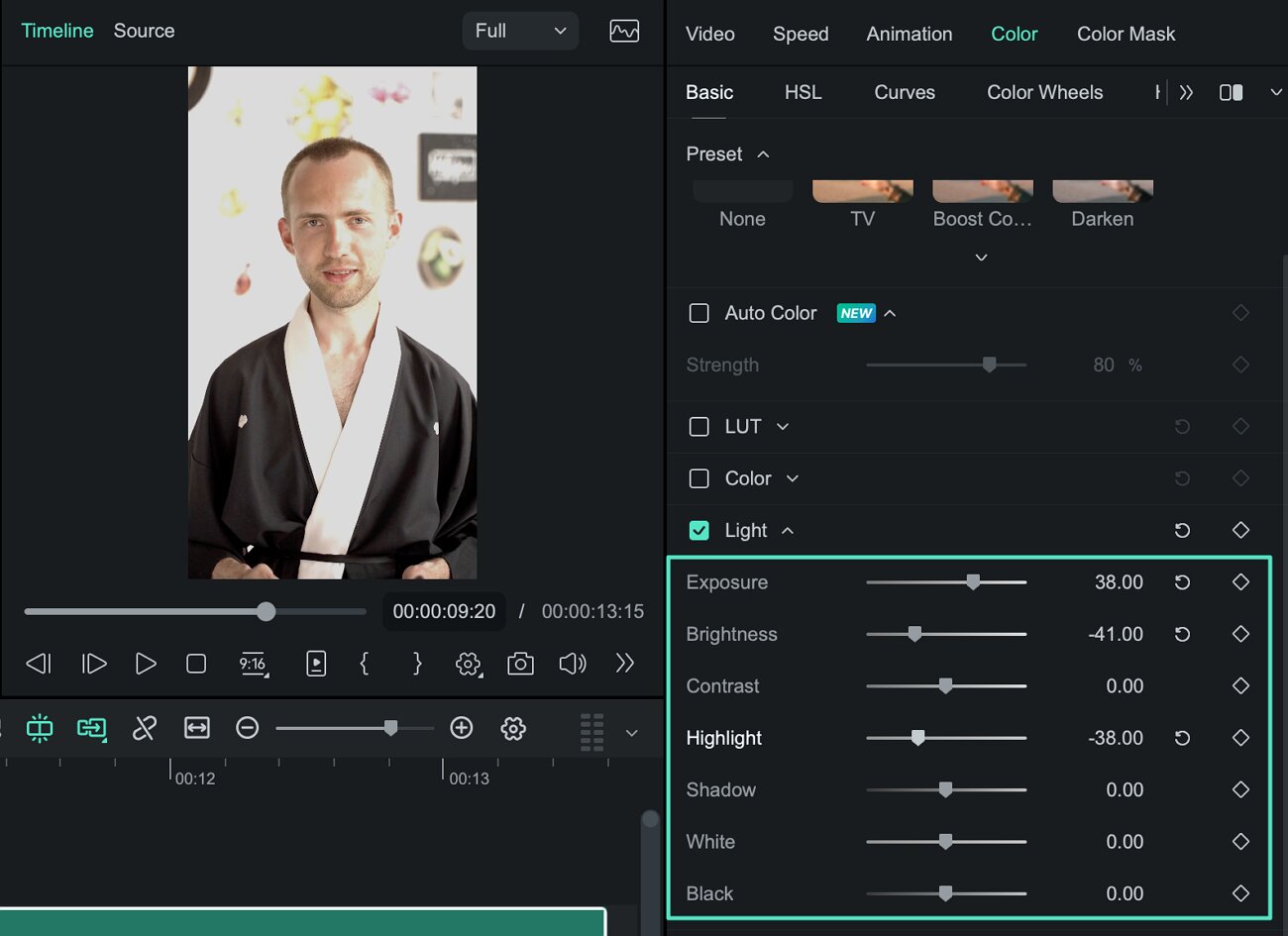
Note: Individual values can be reset when necessary. Keyframes are also available if the lighting adjustment needs to vary as the clip plays.
Improve Video Sharpness
For footage that needs more visible definition, the Adjust section includes a Sharpen control. It lets you increase the apparent detail without changing the other basic color settings.
Step 1. Find the Adjust Controls
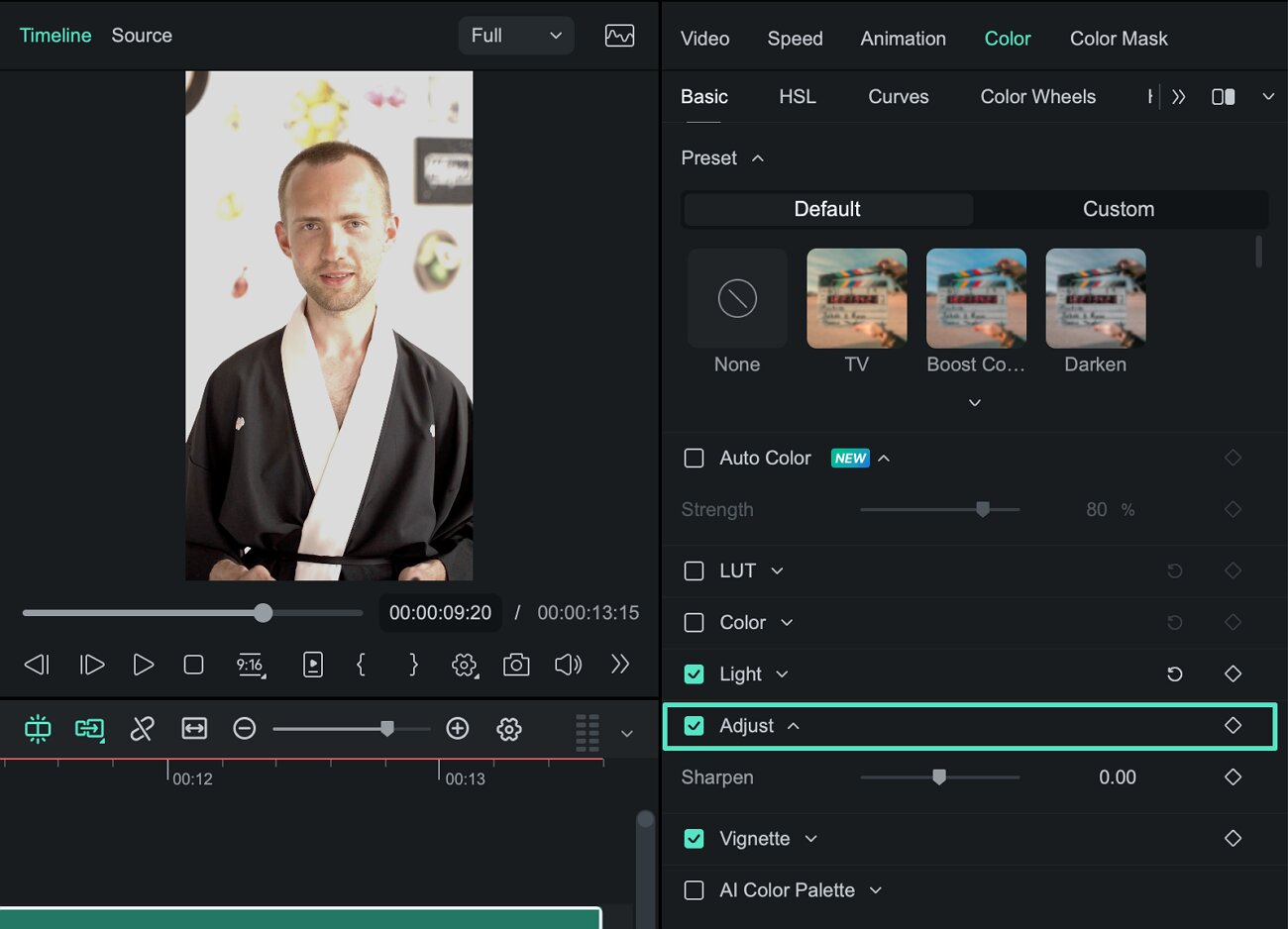
Select the footage on the Timeline and open Color > Basic > Adjust. Enable Adjust to access the Sharpen setting.
Step 2. Fine-Tune the Sharpness
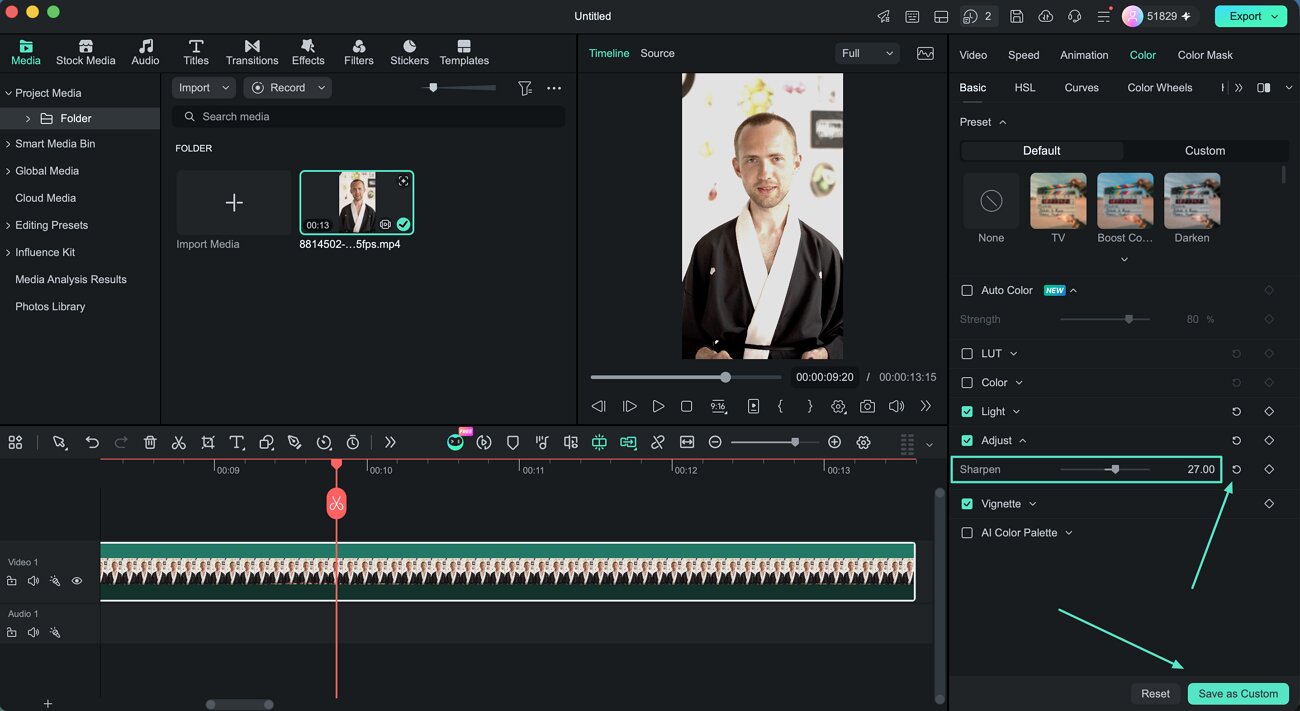
Move the Sharpen slider while checking the result in the preview window. Keep the adjustment at a suitable level for the footage. Choose Reset to restore the original value or Save as Custom to reuse the settings later.
Create a Vignette
A vignette modifies the outer areas of the frame, helping emphasize the subject or center of the shot. Filmora lets you customize the effect rather than applying a fixed look.
Step 1. Customize the Vignette
Select the clip and navigate to Color > Basic > Vignette. Enable Vignette, then modify the available settings while checking how the edges of the frame change in the preview.
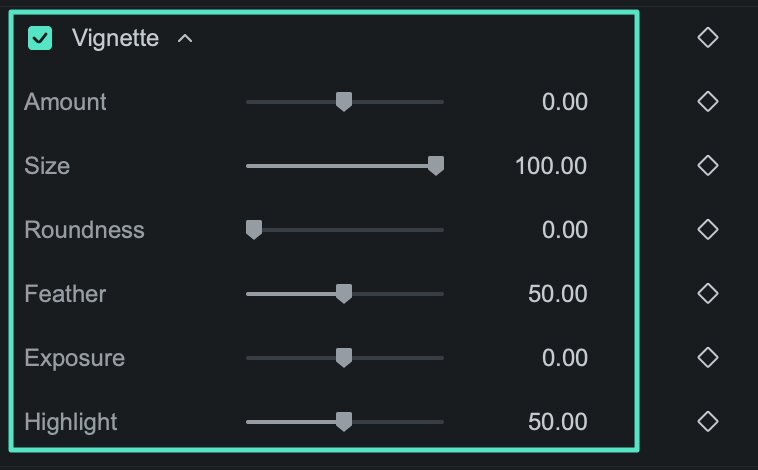
Step 2. Save or Reset the Effect
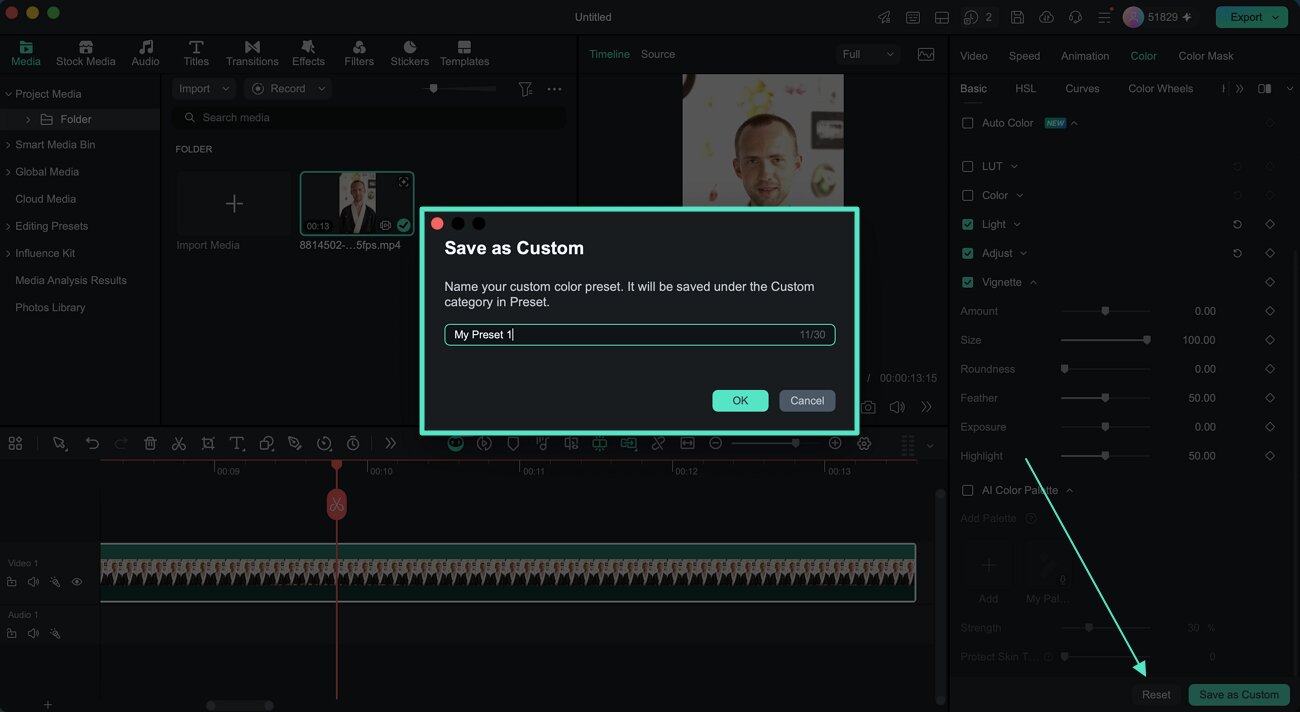
Preview the clip and make any final adjustments to the vignette. Use Reset if you want to discard the changes, or click Save as Custom to keep the configuration for future use.
Enhance Video Colors With Auto Color
Manually correcting every color and lighting parameter is not always necessary. Auto Color provides a faster option by automatically balancing the footage, while Strength gives you control over how much of the correction is applied. You can use the result on its own or as a starting point for further color adjustments.
Step 1. Apply Auto Color
Select the footage on the Timeline and navigate to Color > Basic. Enable Auto Color to apply the correction, then move the Strength slider until the result suits your footage. Select Save as Custom if you want to preserve the settings.
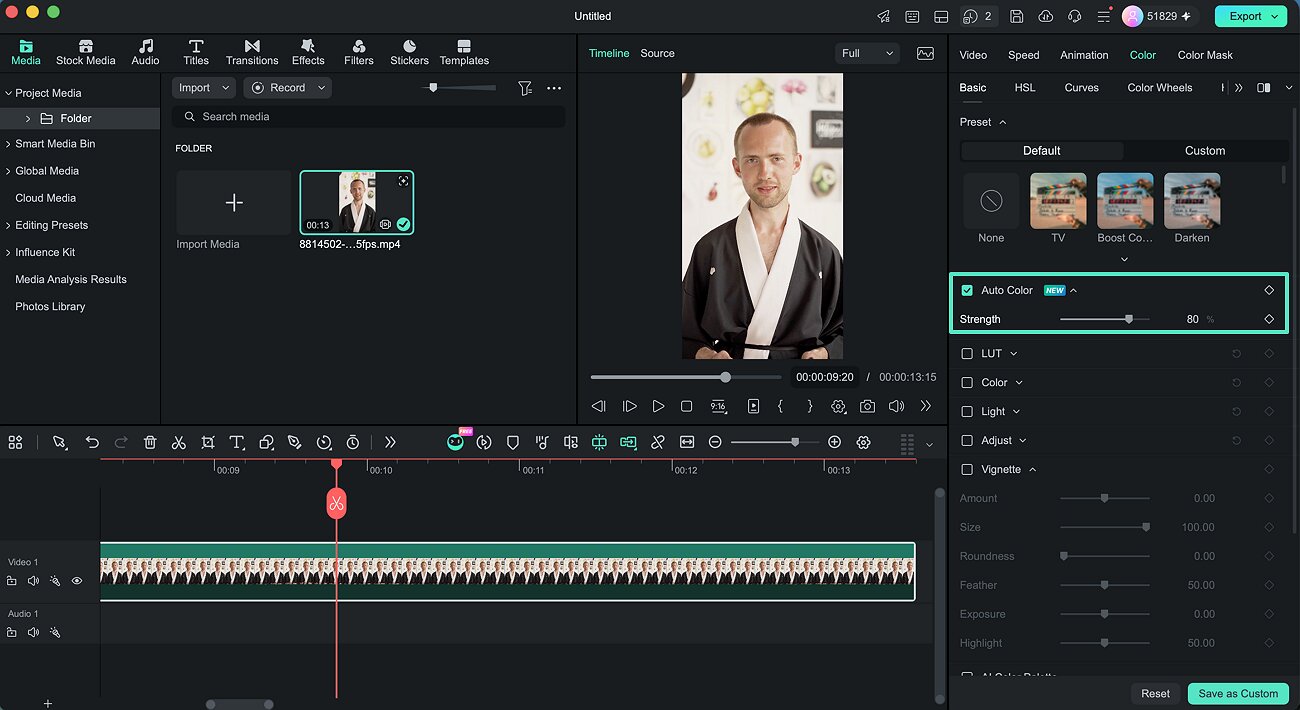
Step 2. Check and Export the Video
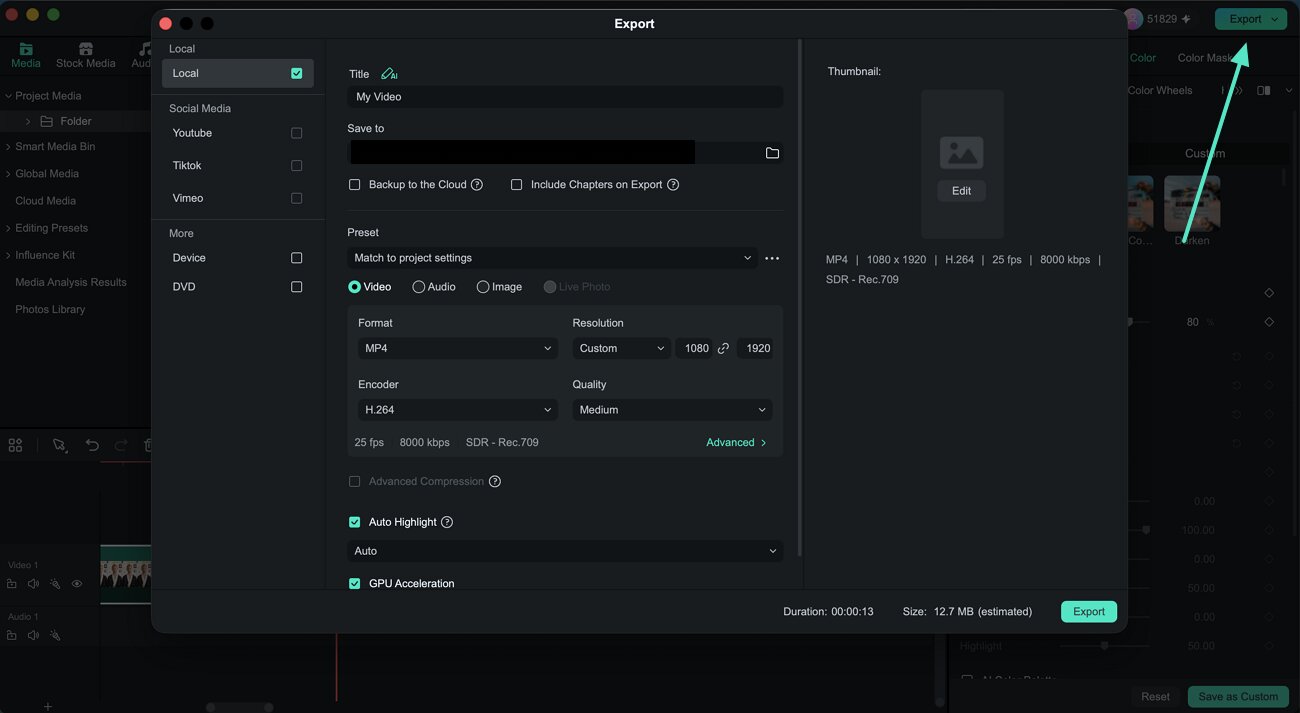
Play the corrected clip in the preview window and compare the result with your original footage. Refine Strength or combine Auto Color with the other color controls if necessary. When the video is ready, click Export to save the final result.
Related Posts
Featured Articles
Learn more popular articles from Wondershare.
The Ultimate Guide to Using Text-to-Speech on Discord
Learn how to enable and use text-to-speech on Discord for fun and accessibility. Plus, discover Filmora's advanced TTS and voiceover features to take your video editing projects to the next level!
Top New Year's Eve Songs to Ring in the New Year
Want your New Year songs to make the atmosphere more festive and exciting? Record your exciting New Year moments and don't forget to play some music!
6 Steps to Remove Snapchat Watermark From Video Easily
Wondershare Filmora’s advanced AI object remover allows you to remove Snapchat watermarks from videos. Try this amazing Snapchat watermark remover!
Recommended User Guide
Learn how to use more features.
AI Color Palette for Mac (Color Match)
Learn how to match the color.
Pro Video Scopes for Mac
Wondershare Filmora, being a professional video editor, offers four types of video scopes.
Color Mask for Mac
Learn how to use Color Mask in Filmora for Mac to apply color adjustments to selected areas using grading layers, curves, and adjustable masks.