For the Best Results, Use the Latest Version.
-
Preparations
-
Account
-
Get Started & Basic Settings
-
Compatibility & Tech Specs
-
Performance Settings
-
-
Creating Projects
-
Creating New Projects
-
-
Importing & Recording
-
Video Editing for Windows
-
Basic Video Editing
- Enable/Disable Clip in Windows
- Magnetic Timeline for Windows
- Dual Monitor Setup for Video Editing on Windows
- Select All Clips on Timeline for Windows
- Timeline and Track Management
- Auto Ripple for Windows
- Split & Trim Video
- Crop & Pan & Zoom Video in Filmora for Windows
- Compositing
- Change Video Speed on Windows
- Reverse Video for Windows
- Mark In and Mark Out for Windows
- Markers for Windows
- Group editing
- Customizable Backgrounds for Videos and Images in Windows
- Video Snapshot
- Using Freeze Frame in Filmora for Windows
- Logo Reveal For Windows
- Auto Enhance in Filmora for Windows
- Applying drop shadow
- Adjustment layer for Windows
- Apply Transforming for Windows
- Video Editing Ruler – Windows
-
Advanced Video Editing
- Keyframe Motion Blur for Windows
- Drawing Tools for Windows | Filmora Guide
- Camera Tracking for Windows
- Create Multi-Camera Clip in Filmora for Windows
- Compound Clip for Windows
- Multi-Clip Editing for Windows
- Filmora Motion Blur | Windows
- 360° Video Reframing for Windows
- Track Matte for Windows
- Video Chapters in Filmora on Windows
- Filmora Flicker Removal Guide | Windows
- Create Multi-Screen Videos in Filmora on Windows
- Masking in Filmora on Windows
- Creating a PIP Effect for Windows
- Keyframe Graph Editor for Windows
- Animation Keyframing for Windows
- Keyframe Path Curve
-
AI-Powered Video Editing
- Smart Scene Cut for Windows
- Smart Short Clips for Windows
- AI Face Mosaic for Windows
- Filmora AI Eye Contact- Windows
- AI Video Enhancer for Windows
- AI Text-to-Video for Windows
- Planar Tracking for Windows
- AI Idea to Video for Windows
- AI Media Analysis for Windows
- Filmora Image to Video for Windows
- Filmora Image to Prompt for Windows
- Instant Cutter Tool for Windows
- AI Extend
- Filmora AI Relight - Windows
- Filmora AI Image Enhancer Guide - Windows
- AI Script to Video Guide for Windows
- AI Text-Based Editing for Windows
- AI Mate Editing for Windows
- Instant Mode for Windows
- ChatGPT Plugin - AI Copywriting
- AI Smart Cutout for Windows
- Lens correction on Windows
- Auto Reframe Video for Windows
- AI Portrait Cutout
- Scene Detection for Windows
- AI Smart Masking for Windows
- Motion Tracking on Windows
- Video Stabilization for Windows
- AI Video/Photo Object Remover for Windows
- AI Smart Search for Windows
- AI Skin Tone Protection for Windows
- AI Image for Windows
- Chroma Key (Green Screen) for Windows
- Super Slow Motion with Optical Flow for Windows
- Video Denoise for Windows
-
-
Audio Editing for Windows
-
Basic Audio Editing
-
Advanced Audio Editing
-
AI-Powered Audio Editing
- Auto synchronization
- AI Sound Effects in Filmora for Windows
- Smart BGM Generation on Windows
- AI Voice Enhancer in Filmora
- AI Voice Cloning in Wondershare Filmora
- AI Music Generator for Windows
- Audio To Video
- AI Vocal Remover for Windows
- AI Auto Beat Sync for Windows
- AI Audio Stretch for Windows
- AI Audio Denoise for Windows
- Silence Detection on Windows
-
-
Text Editing for Windows
-
Basic Text Editing
-
Advanced Text Editing
-
AI-Powered Text Editing
-
-
Video Customizations
-
Video Effects
- Filmora VST3 Plugins for Windows
- Filmora OpenFX Plugins for Windows
- Retouch Guide for Windows
- Filmora Pen Tool Tutorial: Motion Paths & Animation Guide
- Animated Charts
- Mocha Filmora - For Windows
- Different Types of Video Effects
- NewBlue FX effects
- Boris FX effects | Filmora Windows Guide
- Body Effects for Windows
- Filmora -Filmstock Asset
-
Audio Effects
-
Transitions
-
Stickers
-
Filters
-
Color Editing
-
Animations
-
Templates
-
Asset Center
-
-
Exporting & Share & Cloud Backup
Filmora Image to Video for Windows
Filmora's Image to Video feature turns still photos into animated videos using AI. It offers 6 AI models, including Veo 3.1 and Seedance 2.0, giving you more control over how your images move and come to life.
You can choose a model based on the type of video you want to create, adjust the available settings, and generate a video in just a few steps. Whether you're animating portraits or creating cinematic scenes, Filmora makes it easy to turn your ideas into videos.
Entry 1. Access Video Generation in Filmora
Filmora provides different options for accessing its AI video generation tools within the editing workspace. The following methods explain where to find these features and how to get started.
Mode 1. Image to Video
Open Filmora on your Windows computer and create a new project. Once you're in the editing workspace, you can access the Image to Video feature. Follow the steps below to get started:
Step 1. Access the Image to Video Feature
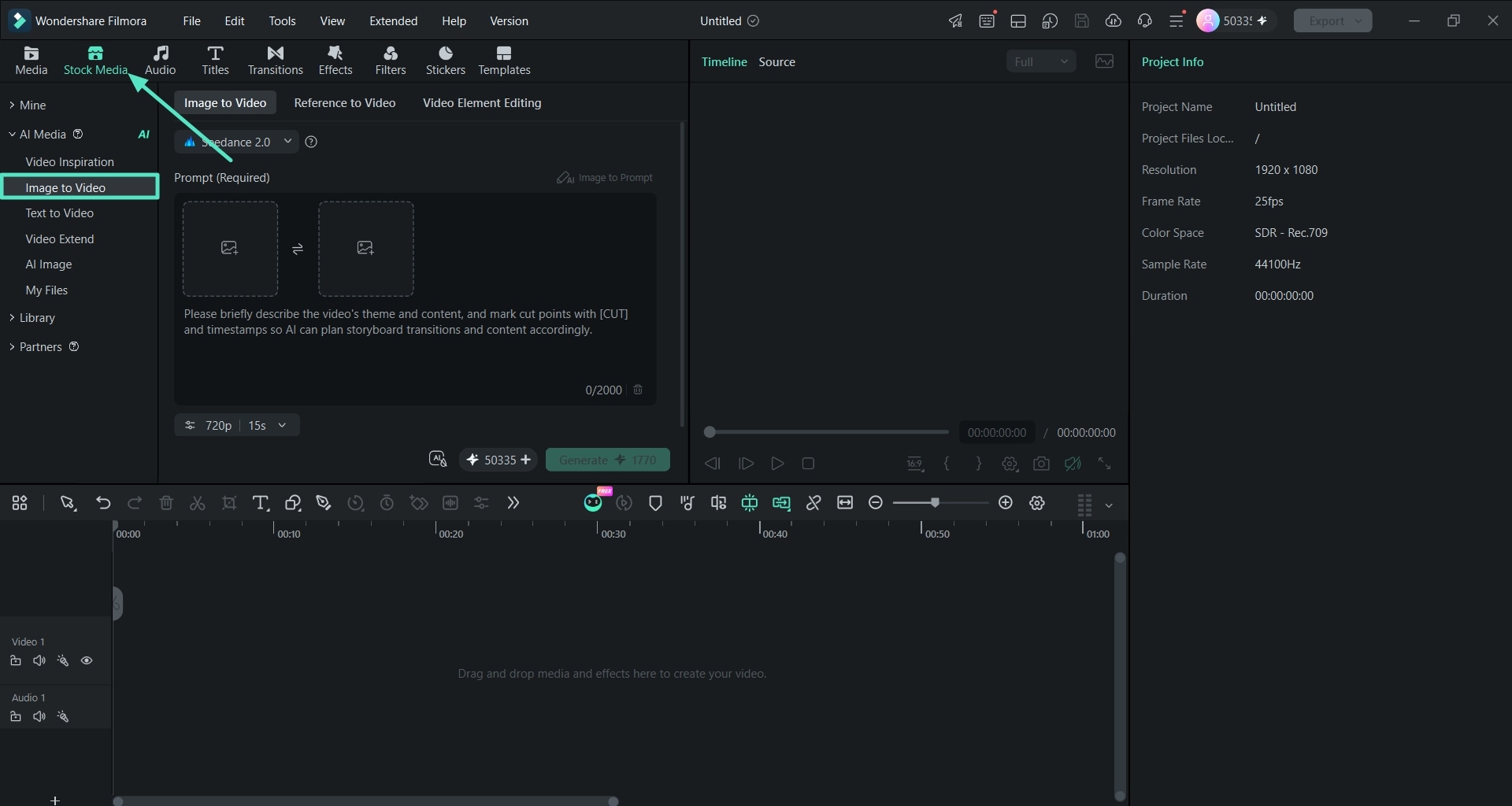
Once you create a new project in Filmora, press the Stock Media tab in the top menu. Expand the AI Media section. From there, choose the Image to Video feature to access the tool.
Step 2. Import the Reference Image
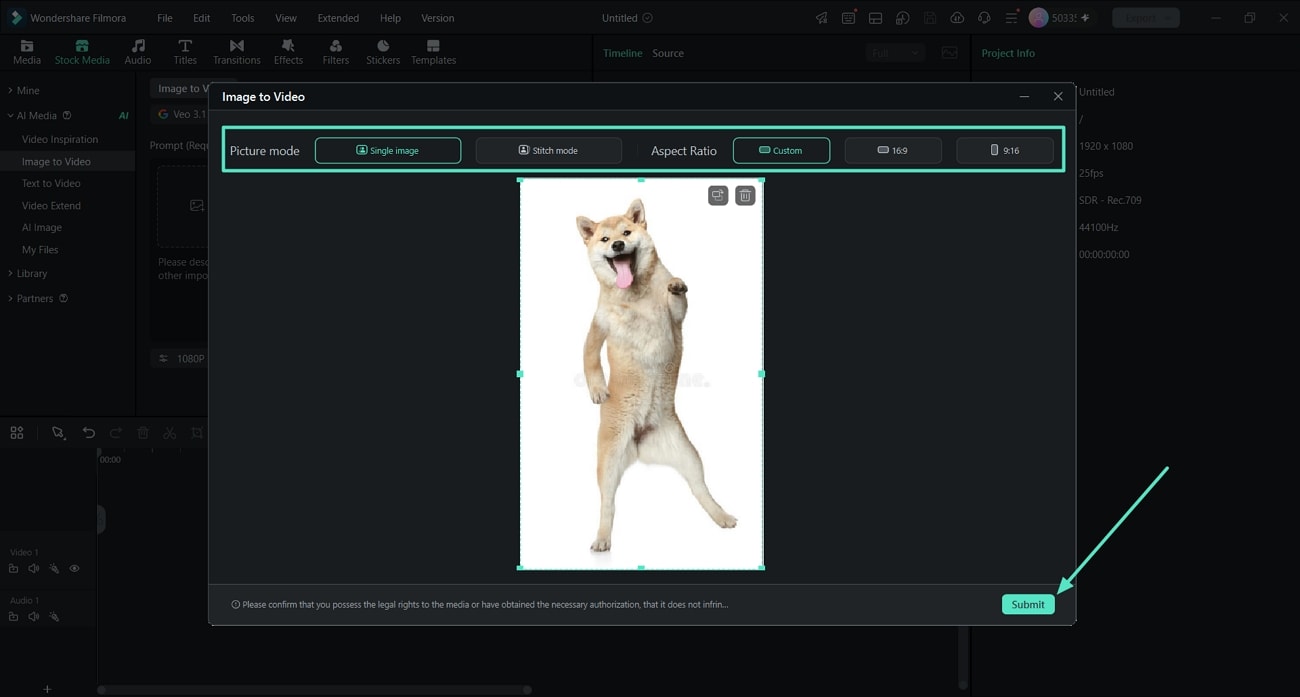
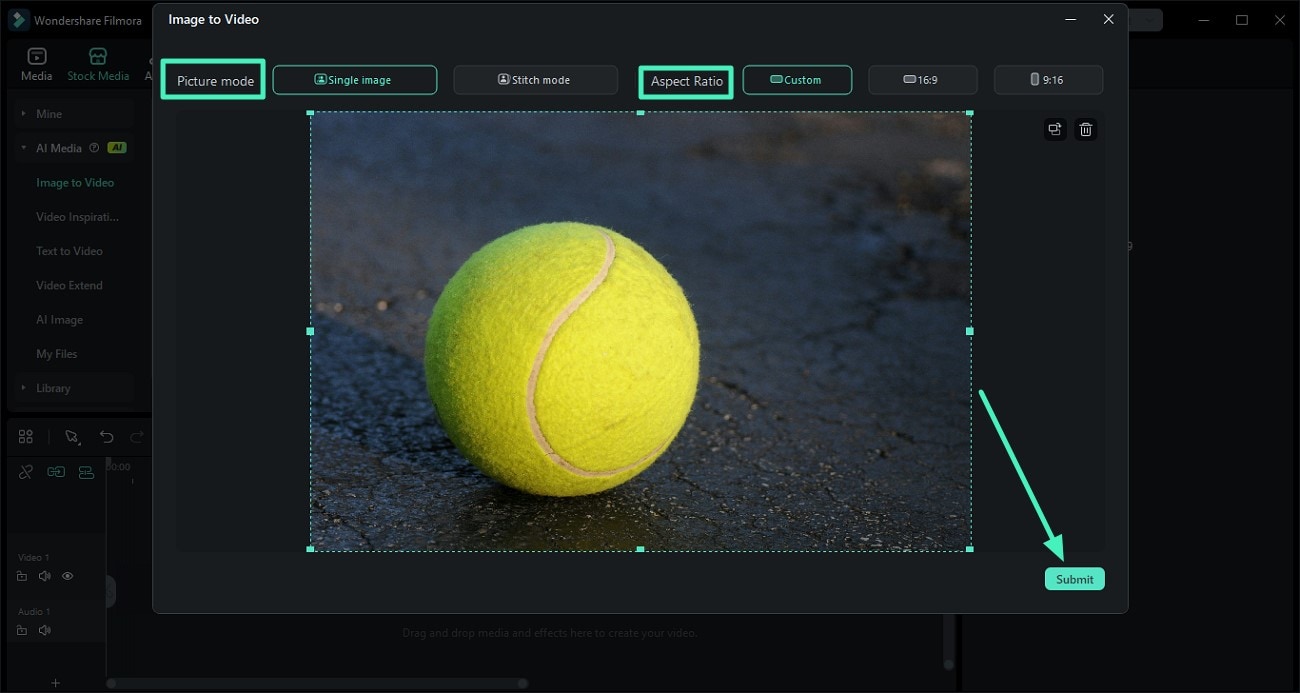
Next, import your reference image and choose a Picture Mode from 2 options. In Single image, you can use a single image for the video. However, the Stitch mode allows you to import more photos for reference. Then pick an Aspect Ratio and press Submit.
Step 3. Choose a Video Model
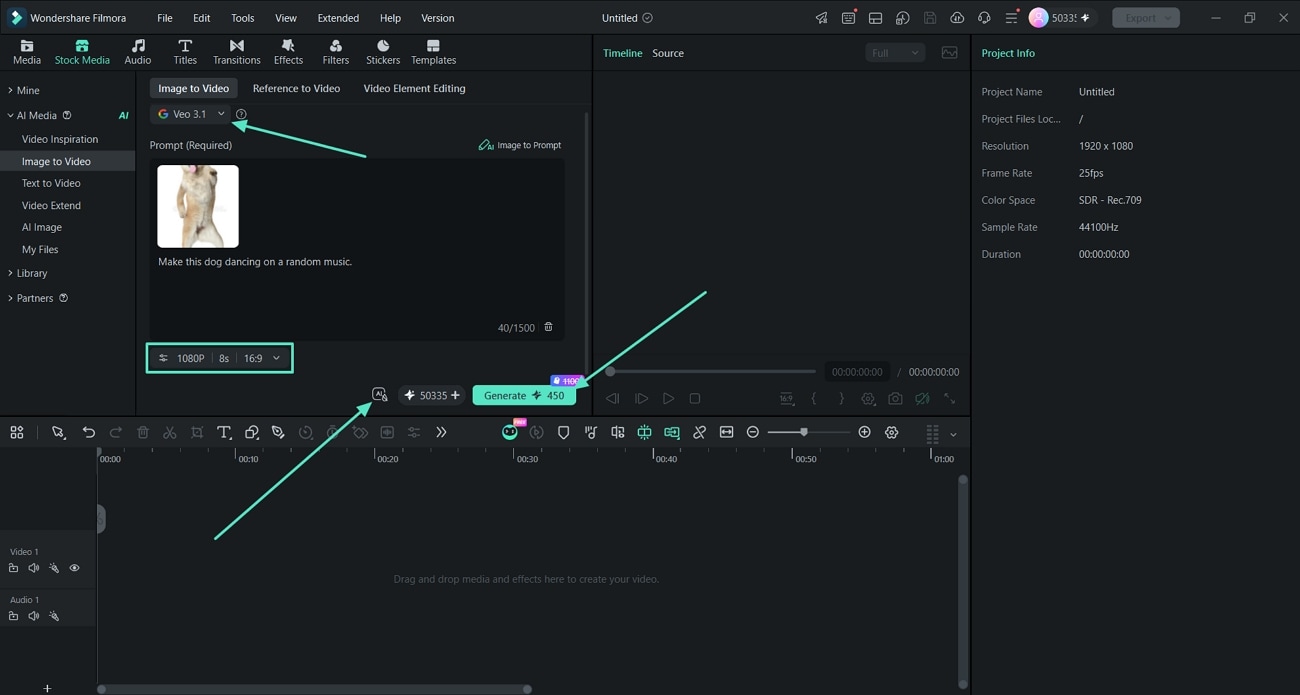
After that, choose an AI Video Model from the options, such as Veo 3.1. Describe the video motion and camera movement in up to 1500 characters and choose Resolution and Duration. Next, agree to the AIGC Usage Agreement and press the Generate option.
Step 4. Preview and Save the Video
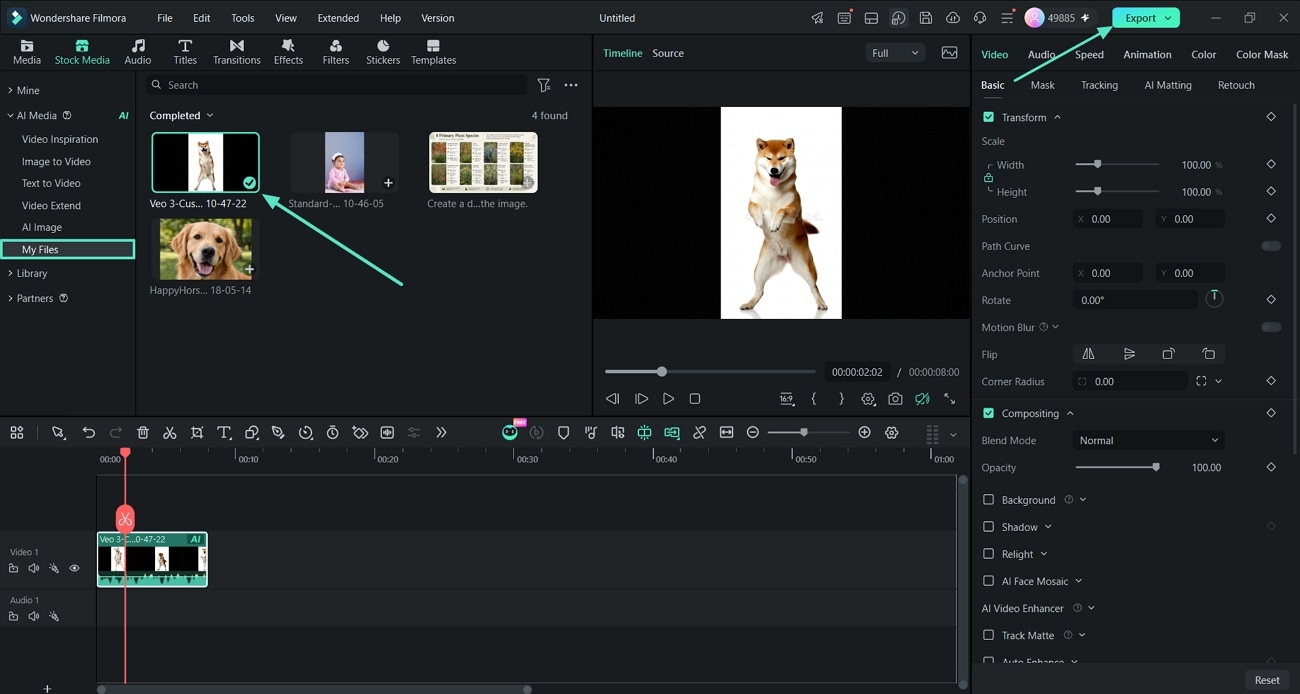
Once the video is generated, access the My Files section under the AI Media option. Here, you’ll see your generated video. Drag and drop the video over the timeline if further editing is required. Then, simply press the Export button in the top right corner to save the final video.
Available AI Models in Filmora Image to Video
Filmora offers 6 AI models, each with different capabilities for generating videos from images. Some models support first and last frame inputs, while others focus on synchronized audio and higher video resolution. The table below explains their key characteristics and recommended uses to help you select a suitable model:
| AI Model | Key Characteristics | Best Use Cases |
| Standard-4.0 | Supports synchronized audio and video generation, with up to 15 seconds at 2K resolution. | E-commerce ads, talking avatars, and narrative shorts. |
| HappyHorse 1.1 | Generates videos up to 15 seconds at 1080p resolution. | Advertising creatives, product promotions, and short-form marketing content. |
| Standard-3.0 | Supports first and last frame inputs, synchronized audio, and videos up to 16 seconds at 1080p. | Smooth transitions between two images and budget-friendly video creation. |
| Seedance 2.0 | Supports first and last frame inputs, with videos up to 15 seconds at 720p. Real-person face photos are restricted. | Controlling how a video begins and ends using selected images. |
| ToMovie 2.5 Pro | Generates videos up to 15 seconds at 2K+ resolution. Portrait uploads are not supported. | High-resolution video projects that do not require portrait references. |
| Veo 3.1 | Supports synchronized audio and generates videos up to 8 seconds at 1080p, with 16:9 and 9:16 aspect ratios. | Short videos with audio for landscape and vertical formats. |
Mode 2. Reference to Video
The Reference to Video feature lets you use reference images to guide AI video generation. These steps will help you add your images and generate a video based on your requirements:
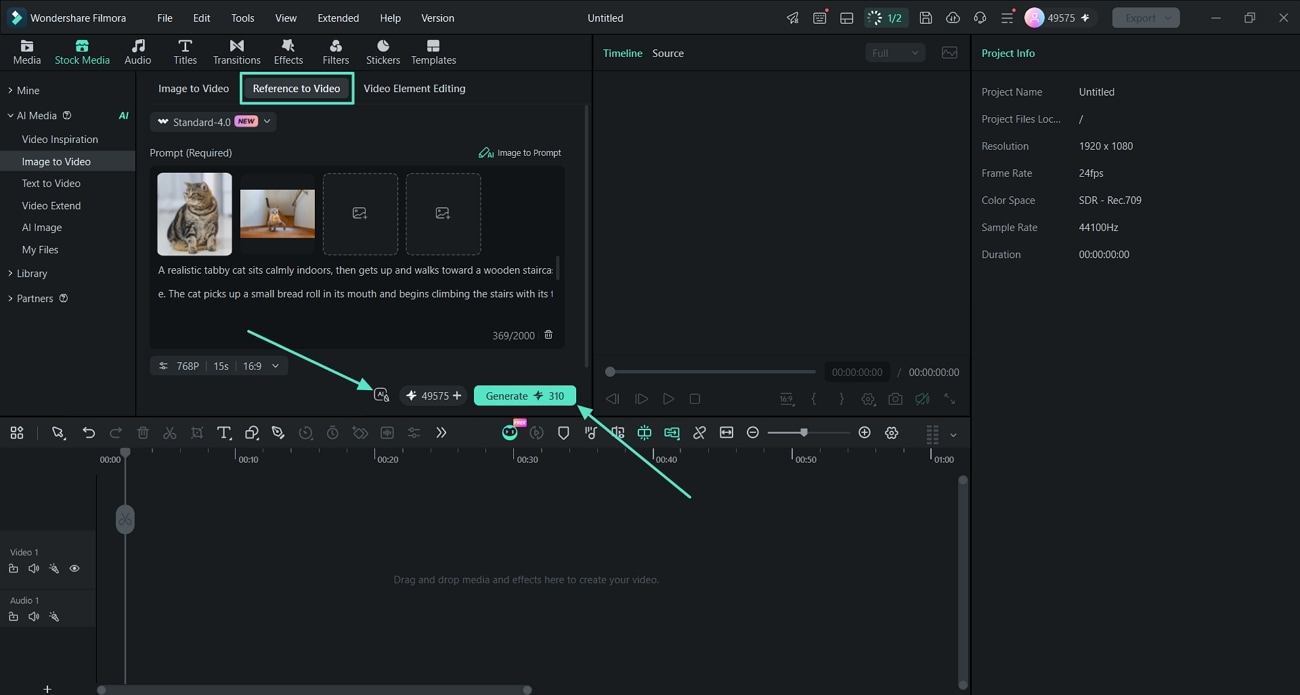
Step 1. Add Reference Images and Start Generation
Add reference images, input your text requirements, enable the AIGC Usage Agreement, and click Generate.
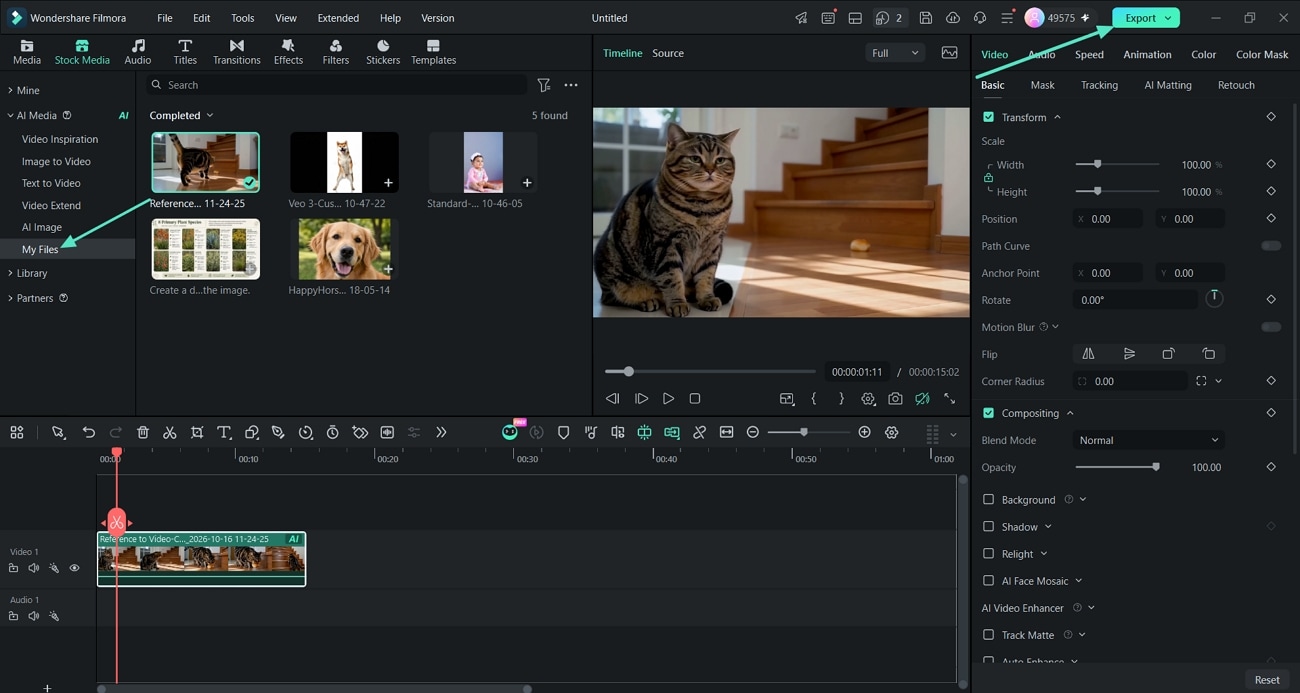
Step 2. Modify the Generated Video and Export
Add effects and other elements, then save using Export.
Mode 3. Video Element Editing
This utility allows you to blend the picture and video to generate a video with various modifications. You can add, replace, or delete elements by adding their pictures.
Add Element
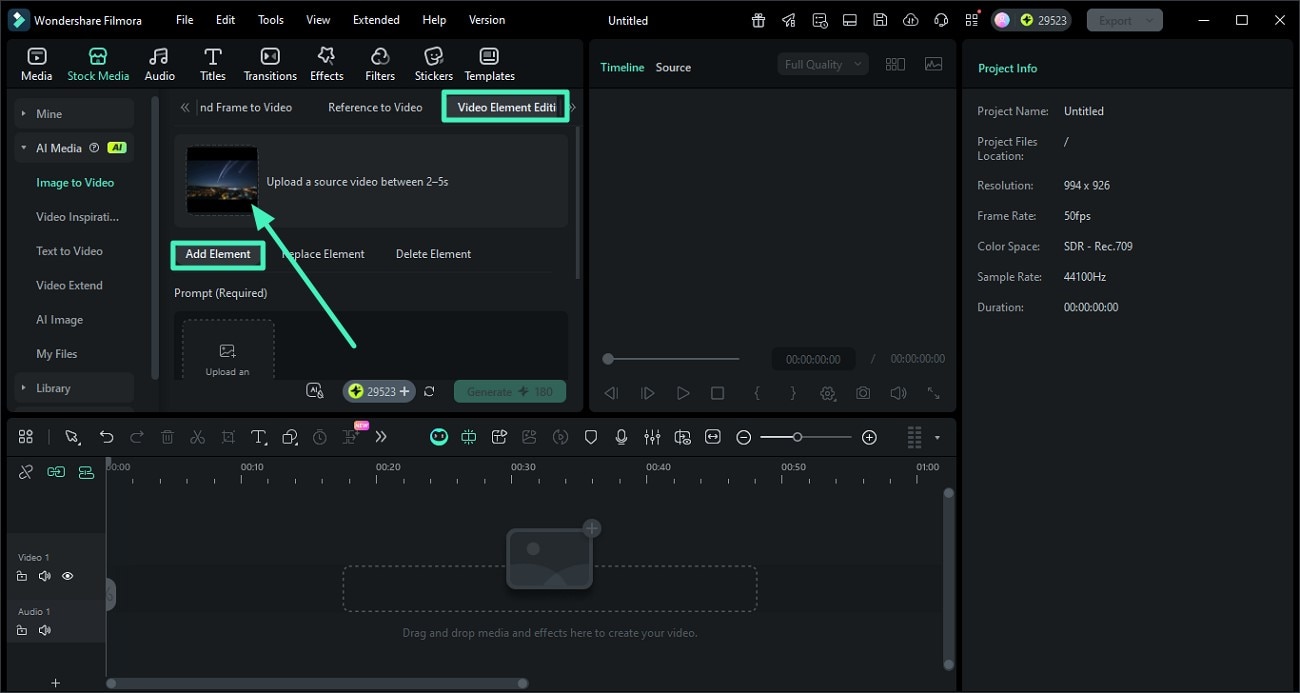
Step 1. Select Video Element Editing and Add Element
Access the Video Element Editing section, enable Add Element, and import the source video.
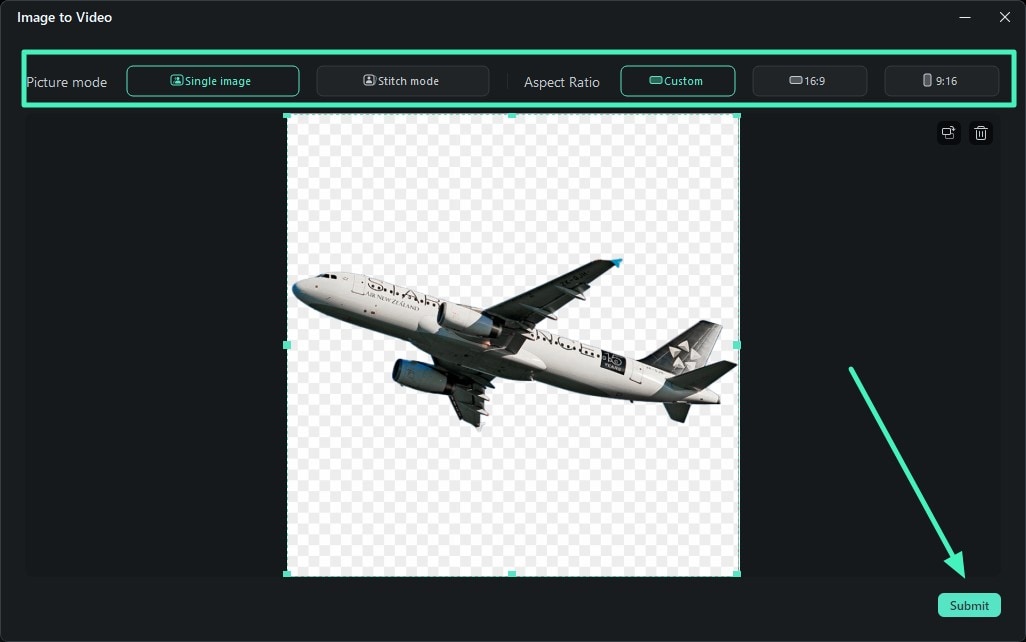
Step 2. Add Image After Cropping
Insert the image to add as an element, select Picture Mode, choose Aspect Ratio, and hit Submit.
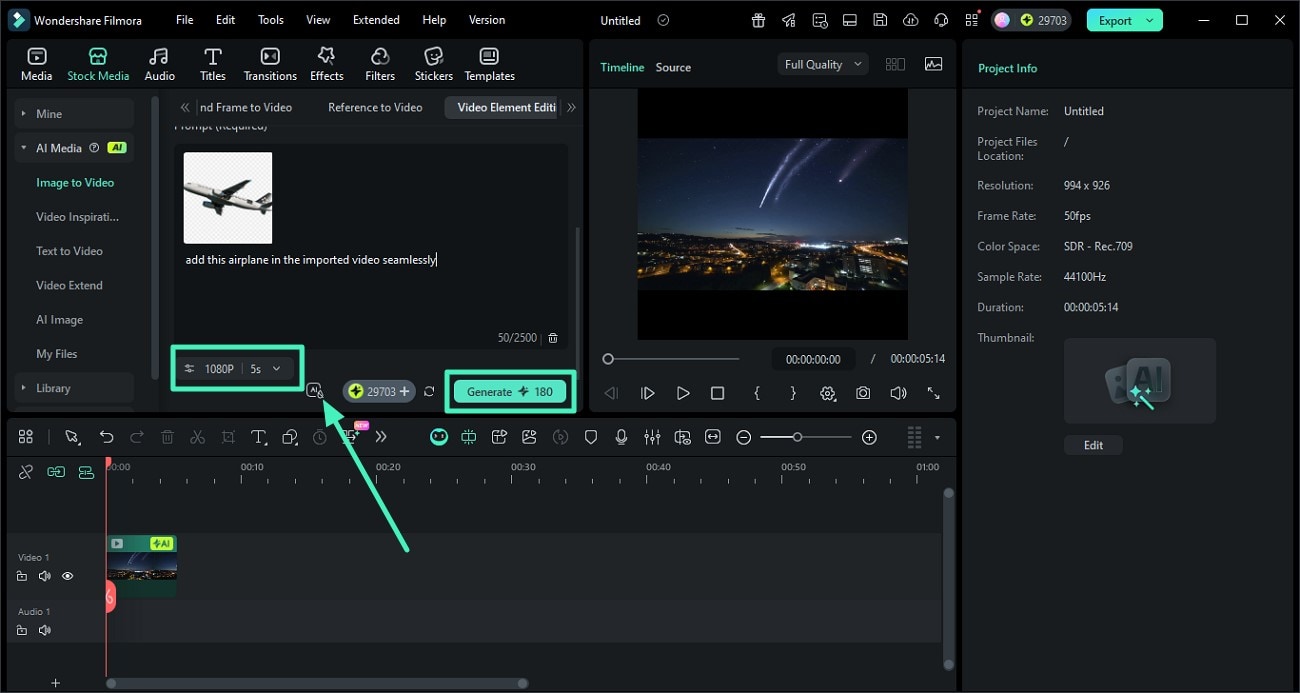
Step 3. Add Prompt and Configure Settings
Input the text prompt, specify Duration and Resolution, enable AIGC Usage Agreement, and hit Generate.
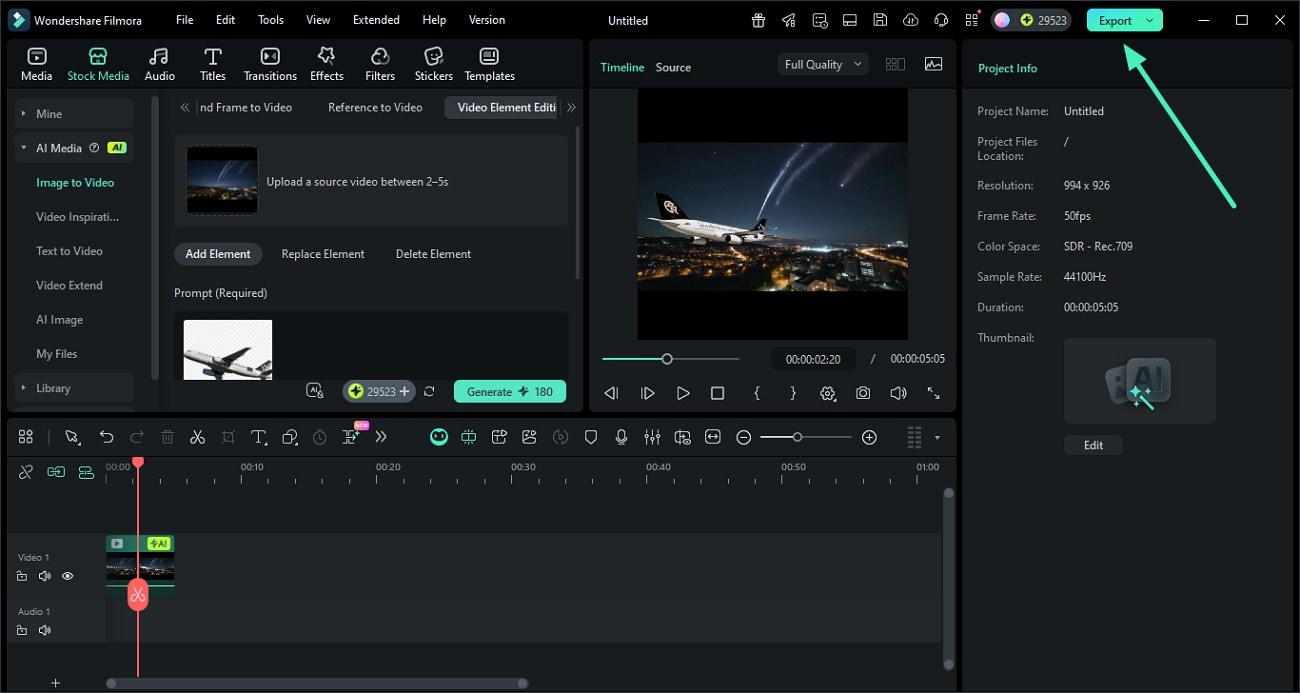
Step 4. Edit the Video and Export
Drag the video to the editing timeline for enhancements, then press Export to save.
Replace Element
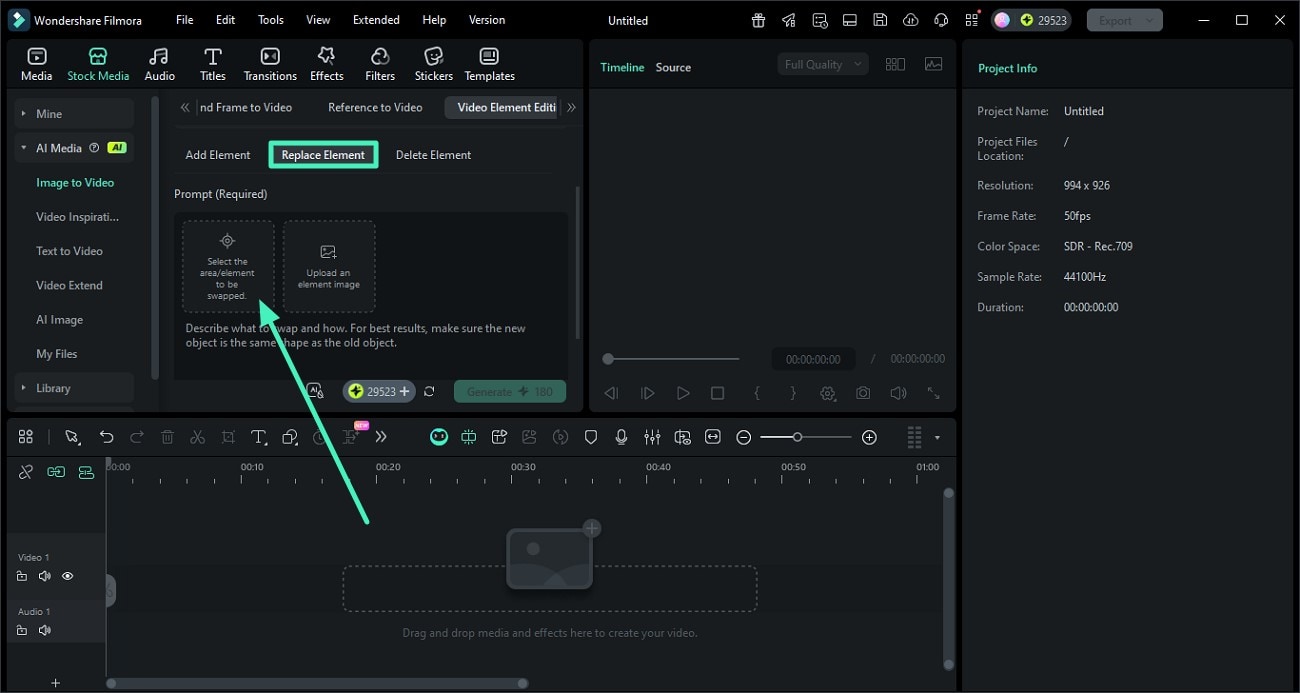
Step 1. Access Replace Element and Add Video
Access Replace Element, add the video, and press Select the Area to be Swapped.
Step 2. Select the Area to be Replaced
Select the element to remove and press Submit.
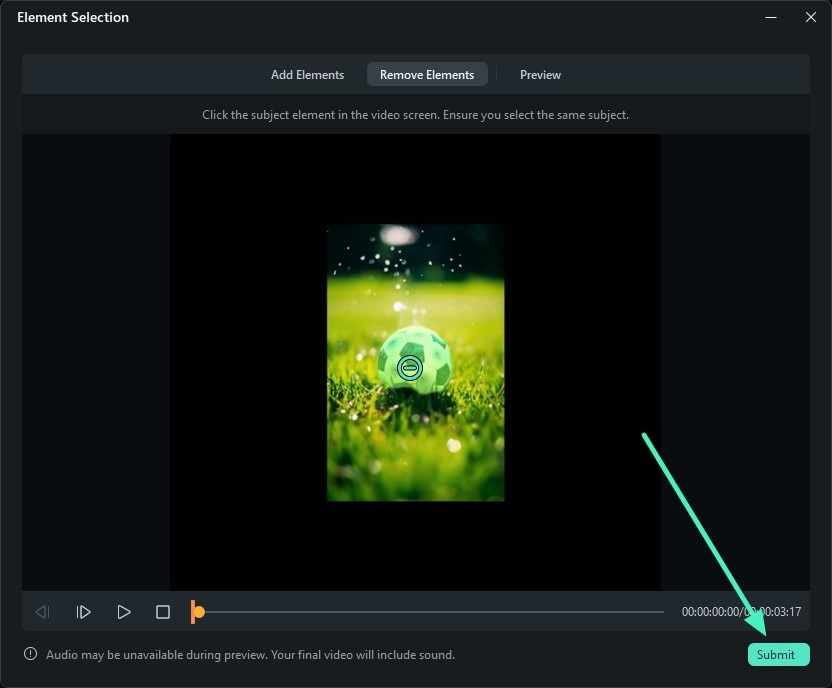
Step 3. Add an Image of the Element to be Added
Import the picture of the new element, select Picture Mode and Aspect Ratio, and hit Submit.
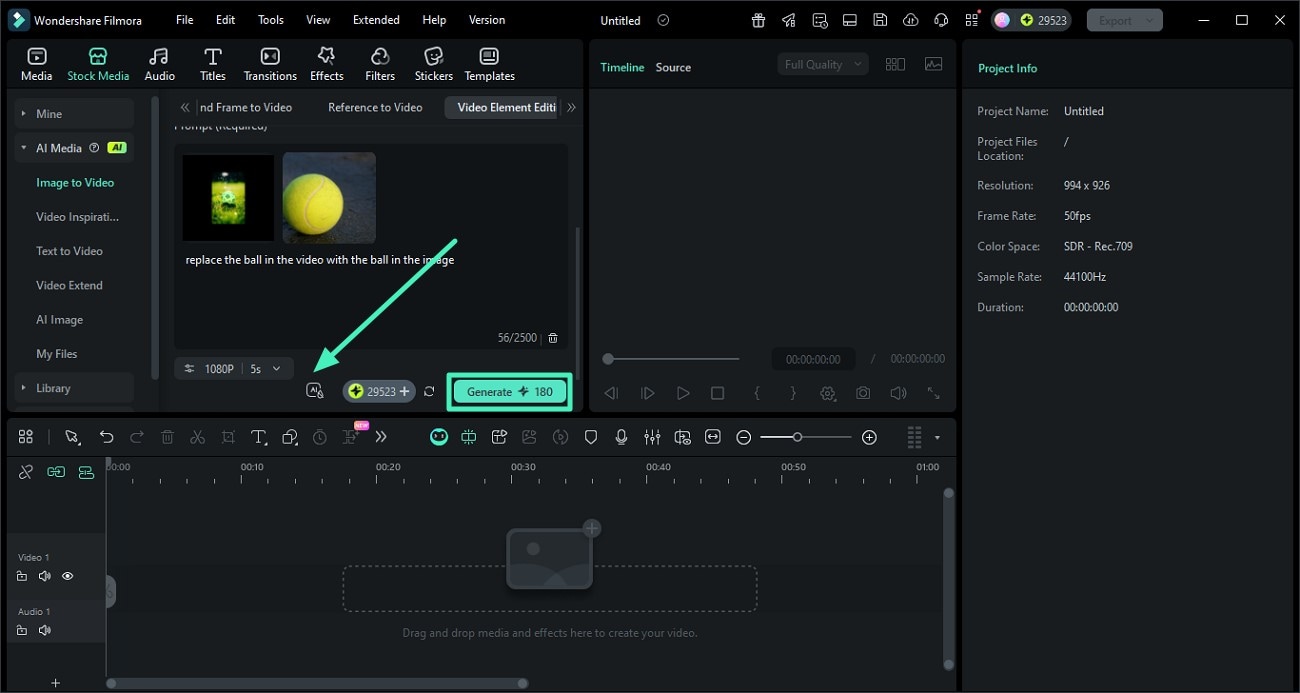
Step 4. Input Text Prompt and Generate Video
Add the text prompt, select duration and resolution, enable AIGC Usage Agreement, and press Generate.
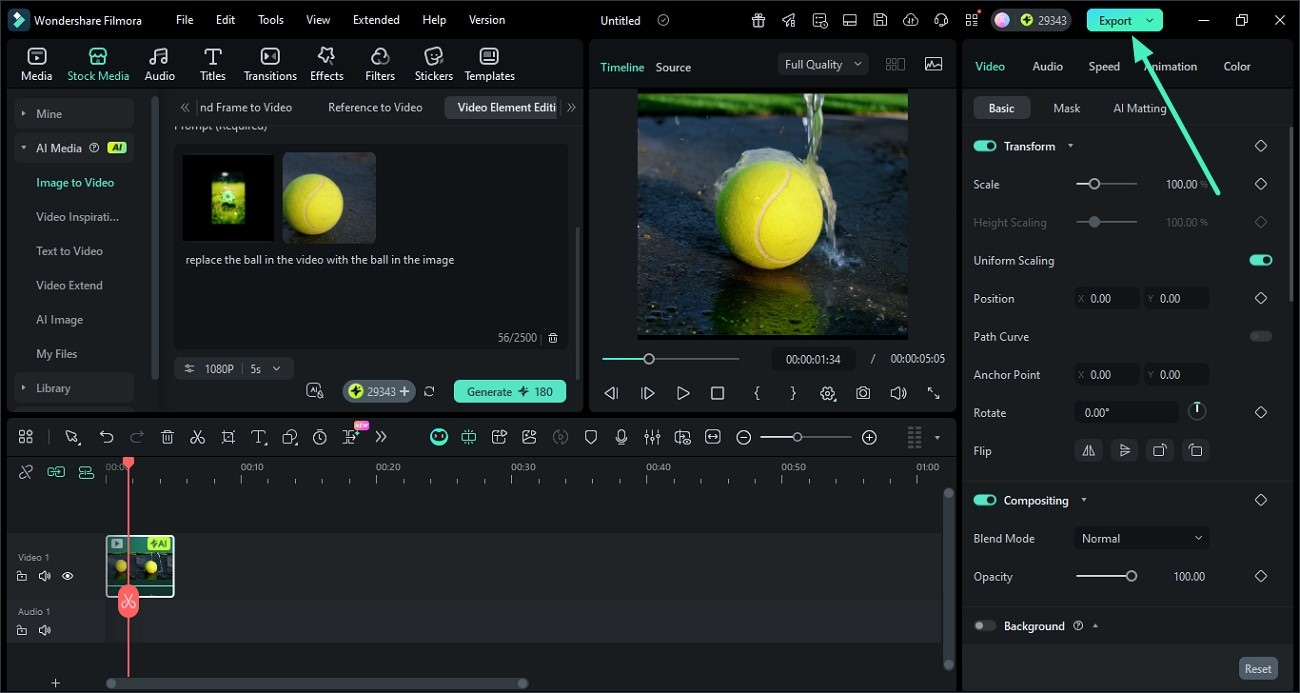
Step 5. Modify Video and Save
Add the result to the timeline, edit as needed, and hit Export to save.
Delete Element
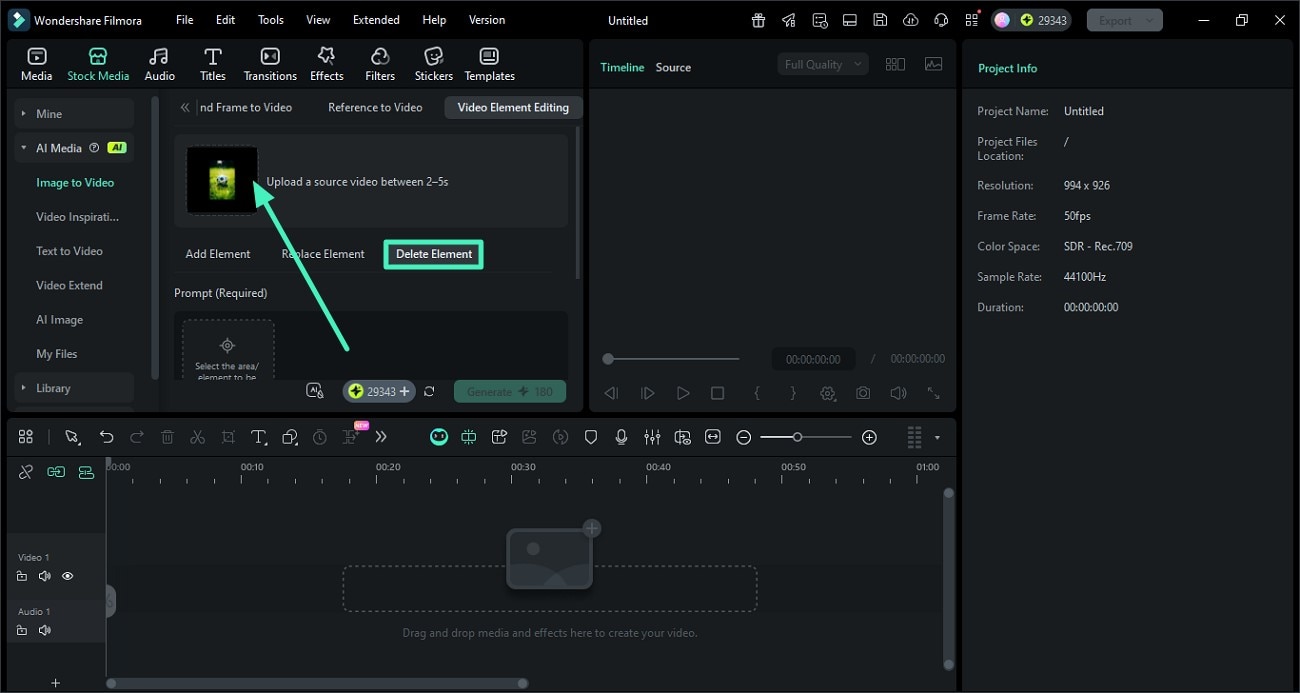
Step 1. Start By Accessing Delete Element Mode
Access Delete Element and add the video to remove an element.
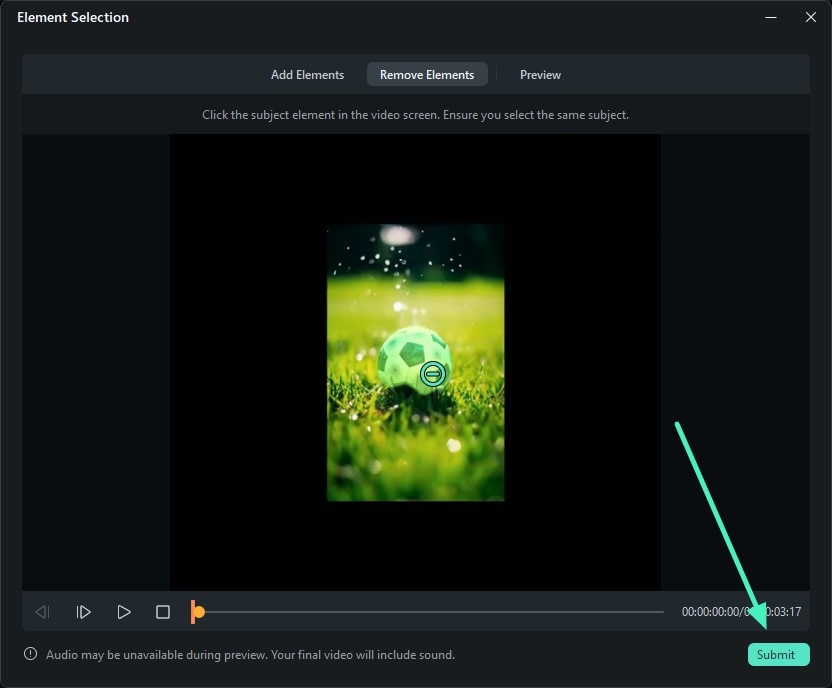
Step 2. Select the Element To Be Removed
Select the element to delete and press Submit.
Step 3. Add Text Requirement and Generate
Input the text prompt and press Generate.
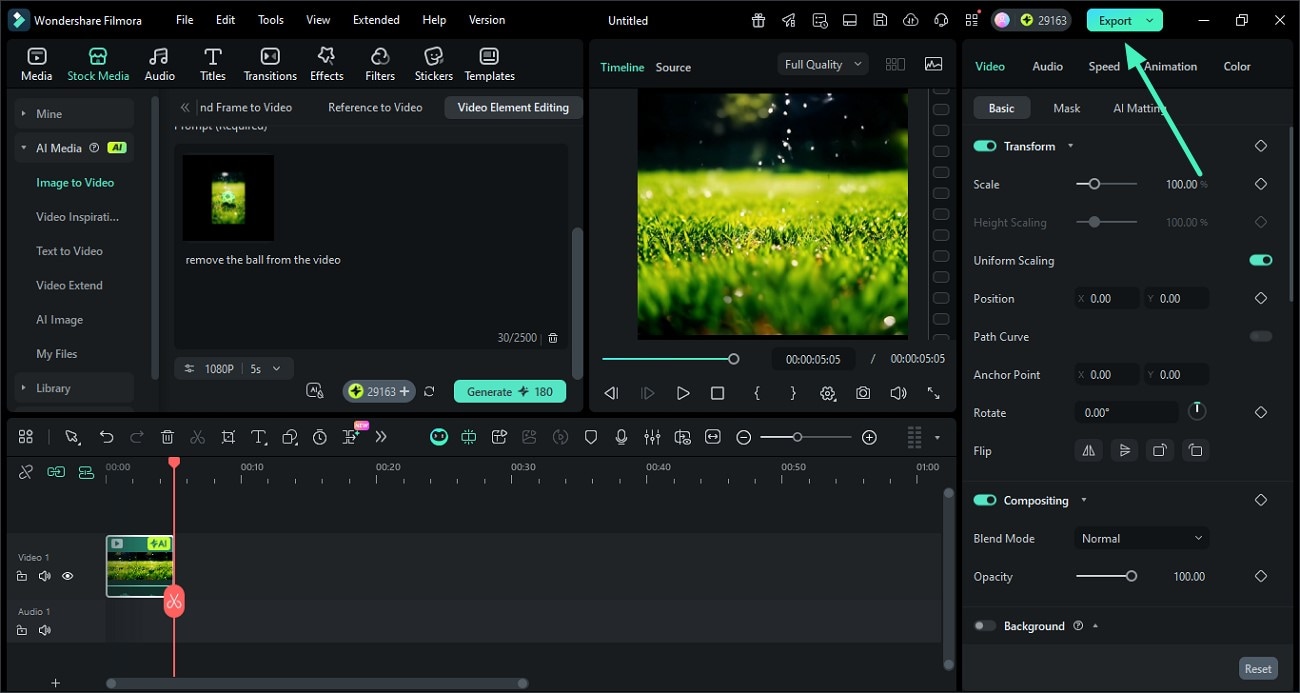
Step 4. Review and Edit the Generated Video
Drag the video to the editing interface, edit if required, and press Export to save.
Entry 2. Acquire the Video Inspiration Section
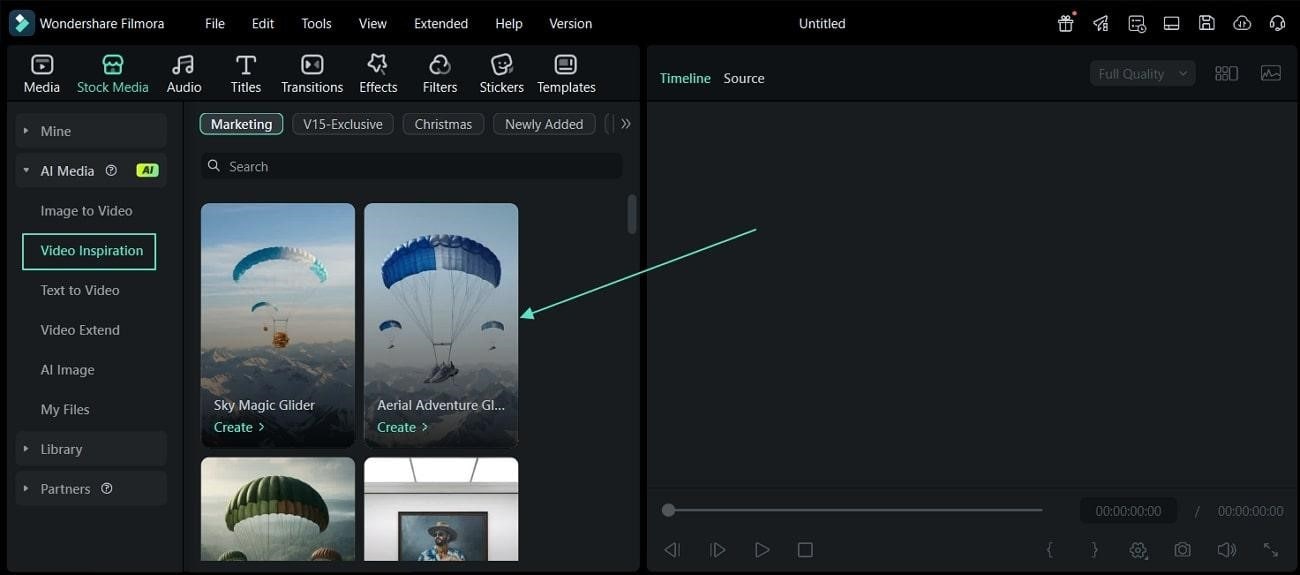
Step 1. Choose the Desired Template in Filmora
Access the Video Inspiration section, scroll through categories, and choose your template.
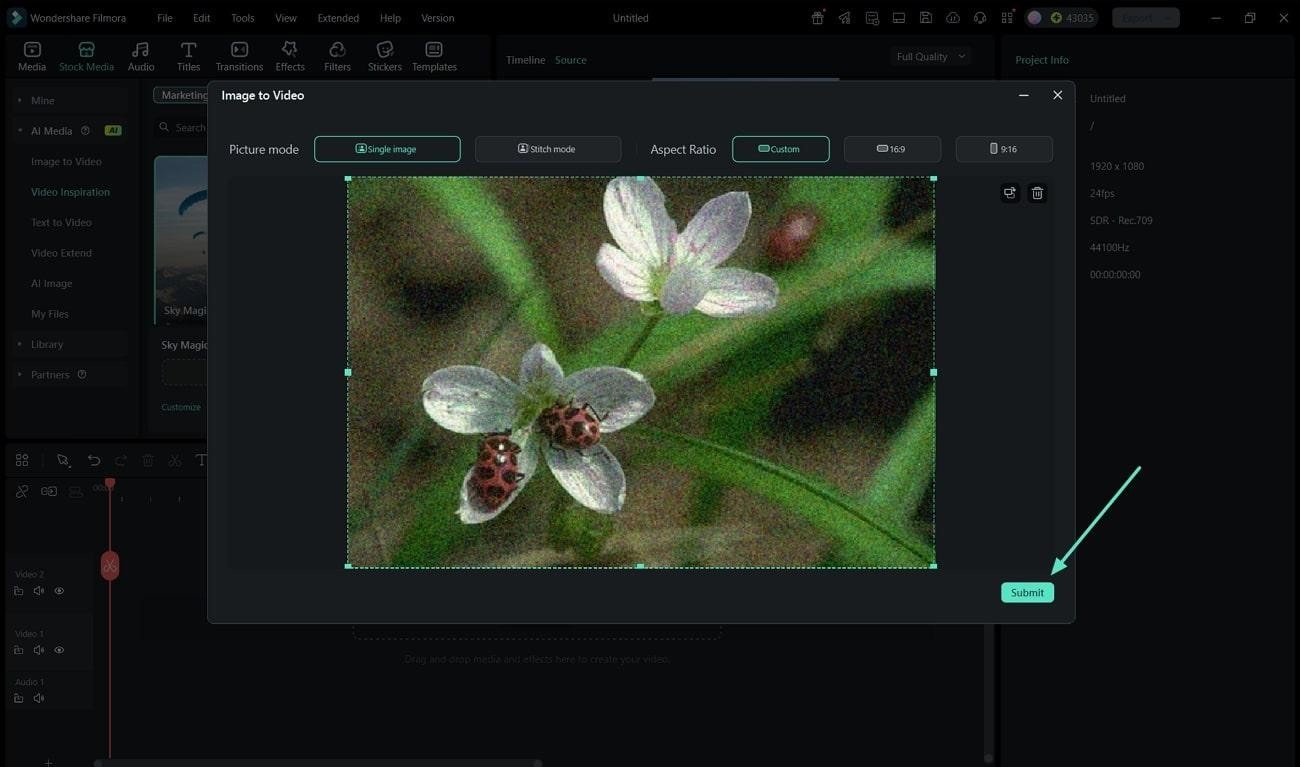
Step 2. Add Image and Crop It
Add the image, choose your preferred Aspect Ratio, and click Submit.
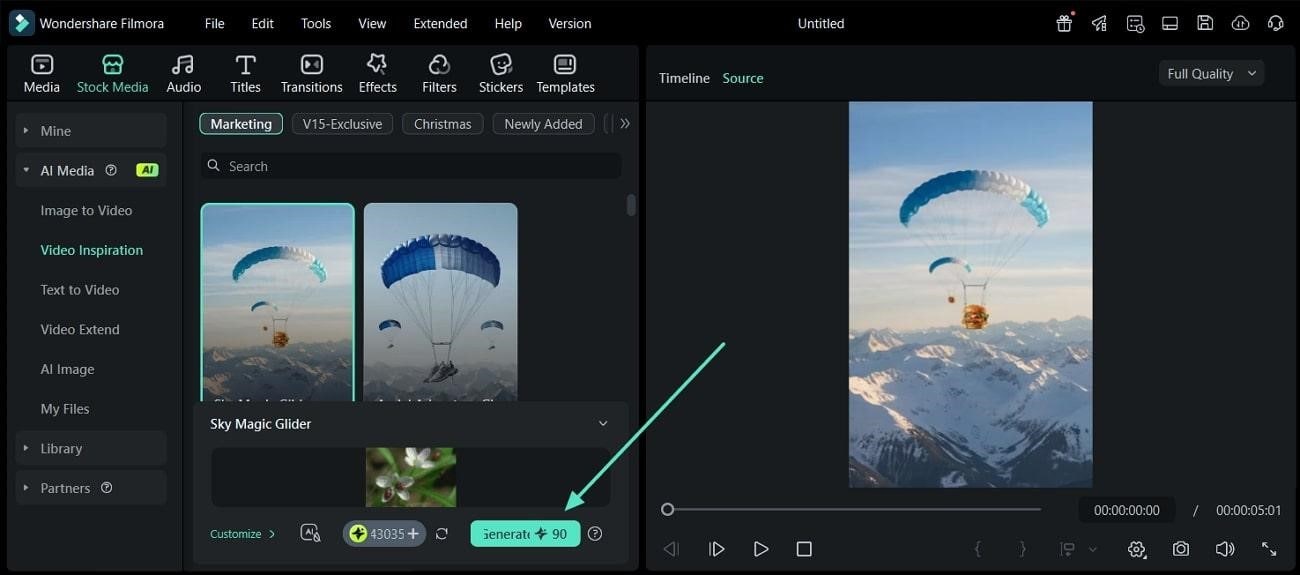
Step 3. Start the Inspiration Video Generation
Locate and click Generate to start the video generation process.
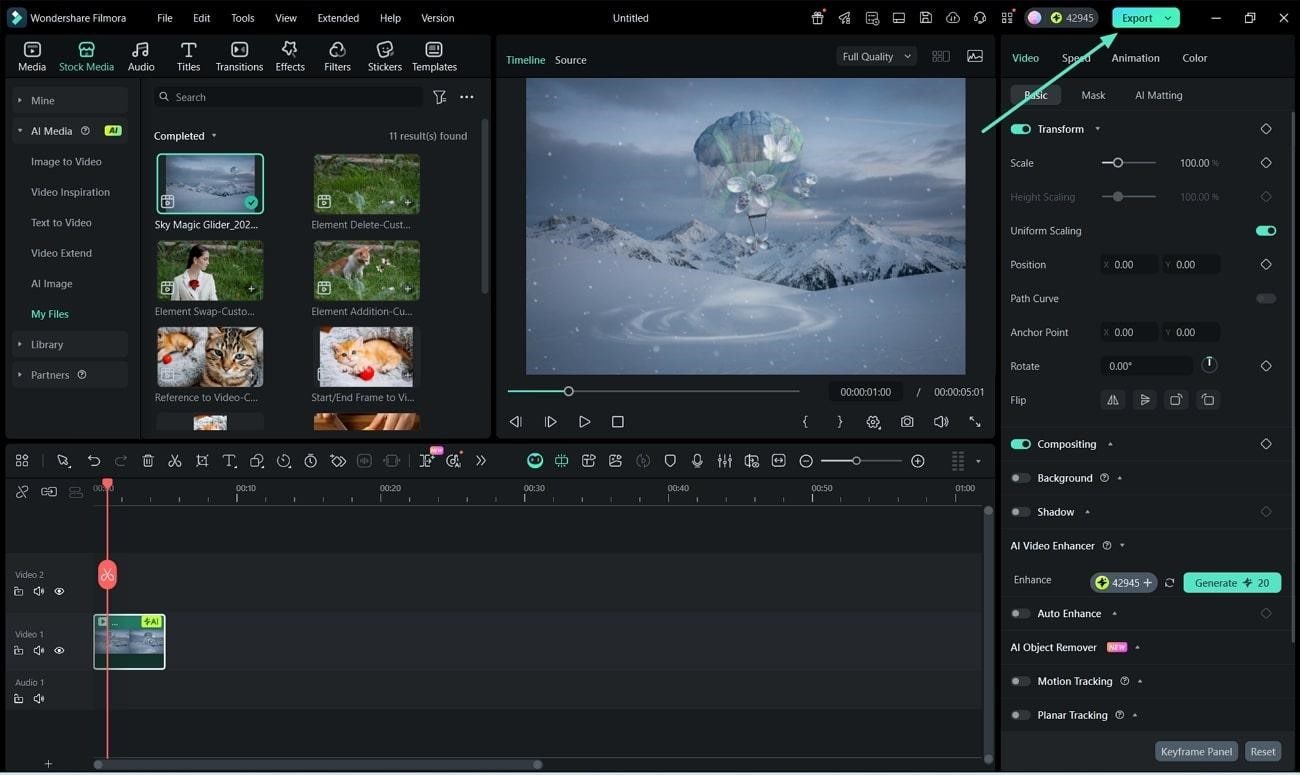
Step 4. Have a Look at the Video Inspiration and Save
Play the generated video in the preview window and save it using Export.
Related Posts
Featured Articles
[Top Tips] How To Make a YouTube Intro: A 2026 Guide
New to content creation and looking for ways to create captivating visual content? Read this article to learn how to make a YouTube intro video effortlessly.
Best MP4 Video File Size Reducers: Top Tools for Quick Compression
Need to reduce your MP4 file sizes? Check out our guide to the best MP4 file size reducers that offer quick compression solutions for content creators and marketers!
YouTube Video Thumbnail Size 2026 | Tips & Templates
Create standout YouTube thumbnails with this simple guide. Learn the best sizes, templates, and tips to boost click-through rates and grow your audience.
Recommended User Guide
Chroma Key (Green Screen) for Windows
Learn how to use Chroma Key (Green Screen) in Filmora to remove and replace backgrounds, fine-tune edges, and create professional green screen videos.
AI Smart Cutout for Windows
This guide helps you remove the background of an image or a video. The AI Smart Cutout is good at cutting an image out and performs well in identifying needed sections in a continuous clip.
AI Video/Photo Object Remover for Windows
Want to remove unwanted objects from videos or photos? Check Wondershare Filmora's AI object remover feature.