
For the Best Results, Use the Latest Version.
-
Preparations
-
Account
-
Get Started & Basic Settings
-
Compatibility & Tech Specs
-
Performance Settings
-
-
Creating Projects
-
Creating New Projects
-
-
Importing & Recording
-
Video Editing for Windows
-
Basic Video Editing
- Enable/Disable Clip in Windows
- Magnetic Timeline for Windows
- Dual Monitor Setup for Video Editing on Windows
- Select All Clips on Timeline for Windows
- Timeline and Track Management
- Auto Ripple for Windows
- Split & Trim Video
- Crop & Pan & Zoom Video in Filmora for Windows
- Compositing
- Change Video Speed on Windows
- Reverse Video for Windows
- Mark In and Mark Out for Windows
- Markers for Windows
- Group editing
- Customizable Backgrounds for Videos and Images in Windows
- Video Snapshot
- Using Freeze Frame in Filmora for Windows
- Logo Reveal For Windows
- Auto Enhance in Filmora for Windows
- Applying drop shadow
- Adjustment layer for Windows
- Apply Transforming for Windows
- Video Editing Ruler – Windows
-
Advanced Video Editing
- Keyframe Motion Blur for Windows
- Drawing Tools for Windows | Filmora Guide
- Camera Tracking for Windows
- Create Multi-Camera Clip in Filmora for Windows
- Compound Clip for Windows
- Multi-Clip Editing for Windows
- Filmora Motion Blur | Windows
- 360° Video Reframing for Windows
- Track Matte for Windows
- Video Chapters in Filmora on Windows
- Filmora Flicker Removal Guide | Windows
- Create Multi-Screen Videos in Filmora on Windows
- Masking in Filmora on Windows
- Creating a PIP Effect for Windows
- Keyframe Graph Editor for Windows
- Animation Keyframing for Windows
- Keyframe Path Curve
-
AI-Powered Video Editing
- Smart Scene Cut for Windows
- Smart Short Clips for Windows
- AI Face Mosaic for Windows
- Filmora AI Eye Contact- Windows
- AI Video Enhancer for Windows
- AI Text-to-Video for Windows
- Planar Tracking for Windows
- AI Idea to Video for Windows
- AI Media Analysis for Windows
- Filmora Image to Video for Windows
- Filmora Image to Prompt for Windows
- Instant Cutter Tool for Windows
- AI Extend
- Filmora AI Relight - Windows
- Filmora AI Image Enhancer Guide - Windows
- AI Script to Video Guide for Windows
- AI Text-Based Editing for Windows
- AI Mate Editing for Windows
- Instant Mode for Windows
- ChatGPT Plugin - AI Copywriting
- AI Smart Cutout for Windows
- Lens correction on Windows
- Auto Reframe Video for Windows
- AI Portrait Cutout
- Scene Detection for Windows
- AI Smart Masking for Windows
- Motion Tracking on Windows
- Video Stabilization for Windows
- AI Video/Photo Object Remover for Windows
- AI Smart Search for Windows
- AI Skin Tone Protection for Windows
- AI Image for Windows
- Chroma Key (Green Screen) for Windows
- Super Slow Motion with Optical Flow for Windows
- Video Denoise for Windows
-
-
Audio Editing for Windows
-
Basic Audio Editing
-
Advanced Audio Editing
-
AI-Powered Audio Editing
- Auto synchronization
- AI Sound Effects in Filmora for Windows
- Smart BGM Generation on Windows
- AI Voice Enhancer in Filmora
- AI Voice Cloning in Wondershare Filmora
- AI Music Generator for Windows
- Audio To Video
- AI Vocal Remover for Windows
- AI Auto Beat Sync for Windows
- AI Audio Stretch for Windows
- AI Audio Denoise for Windows
- Silence Detection on Windows
-
-
Text Editing for Windows
-
Basic Text Editing
-
Advanced Text Editing
-
AI-Powered Text Editing
-
-
Video Customizations
-
Video Effects
- Filmora VST3 Plugins for Windows
- Filmora OpenFX Plugins for Windows
- Retouch Guide for Windows
- Filmora Pen Tool Tutorial: Motion Paths & Animation Guide
- Animated Charts
- Mocha Filmora - For Windows
- Different Types of Video Effects
- NewBlue FX effects
- Boris FX effects | Filmora Windows Guide
- Body Effects for Windows
- Filmora -Filmstock Asset
-
Audio Effects
-
Transitions
-
Stickers
-
Filters
-
Color Editing
-
Animations
-
Templates
-
Asset Center
-
-
Exporting & Share & Cloud Backup
AI Skin Tone Protection for Windows
Do you find it troublesome when skin tone becomes distorted after applying LUT? Filmora has come up with the perfect feature to fix this issue. The recently launched version has a Skin Tone Protection feature that uses AI to analyze the tones and make them right. Follow this guide and know how to apply it.
How to Enhance Skin Tone Using Filmora’s New AI Feature
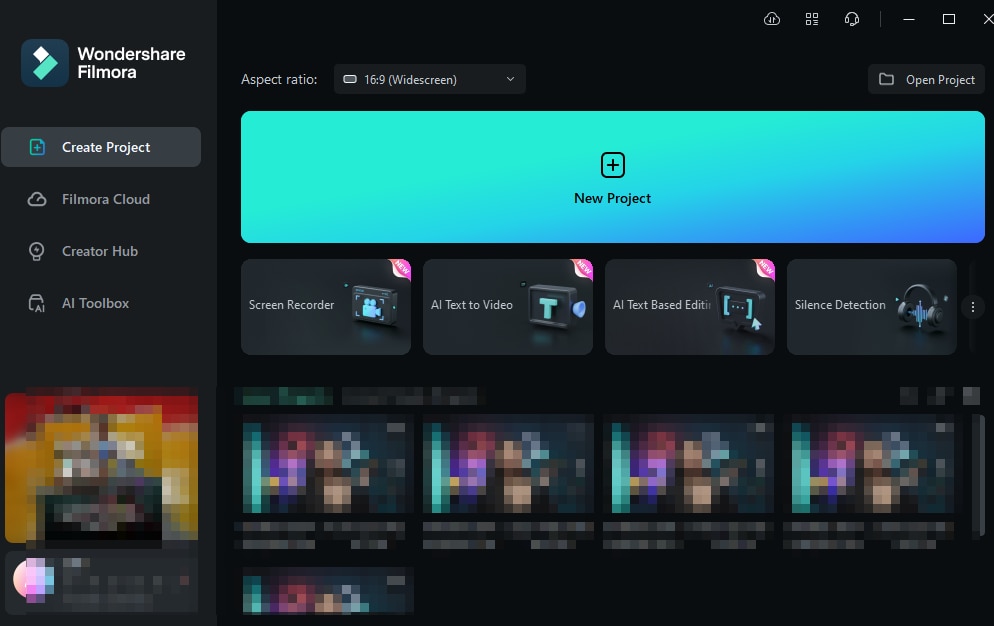
Step 1: Launch Filmora on your Desktop and Start a Project
If you have not downloaded Wondershare Filmora on your desktop, download it. Once you have it opened, log in or sign up and head towards the left side panel to select "Create Project". Multiple tabs will display on the main screen, out of which you must select the "New Project" option.
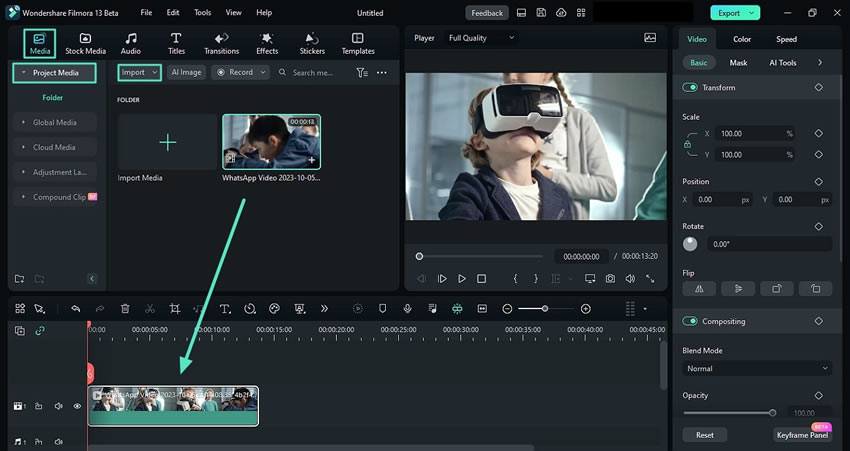
Step 2: Import Media and Drag it to the Timeline
After creating the new project successfully, you will be led to the main interface of Filmora. From the custom toolbar, select the "Media" tab and further select "Project Media" from the categories available at the left panel. Select "Import" to upload your media files, and drag and drop these files onto the timeline.
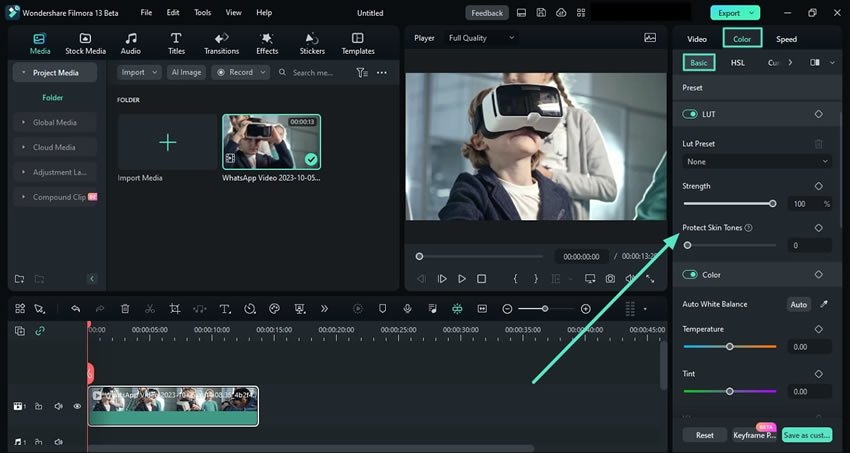
Step 3: Access the AI Skin Tone Option
For the final step of getting skin tone protection, select the clip in the timeline, hover the mouse towards the right-side panel, and click the "Color" tab. Furthermore, select the "Basic" option, and under the "LUT" section, you'll find the "Protect Skin Tones" slider. You can increase or decrease the level of skin tone protection by adjusting the slider or entering a value in the box.
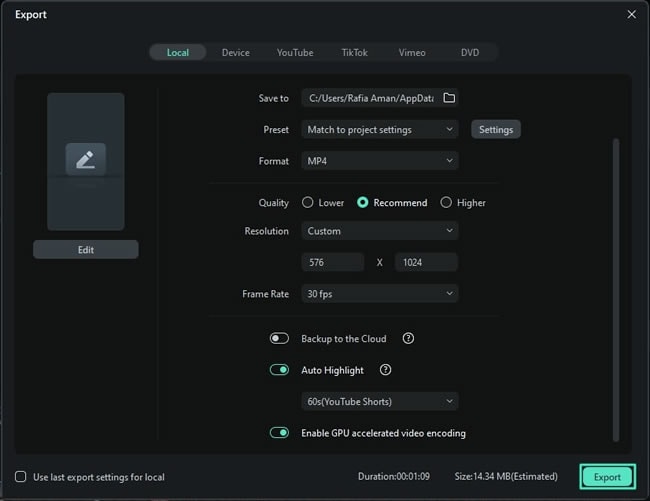
Step 4: Export the Edited Video
Once you’ve edited your video and applied all the effects and filters, it is time for finalization. Click the "Play" button in the preview screen to see the final results, and if you are satisfied, navigate towards the top right corner and click "Export". From the export window, name your video, make other adjustments, and tap on the "Export" button to download it on your device.
Related Posts
Featured Articles
How to Add a Chart to a Video?
Explore how to add charts to videos, the chart types, and a new data visualization tool for stylish, on-brand motion graphics.
Debut Video Capture 2026 Review: Features, Pros, Cons, and Alternatives
If you're looking for a screen recording tool, Debut Video Capture might be just what you need. Check out the full review and the best alternative options here.
AE Face Tracker – How to Track Face in After Effects
If you wish to learn to use the AE Face Tracker tool, you’ve come to the right place. Keep reading to learn more about the best method to apply this effect in After Effects.
Recommended User Guide
AI Image for Windows
To meet more creative needs of creators, Filmora has added ai content generator technology to the product. You can directly experience the function of generating images from text through AIGC.
AI Mate Editing for Windows
AI assistants play an essential role during editing, and with Filmora's new AI Mate Editing feature, users can ask for valuable insights about their videos.
Filmora AI Eye Contact- Windows
Here is the guide on how to use the AI eye contact feature in Filmora for Windows.