For the Best Results, Use the Latest Version.
-
Preparations
-
Account
-
Get Started & Basic Settings
-
Compatibility & Tech Specs
-
Performance Settings
-
-
Creating Projects
-
Creating New Projects
-
-
Importing & Recording
-
Video Editing for Windows
-
Basic Video Editing
- Enable/Disable Clip in Windows
- Magnetic Timeline for Windows
- Dual Monitor Setup for Video Editing on Windows
- Select All Clips on Timeline for Windows
- Timeline and Track Management
- Auto Ripple for Windows
- Split & Trim Video
- Crop & Pan & Zoom Video in Filmora for Windows
- Compositing
- Change Video Speed on Windows
- Reverse Video for Windows
- Mark In and Mark Out for Windows
- Markers for Windows
- Group editing
- Customizable Backgrounds for Videos and Images in Windows
- Video Snapshot
- Using Freeze Frame in Filmora for Windows
- Logo Reveal For Windows
- Auto Enhance in Filmora for Windows
- Applying drop shadow
- Adjustment layer for Windows
- Apply Transforming for Windows
- Video Editing Ruler – Windows
-
Advanced Video Editing
- Keyframe Motion Blur for Windows
- Drawing Tools for Windows | Filmora Guide
- Camera Tracking for Windows
- Create Multi-Camera Clip in Filmora for Windows
- Compound Clip for Windows
- Multi-Clip Editing for Windows
- Filmora Motion Blur | Windows
- 360° Video Reframing for Windows
- Track Matte for Windows
- Video Chapters in Filmora on Windows
- Filmora Flicker Removal Guide | Windows
- Create Multi-Screen Videos in Filmora on Windows
- Masking in Filmora on Windows
- Creating a PIP Effect for Windows
- Keyframe Graph Editor for Windows
- Animation Keyframing for Windows
- Keyframe Path Curve
-
AI-Powered Video Editing
- Smart Scene Cut for Windows
- Smart Short Clips for Windows
- AI Face Mosaic for Windows
- Filmora AI Eye Contact- Windows
- AI Video Enhancer for Windows
- AI Text-to-Video for Windows
- Planar Tracking for Windows
- AI Idea to Video for Windows
- AI Media Analysis for Windows
- Filmora Image to Video for Windows
- Filmora Image to Prompt for Windows
- Instant Cutter Tool for Windows
- AI Extend
- Filmora AI Relight - Windows
- Filmora AI Image Enhancer Guide - Windows
- AI Script to Video Guide for Windows
- AI Text-Based Editing for Windows
- AI Mate Editing for Windows
- Instant Mode for Windows
- ChatGPT Plugin - AI Copywriting
- AI Smart Cutout for Windows
- Lens correction on Windows
- Auto Reframe Video for Windows
- AI Portrait Cutout
- Scene Detection for Windows
- AI Smart Masking for Windows
- Motion Tracking on Windows
- Video Stabilization for Windows
- AI Video/Photo Object Remover for Windows
- AI Smart Search for Windows
- AI Skin Tone Protection for Windows
- AI Image for Windows
- Chroma Key (Green Screen) for Windows
- Super Slow Motion with Optical Flow for Windows
- Video Denoise for Windows
-
-
Audio Editing for Windows
-
Basic Audio Editing
-
Advanced Audio Editing
-
AI-Powered Audio Editing
- Auto synchronization
- AI Sound Effects in Filmora for Windows
- Smart BGM Generation on Windows
- AI Voice Enhancer in Filmora
- AI Voice Cloning in Wondershare Filmora
- AI Music Generator for Windows
- Audio To Video
- AI Vocal Remover for Windows
- AI Auto Beat Sync for Windows
- AI Audio Stretch for Windows
- AI Audio Denoise for Windows
- Silence Detection on Windows
-
-
Text Editing for Windows
-
Basic Text Editing
-
Advanced Text Editing
-
AI-Powered Text Editing
-
-
Video Customizations
-
Video Effects
- Filmora VST3 Plugins for Windows
- Filmora OpenFX Plugins for Windows
- Retouch Guide for Windows
- Filmora Pen Tool Tutorial: Motion Paths & Animation Guide
- Animated Charts
- Mocha Filmora - For Windows
- Different Types of Video Effects
- NewBlue FX effects
- Boris FX effects | Filmora Windows Guide
- Body Effects for Windows
- Filmora -Filmstock Asset
-
Audio Effects
-
Transitions
-
Stickers
-
Filters
-
Color Editing
-
Animations
-
Templates
-
Asset Center
-
-
Exporting & Share & Cloud Backup
Marked Favorites for Windows
Wondershare Filmora has already allowed users to mark their favorite effects, templates, and stickers. However, the new upgrade has improved the system, and now users can do much more than add graphics to favorites. To know more about this functionality and how to access it, keep reading this guide:
Customizing Marked Favorites
With the addition of tags, users can now customize their favorite stickers in different categories, and given below is a detailed overview of how to do it:
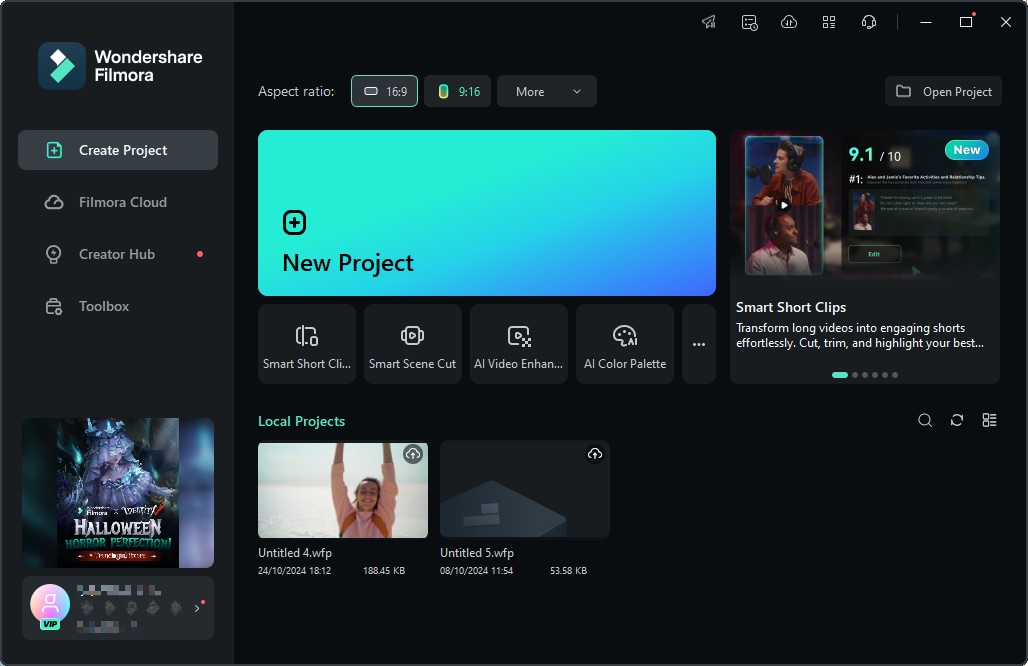
Step 1: Initiate a New Project in Filmora
Following a successful download of Filmora, login to your account and, navigate towards the left panel, click the "Create Project" option. From the options appearing on the main screen, click "New Project".
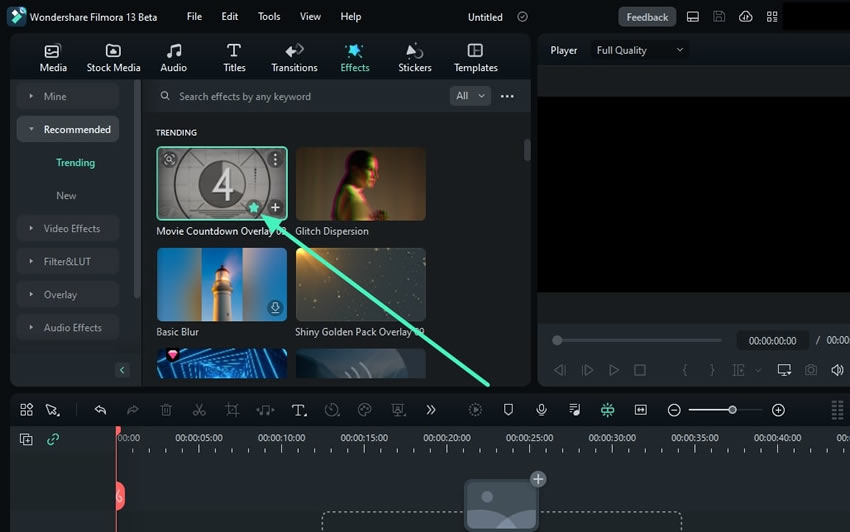
Step 2: Add a Graphic Element to Favorites
Now, pick a graphic you want to add, which can be an effect, sticker, music, or anything. Once you select the graphic tab, go to the elements below and mark your favorites by clicking the "Star" icon.
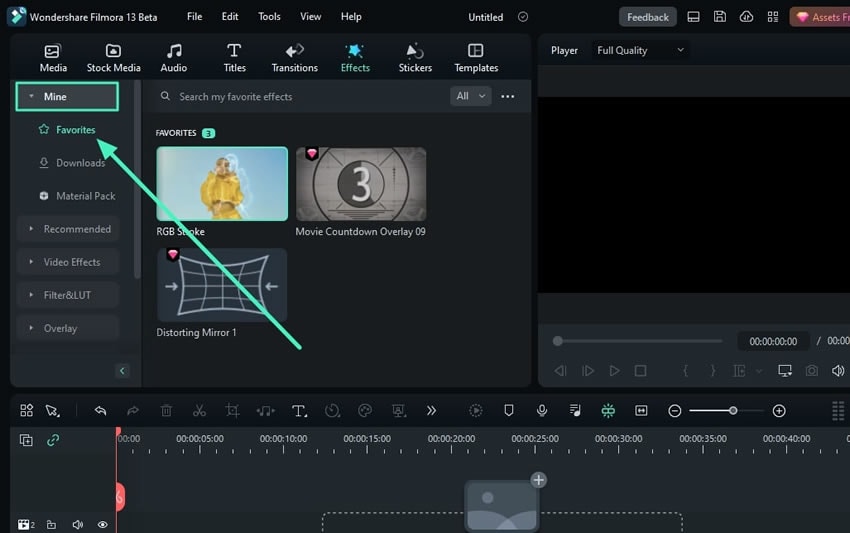
Step 3: Go to the Marked Favorites
While staying in the same graphic tab, navigate towards the "Mine" category on the left side and expand it. From the given options, select "Favorites" and hover towards one of the marked favorites.
Step 4: Assign Tags to Marked Favorites
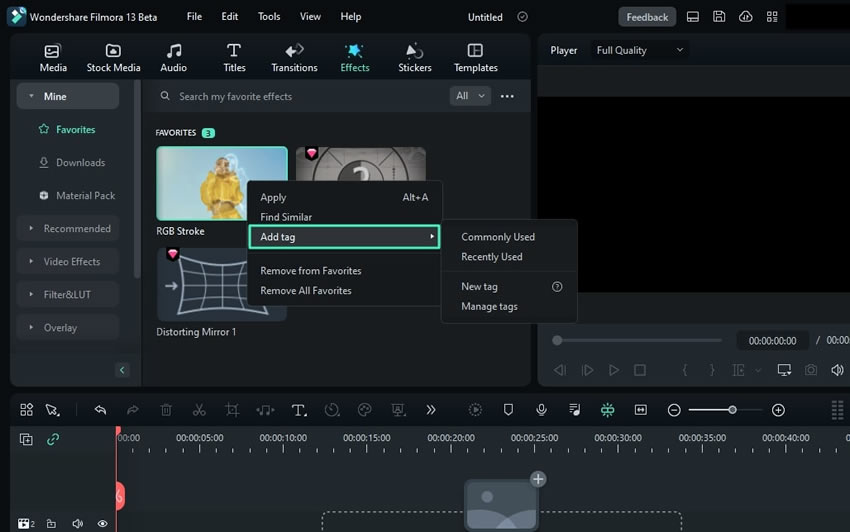
Afterward, right-click on this favorite, and from the options, choose "Add Tag", and you'll see multiple options there. You can categorize your favorite elements in two tags named "Recently Used" and "Commonly Used". These categories will be displayed at the top of the favorites section.
Step 5: Customizing a Tag
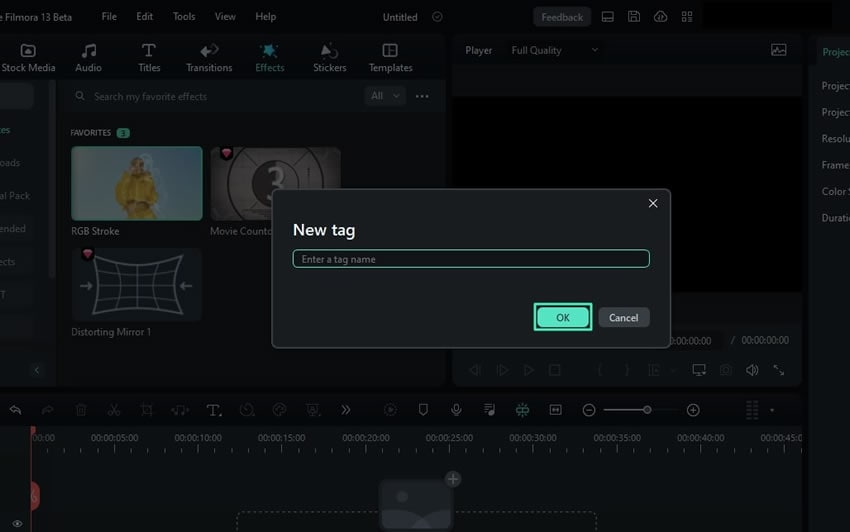
Furthermore, you can add a personal category by selecting "New Tag". Once you click the "New Tag" option, a pop-up will appear where you can customize the name for your tag and click "OK" to proceed. You will be able to access or see the new tag at the top of the favorites section with other tag categories. From there, if you want to create a new tag, you can do it by clicking the "+" option.
Step 6: Delete or Rename a Tag
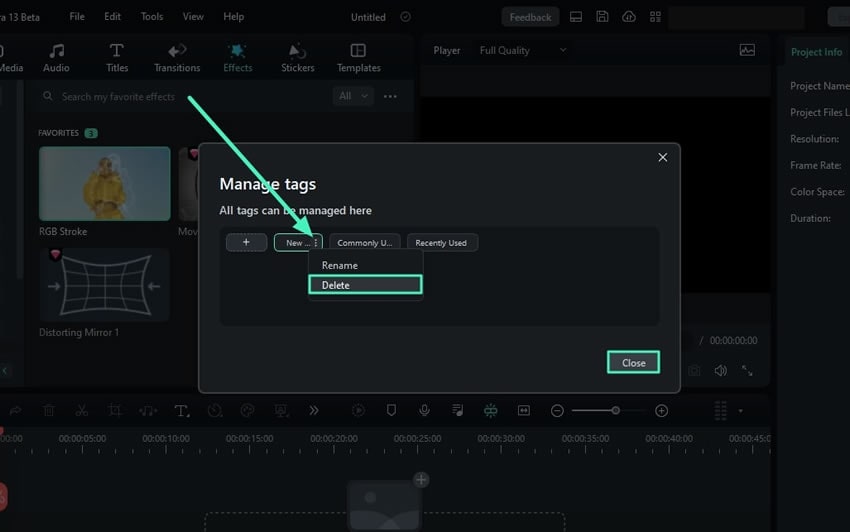
If you are unsatisfied with the name of the tag or want to remove it, choose the "Manage Tag" option. A small manage tags window will appear; go to the tag's name, click on the "Three Dots" icon, and rename or delete it. This method allows you to customize a tag or add your marked favorites to a tab.
Related Posts
Featured Articles
LumaFusion: Top Features and Compatibility on Android, iOS, Mac, and More
Before downloading LumaFusion, let’s take a closer look at what it offers in our review. We’ve covered LumaFusion key features, pros and cons, and compared it to leading video editors like Filmora.
Spooky Halloween Font Resources for Designers: Top Picks
Are you excited about Halloween? It's time to enrich your content with scary Halloween fonts and effects to engage more audiences.
5 Ways | How to Crop Videos on Windows 11 or 10
Learn five simple ways to crop videos on Windows 10/11 using tools like Filmora, VLC, and DemoCreator. Step-by-step guides to help you edit videos effortlessly.
Recommended User Guide
Panel Layout on Windows
Learn about the panel layout in Filmora for Windows, including the Property Panel, Timeline, Media Panel, workspace layouts, and project settings.
Preview Render Files for Windows
Learn how to use Preview Render Files in Filmora for Windows to improve timeline playback with Manual Render and Background Render.
Download & Install
Learn how to download Filmora, install it on Windows, sign in with your Wondershare ID, activate your license, update to the latest version, and uninstall Filmora when needed.