For the Best Results, Use the Latest Version.
-
Preparations
-
Account
-
Get Started & Basic Settings
-
Compatibility & Tech Specs
-
Performance Settings
-
-
Creating Projects
-
Creating New Projects
-
-
Importing & Recording
-
Video Editing for Windows
-
Basic Video Editing
- Enable/Disable Clip in Windows
- Magnetic Timeline for Windows
- Dual Monitor Setup for Video Editing on Windows
- Select All Clips on Timeline for Windows
- Timeline and Track Management
- Auto Ripple for Windows
- Split & Trim Video
- Crop & Pan & Zoom Video in Filmora for Windows
- Compositing
- Change Video Speed on Windows
- Reverse Video for Windows
- Mark In and Mark Out for Windows
- Markers for Windows
- Group editing
- Customizable Backgrounds for Videos and Images in Windows
- Video Snapshot
- Using Freeze Frame in Filmora for Windows
- Logo Reveal For Windows
- Auto Enhance in Filmora for Windows
- Applying drop shadow
- Adjustment layer for Windows
- Apply Transforming for Windows
- Video Editing Ruler – Windows
-
Advanced Video Editing
- Keyframe Motion Blur for Windows
- Drawing Tools for Windows | Filmora Guide
- Camera Tracking for Windows
- Create Multi-Camera Clip in Filmora for Windows
- Compound Clip for Windows
- Multi-Clip Editing for Windows
- Filmora Motion Blur | Windows
- 360° Video Reframing for Windows
- Track Matte for Windows
- Video Chapters in Filmora on Windows
- Filmora Flicker Removal Guide | Windows
- Create Multi-Screen Videos in Filmora on Windows
- Masking in Filmora on Windows
- Creating a PIP Effect for Windows
- Keyframe Graph Editor for Windows
- Animation Keyframing for Windows
- Keyframe Path Curve
-
AI-Powered Video Editing
- Smart Scene Cut for Windows
- Smart Short Clips for Windows
- AI Face Mosaic for Windows
- Filmora AI Eye Contact- Windows
- AI Video Enhancer for Windows
- AI Text-to-Video for Windows
- Planar Tracking for Windows
- AI Idea to Video for Windows
- AI Media Analysis for Windows
- Filmora Image to Video for Windows
- Filmora Image to Prompt for Windows
- Instant Cutter Tool for Windows
- AI Extend
- Filmora AI Relight - Windows
- Filmora AI Image Enhancer Guide - Windows
- AI Script to Video Guide for Windows
- AI Text-Based Editing for Windows
- AI Mate Editing for Windows
- Instant Mode for Windows
- ChatGPT Plugin - AI Copywriting
- AI Smart Cutout for Windows
- Lens correction on Windows
- Auto Reframe Video for Windows
- AI Portrait Cutout
- Scene Detection for Windows
- AI Smart Masking for Windows
- Motion Tracking on Windows
- Video Stabilization for Windows
- AI Video/Photo Object Remover for Windows
- AI Smart Search for Windows
- AI Skin Tone Protection for Windows
- AI Image for Windows
- Chroma Key (Green Screen) for Windows
- Super Slow Motion with Optical Flow for Windows
- Video Denoise for Windows
-
-
Audio Editing for Windows
-
Basic Audio Editing
-
Advanced Audio Editing
-
AI-Powered Audio Editing
- Auto synchronization
- AI Sound Effects in Filmora for Windows
- Smart BGM Generation on Windows
- AI Voice Enhancer in Filmora
- AI Voice Cloning in Wondershare Filmora
- AI Music Generator for Windows
- Audio To Video
- AI Vocal Remover for Windows
- AI Auto Beat Sync for Windows
- AI Audio Stretch for Windows
- AI Audio Denoise for Windows
- Silence Detection on Windows
-
-
Text Editing for Windows
-
Basic Text Editing
-
Advanced Text Editing
-
AI-Powered Text Editing
-
-
Video Customizations
-
Video Effects
- Filmora VST3 Plugins for Windows
- Filmora OpenFX Plugins for Windows
- Retouch Guide for Windows
- Filmora Pen Tool Tutorial: Motion Paths & Animation Guide
- Animated Charts
- Mocha Filmora - For Windows
- Different Types of Video Effects
- NewBlue FX effects
- Boris FX effects | Filmora Windows Guide
- Body Effects for Windows
- Filmora -Filmstock Asset
-
Audio Effects
-
Transitions
-
Stickers
-
Filters
-
Color Editing
-
Animations
-
Templates
-
Asset Center
-
-
Exporting & Share & Cloud Backup
Record PC in Filmora (Windows)
Filmora's Screen Recorder lets you capture tutorials, presentations, meetings, gameplay, and other on-screen activities. It supports Area, Window, and Full Screen recording, along with multiple sources such as the screen, microphone, system audio, and camera. You can also annotate the screen during recording, while Windows users get a dedicated Game Recording option.
Index
Access Screen Recorder in Filmora
Filmora provides multiple entry points for opening the Screen Recorder, allowing you to start capturing without changing your editing workflow.
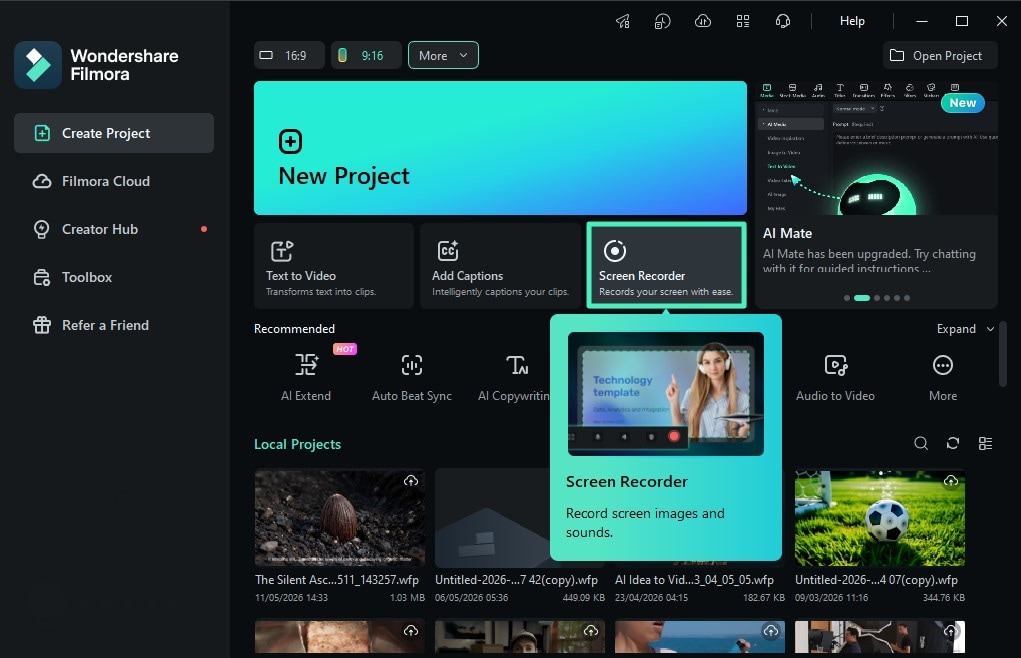
Method 1. From the Startup Screen
Launch Filmora and select Screen Recorder from the startup window to access the recording interface directly.
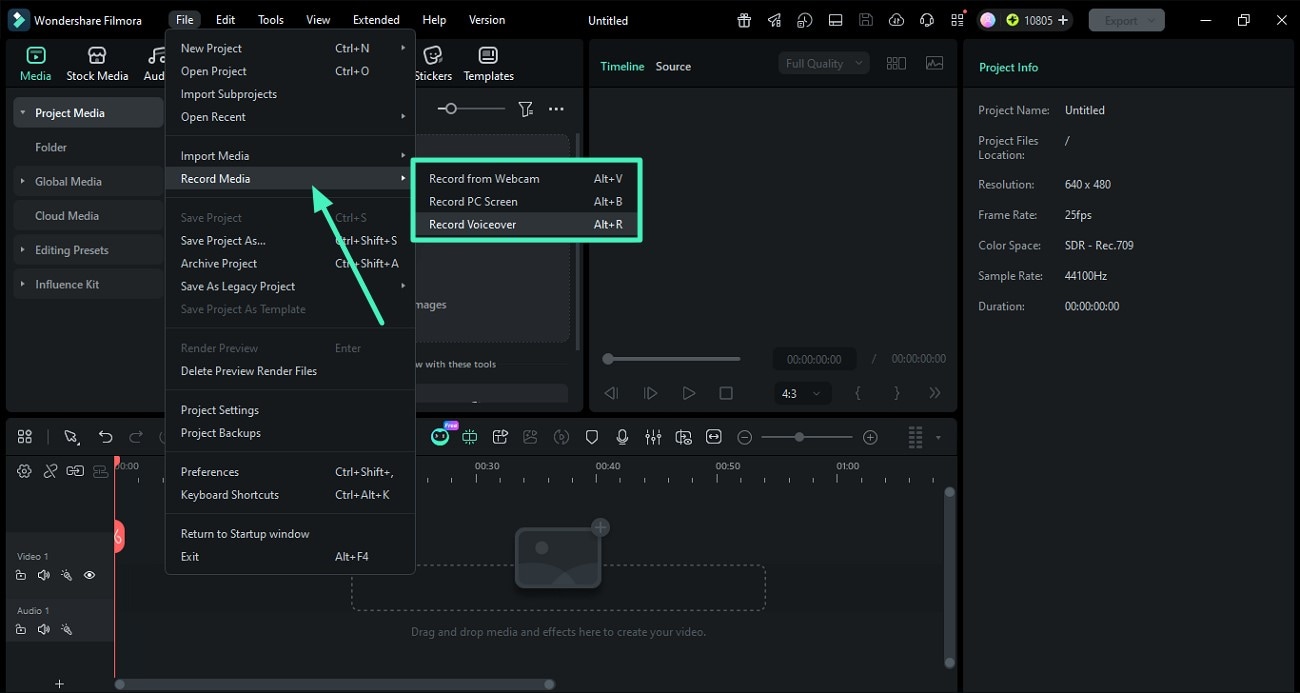
Method 2. From the File Menu
Enter the editing interface and navigate to File > Record Media. Select Record PC Screen from the available recording options. You can also access Record from Webcam, Record Voiceover, and Record Game from this menu.
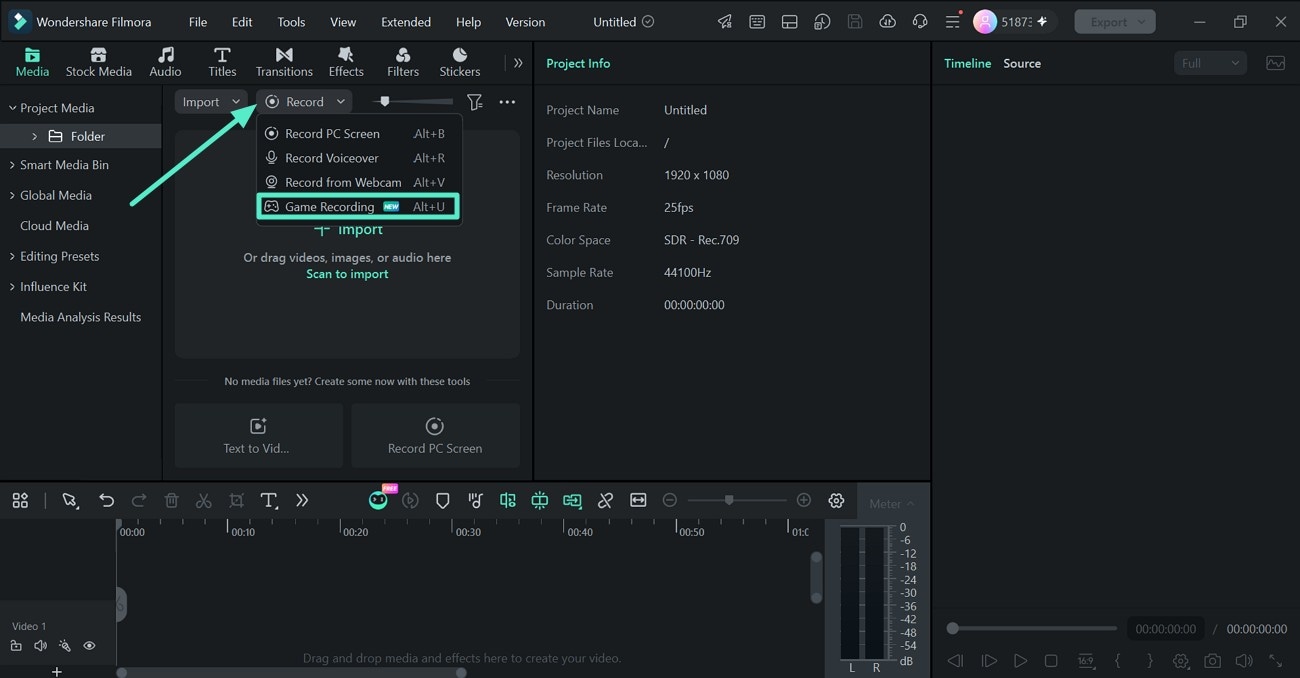
Method 3. From the Media Panel
Open Media and click the Record drop-down menu to access the available recording options. Select Record PC Screen to launch the recorder.
How to Record PC Screen in Filmora
As discussed, Filmora provides a comprehensive suite to record the screen of your PC effortlessly. Follow the steps provided below to learn how to use the screen recording feature of Filmora:
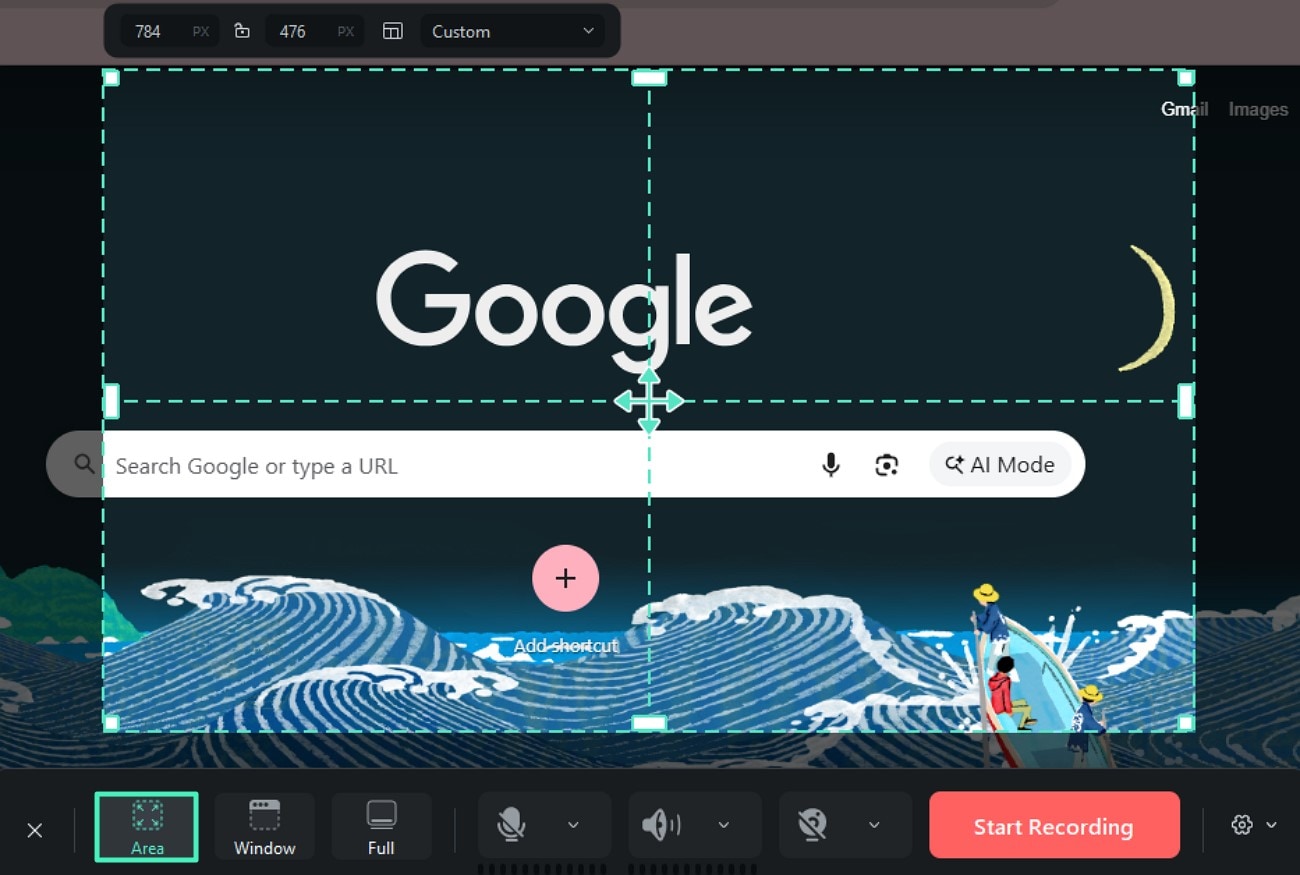
Step 1. Select Area Recording
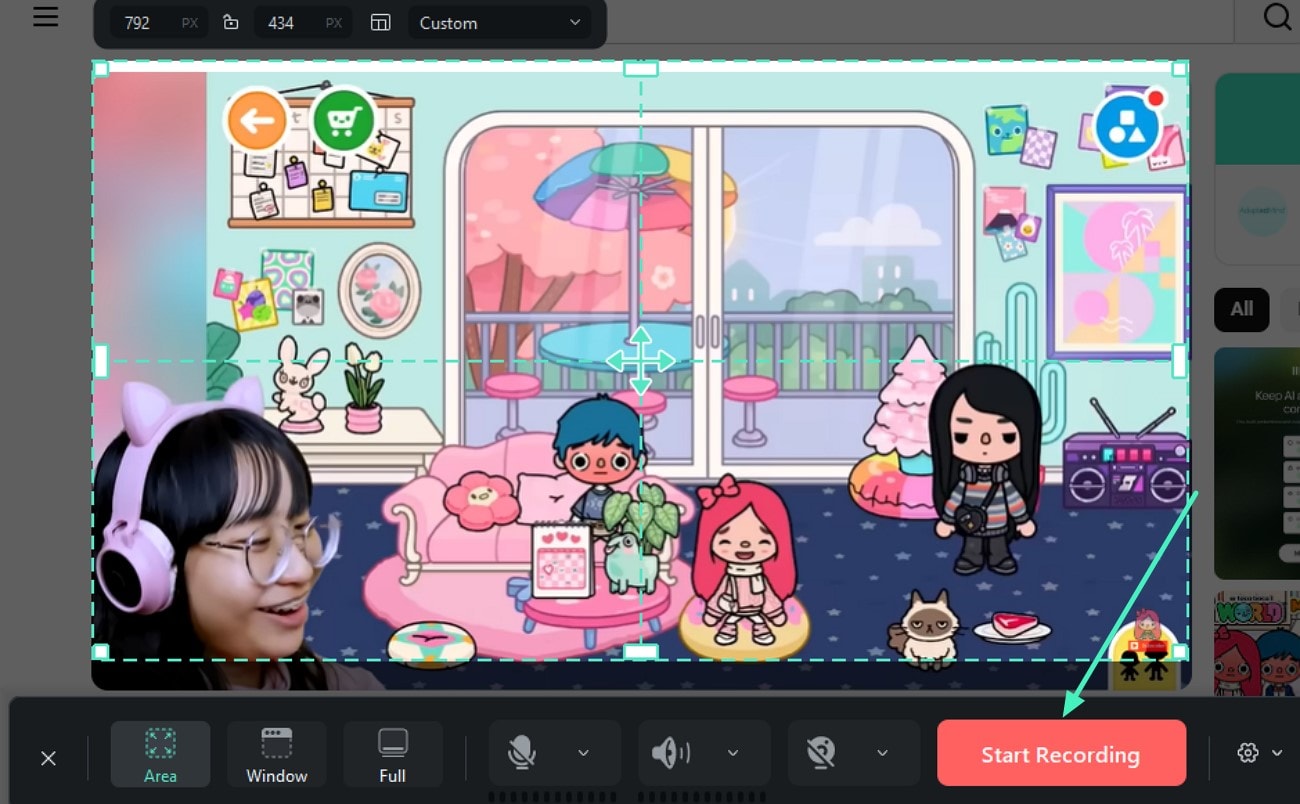
Choose Area when you only want to record a specific portion of the screen. Drag the recording boundary to define the required capture region and adjust its dimensions as needed.
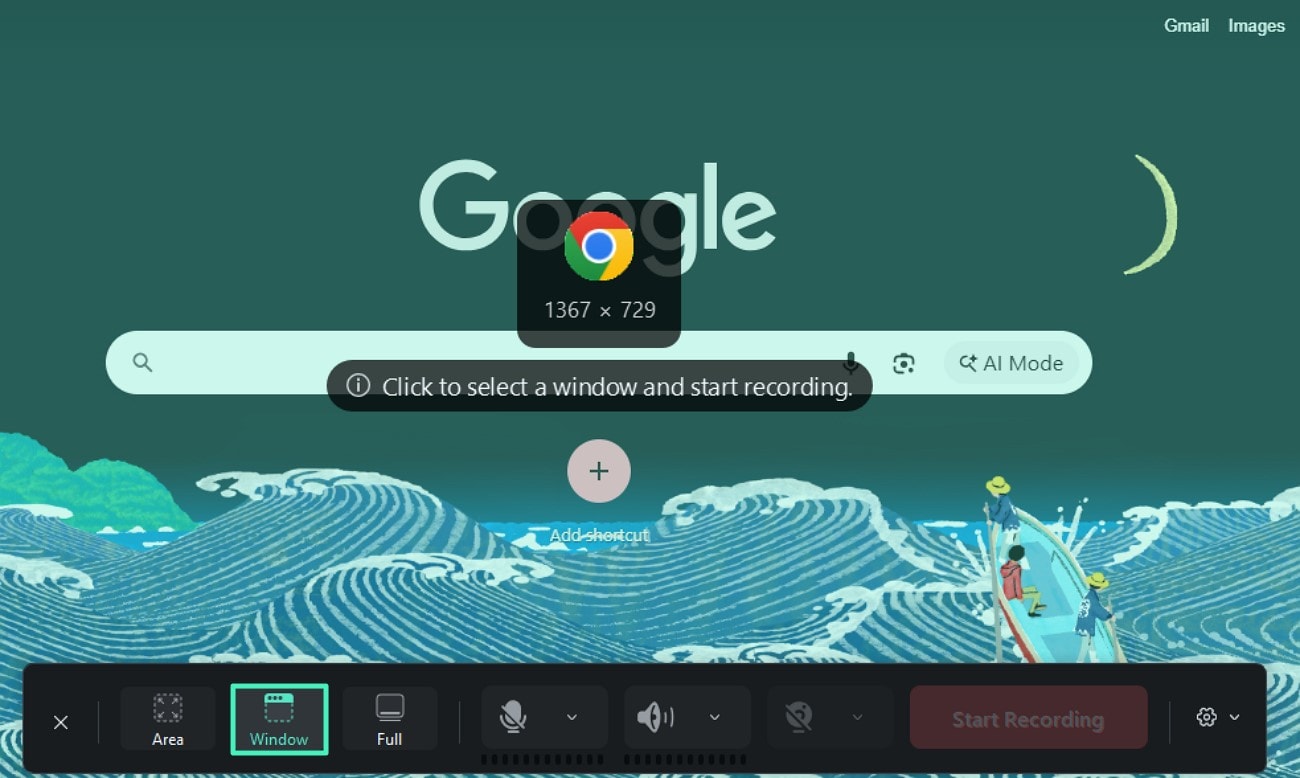
Step 2. Select Full Screen or Window Recording
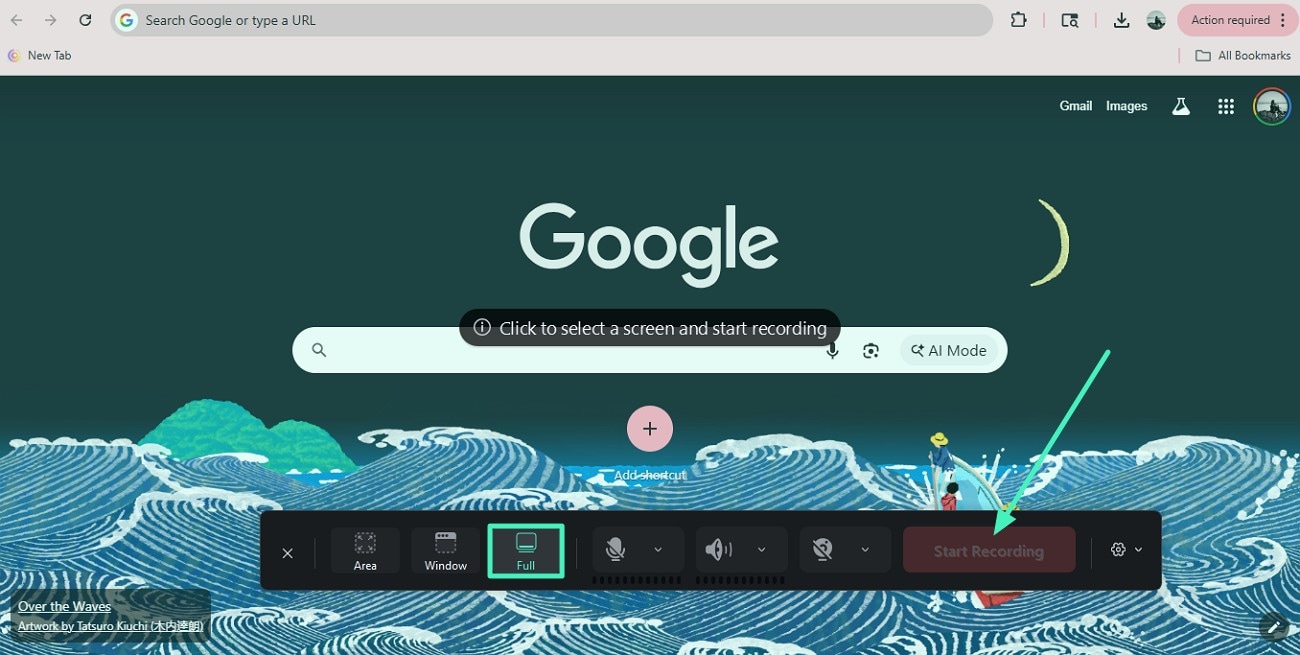
Select Full to capture the complete display, or choose Window to record a specific application. For Full Screen, select the display you want to capture. For Window Recording, move the cursor over the available windows and select the required one.
Step 4. Configure Multiple Recording Sources
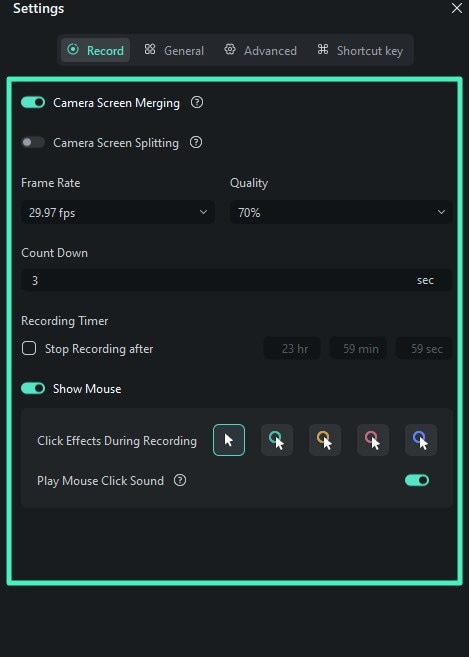
Along with the screen, Filmora lets you capture several input sources during the same session. Enable the Microphone, System Audio, and Camera controls as required to create a multi-source recording. Open the recorder settings to configure options such as the frame rate, recording quality, countdown, and mouse effects. Once the required sources and settings are ready, click Start Recording.
Step 5. Customize the Camera Display
When the camera is enabled, Filmora displays a Camera overlay within the recording area. Choose a camera display style and select the required resolution from the drop-down menu. You can also reposition and resize the camera overlay to fit your recording.
Step 6. Annotate the Screen While Recording
During recording, access the Annotation toolbar displayed along the side of the screen. Use its available tools to draw, highlight, insert text, add shapes, or visually point out important content while presenting. This is useful for tutorials, demonstrations, lectures, and presentations where viewers need to follow specific areas of the screen.
Step 7. Add Recording Markers
Open the recorder Settings and select the Shortcut key tab. Locate Add Marker, which uses M by default. While recording the screen, press M whenever you want to mark an important moment. The markers help you quickly locate key sections when reviewing the recorded content.
Step 8. Stop and Edit the Recording
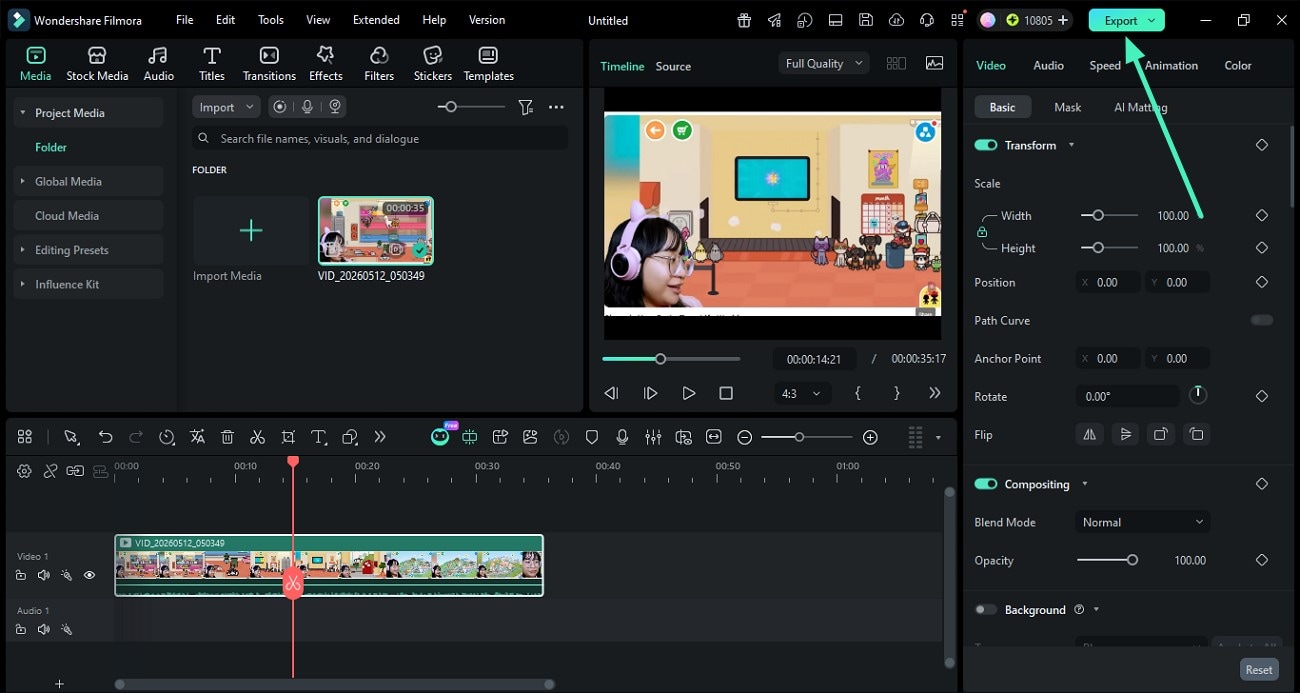
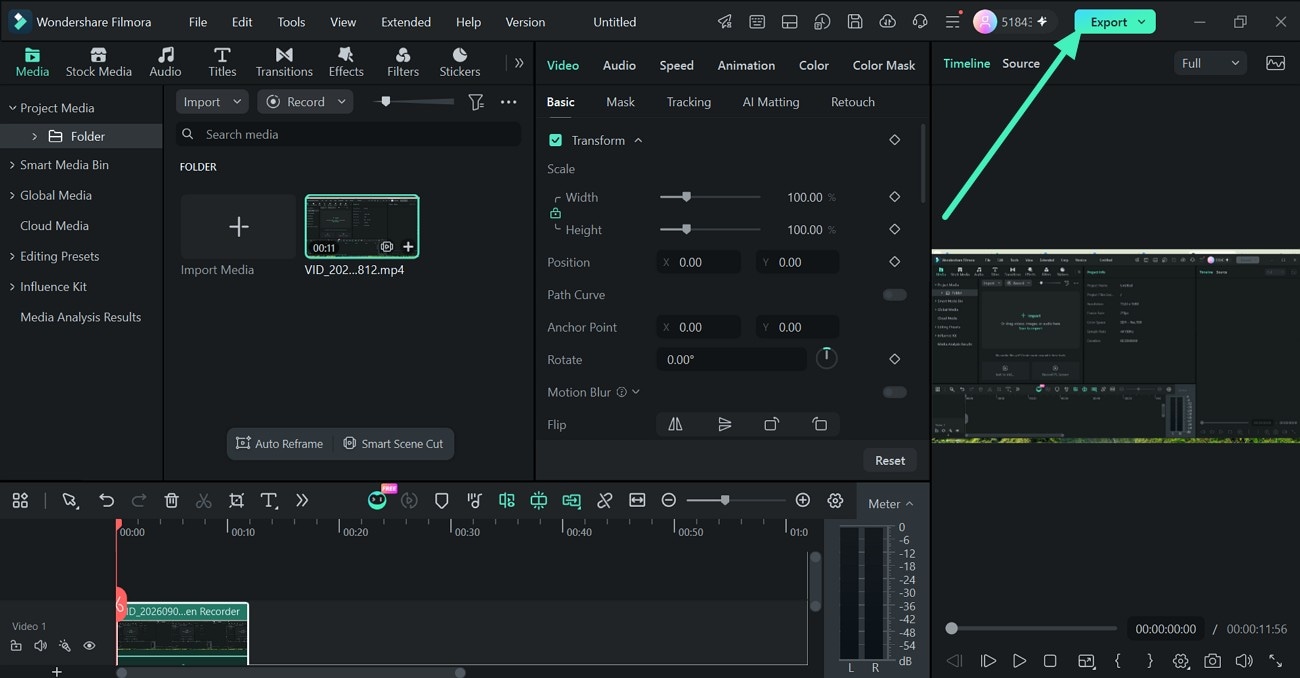
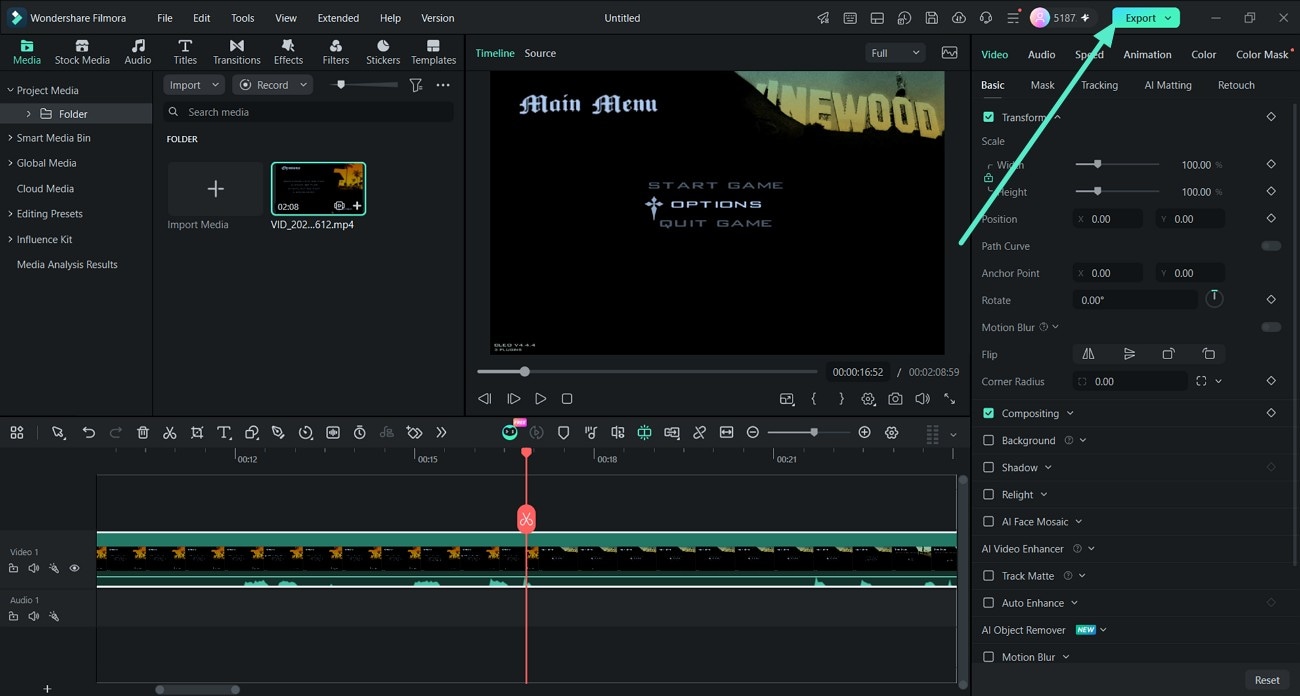
When you finish capturing the screen, stop the recording. Filmora automatically brings the recorded content into the editing workspace, where you can preview and edit it. Make the required adjustments and click Export when the video is ready.
Record Gameplay in Filmora on Windows
Filmora also provides a dedicated Record Game option on Windows. Unlike regular screen capture, this option is intended specifically for recording gameplay and can be accessed separately from the Record Media menu.
Step 1. Open Game Recording
Launch Filmora and open a new or existing project. Go to Media, click the Record drop-down menu, and select Game Recording to open the dedicated game capture controls.
Step 2. Select the Game and Start Recording
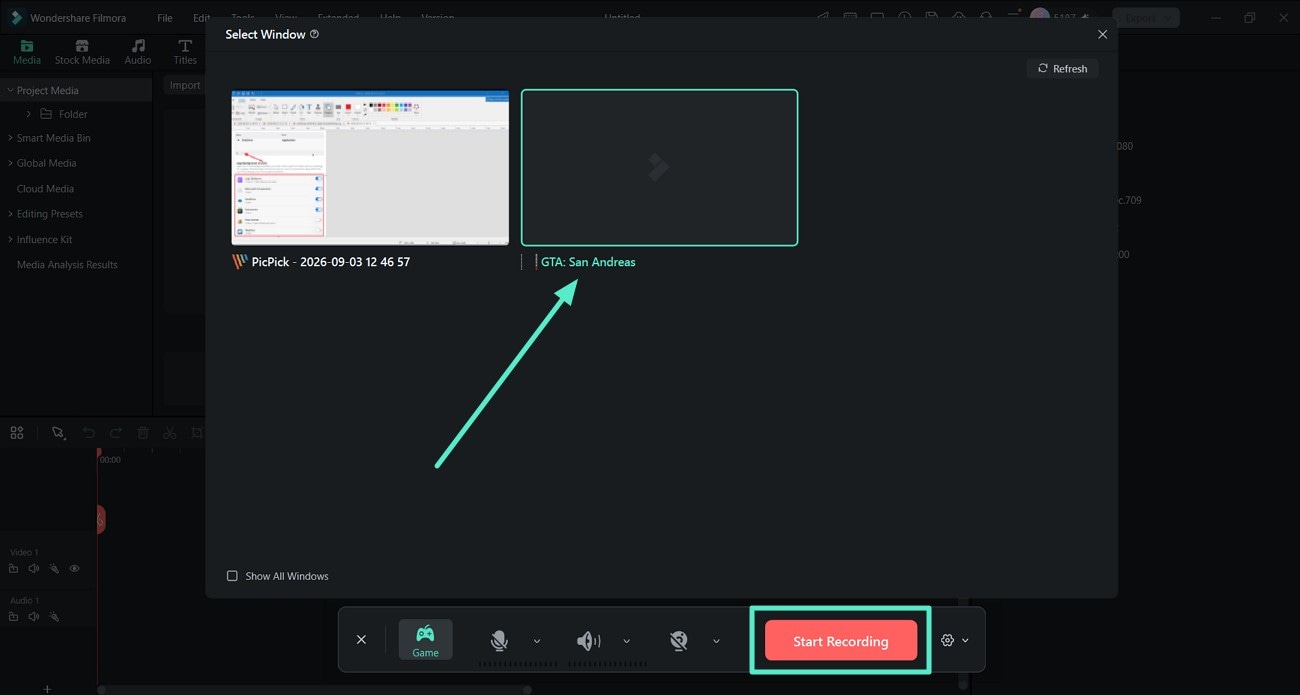
In the Select Window panel, choose the game you want to capture. If the game does not appear, click Refresh or enable Show All Windows to locate it. Adjust the audio or camera options if needed, then click Start Recording to begin capturing the gameplay.
Step 3. Review and Export the Gameplay
Stop the recording when your session is complete. Review the captured gameplay in Filmora and add it to the Timeline for further editing if needed. Preview the final result, then click Export to save your video.
Related Posts
Featured Articles
How to Add a Person to a Photo? The Best Ways
If you want to make your photo perfect by adding another person to it, this article will provide several methods to achieve that goal.
Top Image to Video Apps to Download in 2026
Looking for ways to convert your images into dynamic collages? Read this article to explore the top 10 image-to-video apps to download.
The Best Funny Video Editing Apps You'll Need in 2026
Ever wonder how people create those hilarious memes and funny videos that go viral online? You can make them too by using the best funny video editing apps featured in this guide.